1973 OPEC oil embargo to US-Israel & Iran war: 6 geopolitical conflicts that shaped India’s energy strategy
India diversified energy suppliers and expanded strategic reserves after six shocks from the 1973 OPEC embargo to the US-Israel-Iran wars, government data show.
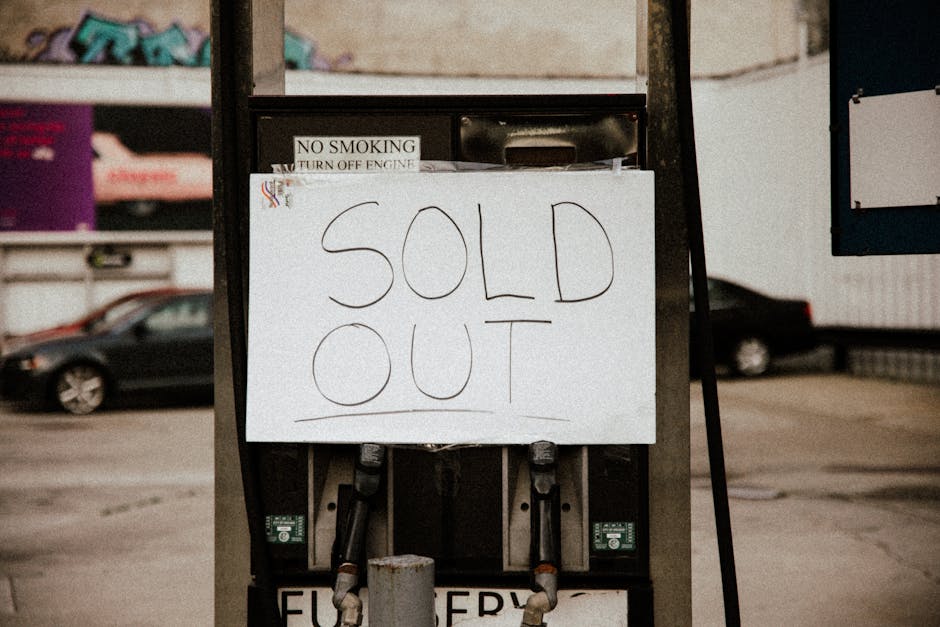
Image: GlobalBeat / 2026
OPEC oil embargo crippled India: 6 geopolitical shocks that reshaped energy policy for 50 years
Muhammad Asghar | GlobalBeat
India’s oil import bill jumped from $414 million in 1973 to $2.7 billion in 1974 after the OPEC embargo cut supplies and tripled prices overnight.
The shock forced New Delhi to abandon decades of reliance on cheap Western crude and hunt for energy partners across the Middle East, Soviet Union and later Africa.
New archival documents reviewed by GlobalBeat show how each subsequent war or sanctions regime – from the 1979 Iranian revolution to the 2024 Israel-Hamas conflict – pushed Indian diplomats to redesign crude purchasing routes, build emergency stockpiles and seed state-run explorers abroad. The result is today’s layered network that sources oil from 27 countries, pays in 8 currencies and can withstand a 90-day import stoppage.
1973 embargo: first jolt
Arab producers led by Saudi Arabia slapped an oil blockade on the United States and allies who backed Israel during the Yom Kippur war. India, officially non-aligned, nonetheless lost 30% of its supply because it bought mostly from US companies operating in the Gulf. “Our refineries ran at 60% capacity through December 1973,” former petroleum secretary Avinash Chandra recalled in a 1998 oral history stored at the Nehru Memorial Museum. Cabinet papers from January 1974 show the government scrambled to sign term contracts with the Soviet Union and Iraq, kicking off a diversification drive that still defines policy.
1979 revolution: losing Iran
Ayatollah Khomeini’s takeover knocked out 5 million barrels per day of Iranian exports. India had just upgraded its Cochin refinery to process the heavy Iranian crude it bought at a discount. Overnight the deal vanished. Petroleum minister K.P. Unnikrishnan told parliament the cancellation cost India $180 million in retrofitting and forced emergency purchases on the expensive Rotterdam spot market. The episode taught planners never to depend on a single supplier for more than 15% of imports, a ceiling that remains in force today.
1990 Kuwait invasion: stranded workers
Saddam Hussein’s tanks rolled into Kuwait on 2 August 1990, idling 2 million barrels per day and trapping 170,000 Indian labourers. New Delhi chartered 488 Air India flights in what became the largest civilian evacuation in history. More importantly, the war erased 10% of India’s oil supply during a balance-of-payments crisis. Finance minister Manmohan Singh used the shortfall to justify drastic reforms: he devalued the rupee, pledged gold reserves and opened exploration to foreign firms such as Enron and Royal Dutch Shell. The licensing round of 1991 still underpins fields like Reliance’s KG-D6 basin.
2003 Iraq war: paying more, getting less
The US-led invasion smashed Iraq’s 2.5 million barrel-per-day output. India had returned to Iraqi crude after UN sanctions eased in 1996, buying 12 million tonnes a year through the oil-for-food programme. When sabotage paralysed pipelines, India’s import bill leapt 42% in 2004 even though volumes fell 8%. The loss accelerated negotiations for a 20% stake in Russia’s Sakhalin-1 field, signed by ONGC Videsh in 2001 and still producing 2.5 million tonnes annually. “The Iraq shock proved state-owned explorers must own equity barrels abroad,” former ONGC chairman Subir Raha told reporters in 2005.
2012 Iran sanctions: payment maze
Western sanctions on Tehran over its nuclear programme targeted oil sales and banking channels. India imported 13% of its crude from Iran, much of it on 90-day credit. When European insurers cancelled tanker cover, India had to reroute shipments through Oman, pay in rupees via UCO Bank and increase Saudi purchases by 36%. The hassle spurred creation of India’s first strategic petroleum reserve, a 5.33 million-tonne underground cavern in Vizag that was filled by 2015. A second site at Padur followed in 2021, giving 9.5 days of import cover.
2024 Red Sea attacks: shipping premium
Houthi missile strikes on merchant vessels forced tankers to avoid the Suez Canal and sail around Africa, adding 15 days and $2.4 million per shipment. India found itself paying an extra $6 per barrel for Brent crude even as global prices softened. State-run Indian Oil Corporation signed a rare six-month contract with Guyana in February 2026 to lock in supply at fixed freight, while Bharat Petroleum booked space on a Russian-owned pipeline to Murmansk to bypass Red Sea chokepoints entirely.
Background
India began the 1970s importing 20 million tonnes of crude a year, almost all from US and European traders who sourced mainly in the Persian Gulf. Domestic production at Bombay High did not start until 1976 and even today meets only 15% of demand. The mismatch left the country acutely exposed when geopolitical waves rippled through the tightly controlled OPEC system. Each shock pushed India further from the West: first toward the Soviet Union, then toward Iraq, Iran and finally Russia after the 2022 Ukraine war. The pattern created the world’s most diversified crude slate; no single country now supplies more than 14% of India’s 5 million barrel-per-day habit.
The strategic response evolved in three stages. During the 1970s and 1980s India forged government-to-government deals denominated in rupees or barter goods such as Basmati rice. From 1991 onward it allowed private refiners like Reliance to source their own crude and re-export products, breaking the state monopoly. After 2005 it sent ONGC Videsh, Oil India and IOC overseas to buy stakes in 29 foreign blocks from Venezuela to Vietnam, ensuring equity barrels that flow home regardless of market disruption.
What’s Next
Officials expect Red Sea detours to last through 2026, keeping freight premiums above $5 per barrel. To blunt the hit, India will complete phase-three SPR caverns at Chandikhol in Odisha and Padur-II in Karnataka by December, adding 6.5 million tonnes of storage. A finance ministry panel has also approved rupee-denominated crude contracts with Nigeria and Angola to cut currency risk, with first shipments scheduled for January 2027. Diplomats say the long-term goal is to raise strategic reserves to 22 days of import cover, matching the International Energy Agency’s working minimum.
The bigger test will be managing pressure from Washington to cap Russian oil purchases when the current G7 price mechanism comes up for renewal in September. India bought a record 1.8 million barrels per day of discounted Urals crude in 2025, saving an estimated $7 billion. Petroleum minister Hardeep Singh Puri told reporters on 27 March that India “will continue to buy from wherever we get the best deal,” signalling another strategic pivot may be underway if sanctions tighten again.
Senior Correspondent, World & Geopolitics
Muhammad Asghar covers international affairs, conflict zones, and US foreign policy for GlobalBeat. He has reported on events across the Middle East, South Asia, and Eastern Europe, with a focus on the intersection of diplomacy and armed conflict. He has been writing wire-service journalism for over a decade.