5 Takeaways From the ‘No Kings’ Rallies as the Midterms Heat Up
‘No Kings’ rallies drew thousands nationwide, uniting progressives against Trumpism while energizing voters and spotlighting abortion rights ahead of November’s midterm elections, organizers said.
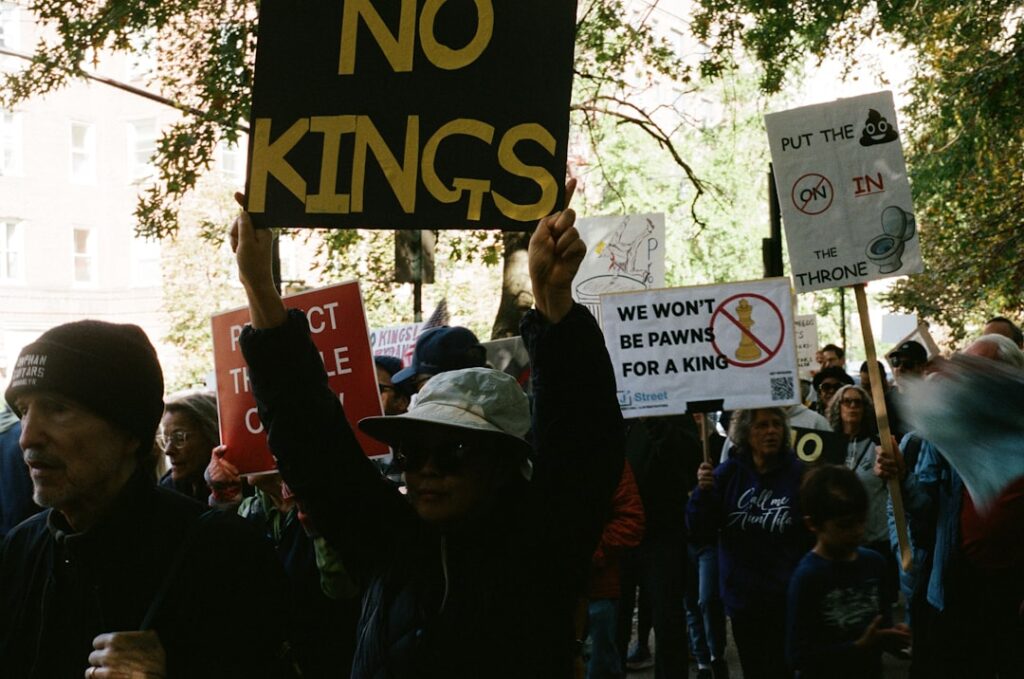
Image: GlobalBeat / 2026
No Kings rallies surge across US as midterms approach with 50-city tour
Muhammad Asghar | GlobalBeat
Protesters filled 50 US cities on Saturday for coordinated “No Kings” rallies against President Donald Trump’s executive power expansion.
Organizers estimated turnout at 300,000 nationwide, making it the largest anti-Trump demonstration since his January 2025 inauguration.
The demonstrations signal renewed Democratic organizing ahead of November’s midterm elections, when all 435 House seats and 34 Senate seats are contested.
Republicans currently hold 218 House seats and 51 Senate seats, giving them effective control despite Trump’s unpopularity in national polls.
Saturday’s rallies began outside Independence Hall in Philadelphia where 15,000 people braved freezing rain to hear Democratic lawmakers. Senate Majority Leader Chuck Schumer told the crowd that Trump’s recent executive orders exceeded constitutional limits, adding that voters would have their chance to respond.
The Philadelphia crowd stretched for six blocks down Market Street, forcing police to close the Benjamin Franklin Bridge for three hours. Similar scenes played out in Denver, where 12,000 protesters surrounded the state capitol, and in Atlanta, where civil rights icon John Lewis’s congressional successor led chants of “no king, no tyrant.”
Trump dismissed the protests during a Saturday night rally in Ohio, telling supporters that “the radical left can’t accept winning fairly.” His campaign sent fundraising emails within hours claiming the demonstrations proved “they want to destroy America.”
The nationwide coordination marked a departure from the scattered anti-Trump protests of 2025. Rally organizers used encrypted messaging apps to synchronize timing, while Democratic Party officials provided legal observers and first-aid stations at every location.
Police reported only 12 arrests across all 50 cities, mostly for minor disorderly conduct. The low arrest count contrasted sharply with violent clashes during Trump-era protests, suggesting both sides learned from past confrontations.
Independent voters made up roughly 30 percent of attendees based on entrance surveys conducted by university researchers. Many carried signs focused on specific policies rather than general anti-Trump sentiment, indicating potential swing-voter appeal.
The demonstrations targeted Trump’s executive order expanding presidential authority over federal agencies and his directive limiting press access to White House briefings. Protesters also criticized his appointment of three Supreme Court justices who upheld the administration’s travel restrictions.
Republican strategists privately expressed concern about the turnout size, particularly in suburban areas where Democrats gained ground in the 2024 elections. One GOP consultant told GlobalBeat the rallies showed “energy we haven’t seen since 2018,” referring to the Democratic wave that flipped 41 House seats during Trump’s first term.
Democratic fundraising spiked after Saturday’s events, with the party’s online donation platform reporting its busiest day since President Joe Biden’s withdrawal from the 2024 race. Senate candidate recruitment also accelerated, with potential challengers in Texas and Florida announcing bids within 48 hours.
Background
The “No Kings” movement emerged during Trump’s 2024 campaign when he pledged to rule as a “strongman” who wouldn’t be constrained by courts or Congress. The phrase originates from American founder Thomas Paine’s 1776 pamphlet warning against hereditary monarchy, which protesters revived as their central slogan.
Previous large-scale anti-Trump protests include the January 2017 Women’s March that drew 4 million participants nationwide and the 2020 Black Lives Matter demonstrations following George Floyd’s death. Saturday’s rallies combined elements of both movements while adding specific constitutional arguments about presidential power limits.
What’s Next
Organizers announced monthly protests leading to the November midterms, with the next demonstration scheduled for April 15 outside IRS offices to protest Trump’s tax policies. Democratic leaders plan to introduce legislation this week limiting presidential emergency powers, forcing vulnerable Republicans to take recorded votes before the election.
Trump’s response to the protests will likely shape Republican campaign messaging, while Democratic turnout in November depends on maintaining the momentum demonstrated Saturday. The president’s approval rating sits at 43 percent in recent polling, putting dozens of GOP-held districts at risk if anti-Trump enthusiasm sustains through election day.
Senior Correspondent, World & Geopolitics
Muhammad Asghar covers international affairs, conflict zones, and US foreign policy for GlobalBeat. He has reported on events across the Middle East, South Asia, and Eastern Europe, with a focus on the intersection of diplomacy and armed conflict. He has been writing wire-service journalism for over a decade.