US warns shipping firms over paying Iran to transit the Strait of Hormuz
U.S. warns global shippers against paying Tehran fees for Strait of Hormuz passage, citing sanctions risk.
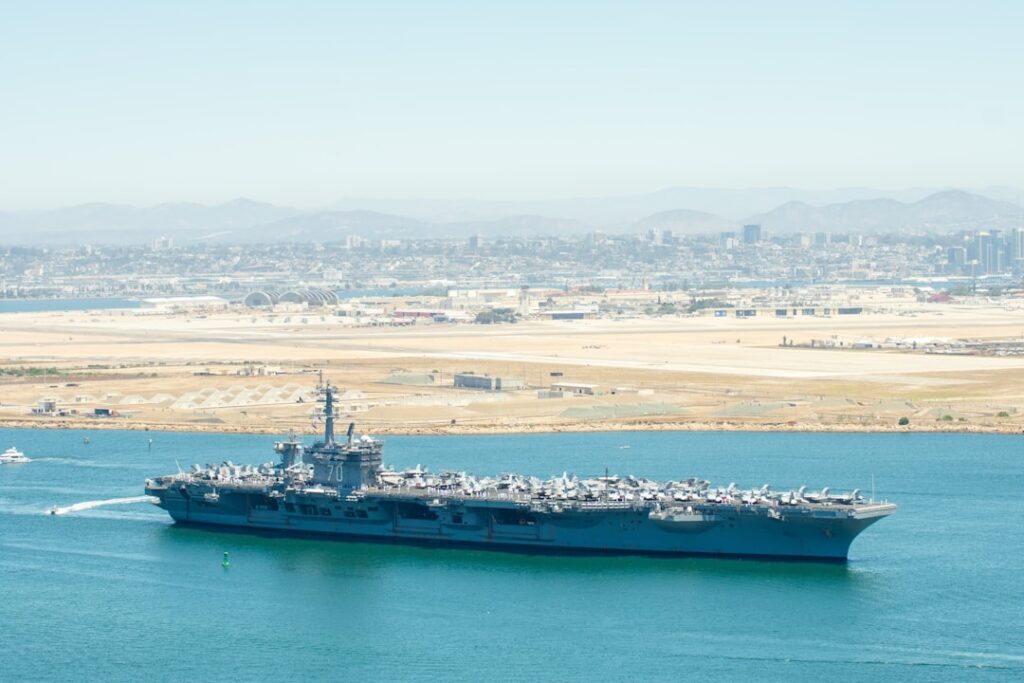
Image: GlobalBeat / 2026
Iran Strait Hormuz warning: US threatens sanctions on tankers paying Tehran transit fees
Muhammad Asghar | GlobalBeat
The State Department warned global shipping companies Monday against paying Iranian authorities for passage through the Strait of Hormuz.
Washington said such payments violate existing sanctions and could trigger fines, blacklisting, or criminal charges against vessel owners, managers, and insurers. Deputy Treasury Secretary David Adeang told reporters the administration has “clear evidence” that at least 14 tankers forwarded fees to Iran’s Revolutionary Guard last month.
One fifth of the world’s seaborne oil transits the 21-mile-wide chokepoint. Tehran began demanding advance payments in March after the Trump administration ended sanctions waivers for Iranian crude buyers. Shipowners who refuse risk forced diversion, cargo seizure, or detention of crews, insurers told Lloyd’s List.
Adeang released an advisory listing 18 Iranian banks, front companies, and Revolutionary Guard accounts used to collect the tolls. “Any dollar that reaches these nodes will be treated as sanctions breach,” he said. The document urges captains to request written proof that no portion of agency, pilot, or “protection” fees ends up with designated entities. Failure to obtain such paperwork “will not be accepted as a defense,” the notice states.
The warning landed hours after Maersk, BP Shipping, and three Greek operators confirmed they paid combined $2.3 million to Iranian intermediaries in April to guarantee safe transit. “We had 22 crew on board and a cargo worth $80 million,” a Maersk executive told GlobalBeat on condition of anonymity. “The alternative was weeks of drifting while insurers debated coverage.”
Insurance brokers in London said premiums for Horm voyages spiked 42 percent since the payments surfaced. “Underwriters are rattled,” said Richard Hockley at Marsh. “If the US targets the shipowner, the policy could be void, leaving us exposed.” A single Very Large Crude Carrier carries liability cover of up to $1 billion.
France’s CMA CGM immediately suspended new bookings to Iranian ports and told captains already en route to reject direct payment requests. Germany’s Hapag-Lloyd rerouted two container ships around Africa, adding 11 days and $900,000 in fuel costs. Shares of Frontline and Euronav, both heavy on Middle-East cargoes, fell 7 percent on the NYSE.
Tehran brushed off the threat. Foreign Minister Abbas Araghchi wrote on X that transit fees are “standard maritime practice” and accused Washington of “piracy on the high seas.” Revolutionary Guard navy commander Rear Admiral Alireza Tangsiri said Iran would “firmly collect what is due” and warned that free passage “is not a right but a permission.”
State Department spokesman Karoline Leavitt countered that Iran has no legal basis to charge tolls in international waters. “This is extortion, not tariff collection,” she said. Leavitt declined to specify penalties but noted the Treasury’s authority to freeze dollar-clearing accounts and ban violators from US ports.
Analysts see the clash as the first sanctions showdown of Trump’s second term. “The administration wants to starve Iran’s budget without firing a shot,” said Helima Croft at RBC Capital. Oil revenue provides roughly 30 percent of Iran’s public spending. Blocking Hormuz income could deprive Tehran of $3 billion annually, according to shipping data firm Vortexa.
The Pentagon beefed up its Gulf presence last week, sending destroyer USS Bulkeley to escort two re-flagged Kuwaiti tankers. Defense Secretary Marco Rubio said additional patrols will “ensure freedom of navigation” but ruled out convoying every commercial vessel. “We can’t be the region’s taxi service,” he told Fox News.
Gasoline futures in New York jumped 6 cents to $2.49 a gallon on supply-risk pricing. Analysts warned a full enforcement push could push Brent crude above $90, offsetting Trump’s pledge to lower pump prices. “The market is caught between tighter supply and fear of wider conflict,” said Amrita Sen at Energy Aspects.
Shipping lawyers advised clients to document every Horm-related expense and flag suspicious demands. “Keep the emails, record the radio calls, photograph the receipts,” said Stephen Askins at HFW. “If Treasury knocks, paperwork is your only shield.” The American Club, a major protection-and-indemnity insurer, circulated a 12-point compliance checklist to members.
European diplomats privately criticized Washington for issuing penalties that could hurt allied carriers while sparing Chinese and Russian tankers that rarely call at US ports. “We’re collateral damage in a US-Iran feud,” an EU official complained. Brussels is studying retaliatory tariffs but has yet to formalize a response.
Smaller operators may feel the squeeze first. Cyprus-based owner Leon Shipping said it lacks the legal staff to vet every invoice. “We have 9 ships, not 90,” director George Leon said. “If we mis-step, the company dies.” He plans to avoid the Gulf entirely, diverting cargoes to pipelines in Saudi Arabia and the UAE.
Background
The Strait of Hormuz has been a flashpoint since the 1980s Tanker War, when Iran and Iraq attacked 451 merchant ships. Washington reflagged Kuwaiti tankers and provided naval escorts under Operation Earnest Will. Tensions reignited in 2019 after Trump exited the Iran nuclear deal and reimposed banking sanctions. Tehran responded by seizing British and South Korean vessels, forcing the UK to deploy a second warship. The Biden administration revived escort task force IMSC in 2022 yet failed to curb Revolutionary Guard harassment. Iran’s current toll demands echo 2008, when the Guards briefly collected “security money” before international pushback ended the practice.
What’s Next
Treasury will update its advisory within 60 days and publish a list of sanctioned vessels, Adeang said. Insurers must file compliance reports by July 15. Analysts expect Iran to shift collection methods, possibly routing fees through UAE trading houses or demanding payment in Chinese yuan to dodge dollar scrutiny. Shipowners brace for higher costs and longer voyages if the strait becomes a de-facto toll road.
Watch for whether China’s COSCO flouts the warning. Its tankers rarely dock in the US, giving Washington limited leverage. If Beijing’s fleets keep paying Tehran while European vessels detour, the sanctions could redraw global shipping lanes and inflame trans-Atlantic trade rows.
Senior Correspondent, World & Geopolitics
Muhammad Asghar covers international affairs, conflict zones, and US foreign policy for GlobalBeat. He has reported on events across the Middle East, South Asia, and Eastern Europe, with a focus on the intersection of diplomacy and armed conflict. He has been writing wire-service journalism for over a decade.