Michigan Manufacturing Technology Center hosts AI event in Jackson
Michigan Manufacturing Technology Center will host an AI-focused event for manufacturers in Jackson on June 25, WILX-TV reported.
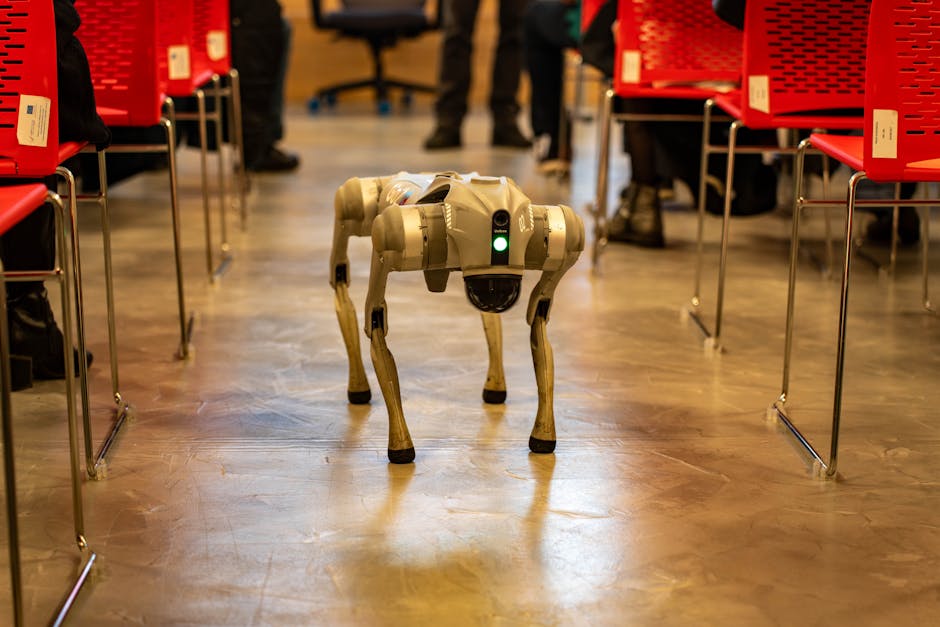
Image: GlobalBeat / 2026
AI manufacturing Michigan: Jackson hosts 200 firms for automation summit
Sarah Mills | GlobalBeat
The Michigan Manufacturing Technology Center drew 200 companies to Jackson on Wednesday for a daylong crash course on deploying artificial intelligence across factory floors.
Governor Gretchen Whitmer opened the conference by announcing a $15 million state fund that will cover half the cost of AI pilot projects at small and mid-sized plants.
The money arrives as Michigan’s 13,000 manufacturers scramble to fill 27,000 open production jobs and slash downtime blamed for $3 billion in lost output last year.
“AI isn’t futuristic, it’s running the coating line in Adrian right now,” Whitmer told the crowd at the Commonwealth Commerce Center. “Today is about copying that success before the competition copies it first.”
Case studies dominated the agenda. Operators from Grand Rapids-based Autocam Precision Components Group said computer vision cameras installed 18 months ago now catch micro-cracks in fuel injector bodies that human inspectors missed 7% of the time. Scrap rates dropped 22%, saving $1.2 million annually and erasing the $280,000 upfront cost in 14 weeks.
Van Buren Township engine-parts maker G-Matt Industries revealed it fed 40 terabytes of vibration, temperature and oil-sample data into a Google Cloud model that predicts bearing failures 10 days in advance. Unexpected outages have fallen from 38 per year to 6, maintenance chief Dana Liu said. “We schedule the fix during planned downtime instead of calling triple-time crews at 2 a.m.”
Smaller shops voiced equal enthusiasm and equal anxiety. “We’re 82 people carving aerospace brackets,” said Louie Casarez, president of Sterling Heights firm Casarez Machine. “If AI can squeeze 12% more capacity from our Haas mills we double profits, but who trains the kid sweeping chips to babysit an algorithm?”
Labor unions want guarantees. Al Pellegrino, Michigan district president for the International Association of Machinists, said the union supports “productivity sharing” contracts that guarantee workers a slice of AI-driven savings. “If a camera replaces 3 inspectors we retrain those people as data taggers at the same wage, not lay them off,” he told reporters.
The conference coincided with new data from the Federal Reserve Bank of Chicago showing Michigan manufacturing output flat since January while AI-heavy sectors such as semiconductors and electric batteries grew 6% nationwide. “The state risks another decade of catch-up unless adoption accelerates,” said Chicago Fed economist Paul Traub.
Japan’s Denso Corp, the largest Japanese employer in Michigan, used the event to recruit partners for a shared data platform it hopes will pool defect scans from 40 suppliers around Battle Creek. Denso executive Yuki Sato said anonymised images could train a common model that gets smarter every shift. “No single plant sees enough cracks, but together we see thousands,” Sato said.
Privacy worries persist. Jackson-based food processor Southern Foods Inc said it walked away from a vision deal when a Silicon Valley startup demanded perpetual rights to images of proprietary seasoning blends. “Our recipes are our edge,” quality director Kim Downey said. “Handing over high-resolution video felt like giving away the vault code.”
State officials promise guardrails. The $15 million fund, financed by federal American Rescue Plan dollars, requires vendors to store Michigan data inside the continental United States and delete it when grants expire. Recipients must file quarterly reports on jobs created, retained or lost, though the state will not penalise firms for net reductions revealed.
Applications open July 1 and awards will average $150,000, Michigan Economic Development Corp director of advanced manufacturing Quentin Messer said. Preference goes to shops with fewer than 250 employees, women- or minority-owned businesses, and plants in counties where unemployment still exceeds 5%. “We want ZIP codes that haven’t felt the recovery,” Messer added.
Academics warned hype can backfire. University of Michigan industrial engineering professor S. Jack Hu told attendees half of AI pilots in metal-bending plants fail because sensors capture noise instead of insight. “Mounting a $12,000 camera on a 40-year-old press is pointless if you still run the same shift schedule,” Hu said. He urged companies to stabilise processes before automating them.
The center will host follow-up workshops in Kalamazoo on August 12 and Saginaw on September 9. Each session caps attendance at 40 firms so engineers can bring actual part samples for on-site camera testing.
Background
Michigan built的人工智能集成仍然落后于沿海科技中心。州内制造商目前每年在工业人工智能软件上的支出约为$180 million,仅占加州工厂同类支出的三分之一,根据密歇根大学5月发布的一项研究。
这项差距源于十年的预算紧缩。2008年汽车业崩盘后,密歇根工厂推迟了对设备升级的投资长达6年。联邦复苏法案资金主要流向了装配线机器人,跳过了预测分析平台,这些平台当时仍处于起步阶段。
What’s Next
Grant winners must start pilot installations by December 1 and report measurable results—scrap reduction, overtime hours saved, or defect escapes prevented—by next June. Messer said the state will publish a public scorecard, an effort to pressure laggards and attract additional federal supply-chain resilience grants expected this fall.
The technology center’s next AI boot camp hits Kalamazoo on August 12, where organizers plan to unveil an open-source defect library collected from today’s attendees. If 40 companies upload as promised, Michigan will possess the largest public image set of Midwest-made metal flaws, a dataset officials hope will entice more software vendors to tailor products for the region’s automotive and furniture suppliers rather than coastal electronics factories.
Technology & Science Editor
Sarah Mills is GlobalBeat’s technology and science editor, covering artificial intelligence, cybersecurity, public health, and climate research. Before joining GlobalBeat, she reported for technology desks across Europe and North America. She holds a degree in Computer Science and Journalism.