2026 World Cup: FIFA still haggling with broadcasters in China and India over ‘most U.S. tournament ever’
FIFA has not yet closed World Cup broadcast deals in India or China, two of soccers biggest growth markets.
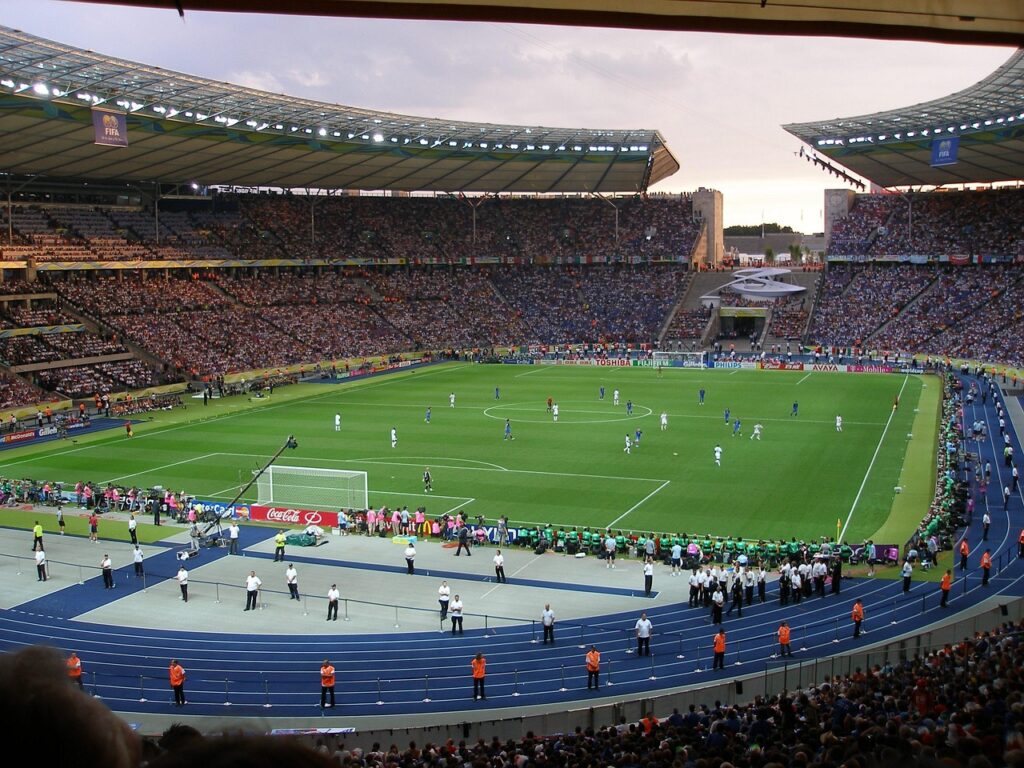
Image: GlobalBeat / 2026
2026 World Cup broadcast negotiations stall in China and India over record U.S. pricing
James Okafor | GlobalBeat
FIFA has not closed broadcast deals in China or India for the 2026 World Cup, jeopardizing access for a combined population of 2.8 billion people.
The governing body wants what it calls “record-setting fees” for the tournament hosted jointly by the United States, Canada and Mexico, yet state broadcasters and private channels in Beijing and New Delhi balk at the price tag.
Both regions matter. Chinese audiences averaged 35 million for 2018 World Cup matches, while India is football’s fastest-growing advertising market, FIFA data show. Leaving either territory dark would punch a near $500 million hole in projected broadcast revenue.
FIFA sales director Rhiannon Martin said talks remain “intense” after separate rounds in Zurich and Singapore concluded this week “without final signatures in either market.” She warned negotiators that “deadlines are real.”
Chinese state partner CCTV dropped the 2022 tournament in Qatar over geopolitical tensions. The network’s current negotiating team told reporters it “cannot justify tripling fees when audience measurement systems still lack clarity.”
Tencent Sports briefly held interim streaming rights for the 2022 World Cup. Sources close to the company said the Shenzhen giant may bid again, “but only if the package includes mobile-only tiers rather than all-rights.” They asked not to be named because no offer has gone to FIFA.
India complicates the picture. FIFA seeks one buyer for television, digital and short-form clips within a market where cricket commands 80 percent of sports ad spend. Sony Sports, current rights-holder for the Premier League and FIFA Club World Cup, declined to comment on “acquisition rumors.” Viacom18, backed by Reliance Industries, faces its own $10 billion cricket cost base through 2027, limiting room to spend on football.
Commercial calculations favor American corporations already. Fox, Telemundo and Bell Media pay a combined $1.2 billion in the U.S. market alone. FIFA argues that cricket-centric broadcasters can still profit; the 2026 edition will schedule kick-offs from noon to 9 p.m. Eastern, midnight until dawn in South Asia, an overnight advertising slot broadcasters consider premium.
Negotiating documents obtained by GlobalBeat show a minimum broadcast guarantee for China set at $200 million, a 220 percent jump over 2022, when CCTV never followed through. India’s floor price is listed at $180 million, triple Sony’s last reported figure from 2014.
Xi Jinping’s government linked the bid to broader sports diplomacy, yet officials pointed to a freeze on large international discretionary spending as domestic football projects remain unfinished. A National Radio and Television Administration statement advised “rational evaluation of the tournament’s monetisation model.”
FIFA’s cash model depends on broadcast money. Total revenue for the 2022 World Cup reached $7.5 billion, with media rights contributing $2.6 billion and growing. A major shortfall in China and India would force the body to draw from reserves used for its promised $1.5 million preparation payment to 209 member associations.
Senior accountant at FIFA’s Finance Committee, Leni Fischer, told delegates in March that “any gap larger than $300 million would freeze the start of member association payments and slash prize money.” Prize money already set at $440 million for 2022 may increase 25 percent for the 48-team event.
The hosting nations remain spectators for now. Private merchandisers worry that unblocking Chinese and Indian eyeballs affects sales forecasts. Fanatics, the U.S. licensed merchandiser, projected $2.6 billion jersey revenue, half of it outside North America, banking on Asian television. “Unknown reach hits planning,” a company source confirmed.
Broadcasters sense leverage. The World Cup rarely shifts date, and FIFA needs revenue to cover activity quotas promised to the expanded lineup of 48 nations. Nick Quraishi, senior media analyst at Enders Analysis, wrote in a client note that “stalemate past June 1 would persuade FIFA to slice rights into smaller packages, lowering overall yield.”
Spinroom tactics surfaced. FIFA offered China exclusive documentary access to the Chinese national team should qualification succeed, sources familiar with the offer said. The suggestion fell because the men’s side failed in Asian qualifiers and sits ranked 88th. Women’s qualification starts in 2027, post-tournament.
India’s national team is also absent, removing home-team ratings value. The All India Football Federation argued the sport benefits “long-term” but cannot drive state subsidies to private networks. Star Sports channel head Sanjog Gupta said executives must “treat every dollar as if it were a rupee.”
Chinese social media reaction has tuned out. Sina Weibo lists World Cup broadcast as trending topic only on Saturday nights during Europe-based fixtures, not midweek. Commentator Liu Jie predicted “fewer than 10 million cumulative weekend viewers” without local language pay-TV or free channels carrying marquee games.
India’s young audience offers optimism. FIFA data claim 125 million Indians watched at least 30 minutes of the 2022 final, but the country delivered only $70 million in official media rights, lower than the Netherlands population 17 million. “Premium sport needs paywall, but India still prefers ad-funded primetime,” Kaushal Saraf, analyst at Digital Sports Asia, added.
Background
FIFA commercialized television rights globally starting with the 1954 tournament, originally managed by host broadcasters. The 1994 World Cup in the United States marks the first time FIFA packaged international feeds into centralized rights sales, capturing $60 million outside host markets. Rights revenue climbed to $1.1 billion by 2010 and doubled by Russia 2018 after the expansion of digital platforms.
China’s relationship with football governing bodies has swung between investment and tension. President Xi declared an ambition to host and win a World Cup by 2050, spawning a property-fuelled club boom that collapsed in 2021 under debt controls. CCTV previously dropped games involving Manchester United after supporters protested Hong Kong policy in 2019, showing how politics overwhelms sport spending when costs surge.
India entered FIFA calculations only after smartphone penetration crossed 600 million users in 2020, boosting streaming apps Dream11, Jio and Hotstar. Football is still the fourth-watched sport, behind cricket, field hockey and kabaddi, but urban surveys by Ormax show 45 percent of respondents aged 15-34 named Lionel Messi or Cristiano Ronaldo as favorite athlete, ahead of cricketer Virat Kohli for the first time.
What’s Next
FIFA must sign contracts by September 1 to meet internal Repucom advertising booking schedules, leaving four months to bargain, or risk falling back to a tender process that could split rights between pay-TV and streaming services in either country. A FIFA council meeting in July could lower the minimum guarantee, yet insiders say president Gianni Infantino resists because current books project a $500 million surplus for the cycle.
The standoff is bigger than one tournament. If China and India blackout, U.S. advertisers may pull the plug on Asian language campaigns, shrinking the hype that local organizers bank on for selling a tournament already marketed as the “most American World Cup ever.”
Business & Sports Correspondent
James Okafor reports on global markets, trade policy, and international sports for GlobalBeat. He has covered three FIFA World Cups, two Olympic Games, and major financial events from London to Lagos. He specialises in African economies and emerging market stories.