AI technology helps doctors detect colon cancer at local surgical center
Local surgical center adopts AI to improve colon cancer detection accuracy, doctors report.
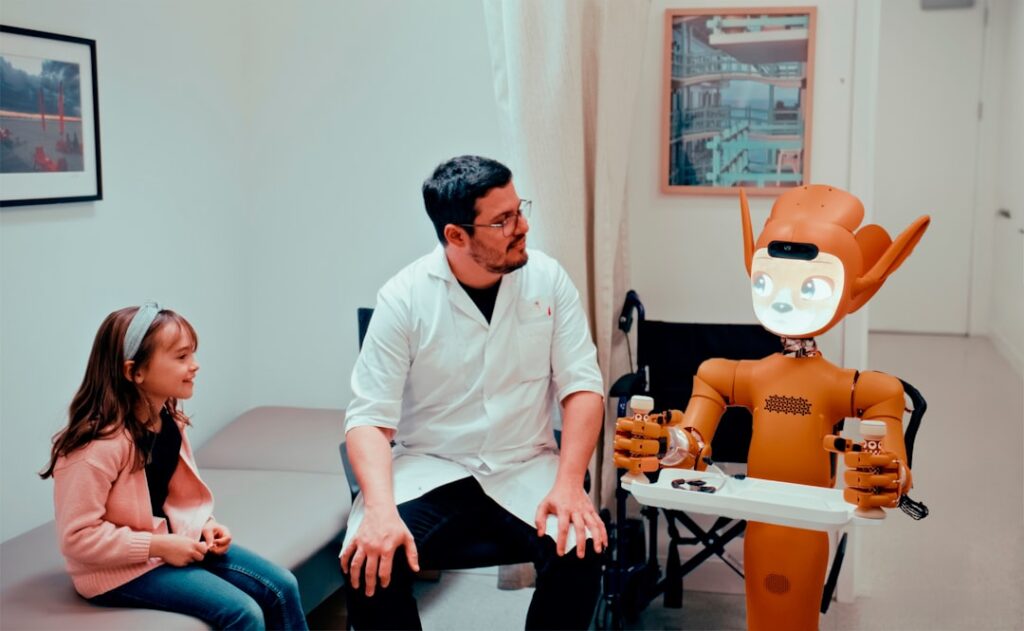
Image: GlobalBeat / 2026
AI colon cancer detection spots tumors at Louisiana surgical center
Sarah Mills | GlobalBeat
A Lake Charles surgical center reported catching 12 early-stage colon tumors in 4 months after adding AI software to routine endoscopies.
The system flagged one malignancy that 3 veteran surgeons had missed during the same procedure, physicians told reporters Tuesday.
Colorectal cancer kills about 53,000 Americans yearly, often because small flat lesions slip past human eyes. Louisiana posts the nation’s third-highest death rate from the disease, state health data show.
Dr. Phillip Guidry, gastroenterologist at The Surgical Specialists, said his team adopted the Medtronic GI Genius module in January after a 30-minute training session. “We plug it into the existing scope. A green box flashes when the algorithm thinks it sees something odd. I decide whether to biopsy,” he said.
The device, cleared by FDA in 2021, compares each video frame to 13 million archived polyp images in 0.04 seconds. A European trial of 2,400 patients found it raised adenoma detection rates by 14%, results published in Gut showed.
Lake Charles results exceeded that average. Between January and April the group performed 418 screening colonoscopies and removed 152 polyps. Twelve proved cancerous; 38 were advanced adenomas likely to turn malignant. The AI suggested 11 of the cancerous sites and 34 of the high-risk adenomas, Guidry said.
Patients learned the news faster. Pathology reports that once took 10 days arrived in 3 because the software mapped exact coordinate coordinates for the lab, administrator Sheila Henning explained. Faster diagnosis slashed anxiety calls to the office by half, she added.
Cost worried hospital executives at first. The disposable AI cartidge adds $65 to each scope. Medicare reimburses nothing extra. Yet finance director Craig Mire said the center still gains because insurers pay flat fees for cancer care. Catching disease earlier moves treatment from hospital operating rooms to the outpatient endoscopy suite, saving roughly $4,000 a case.
Word spread. Colonoscopy bookings rose 22% after the first cancer story hit the local American-Press, marketing chief Jennifer Long said. Several patients requested the “robot test” by name, even though Louisiana law does not allow direct-to-consumer advertising for specific devices.
Competitors took notice. Lake Charles Memorial Hospital announced it will install rival AI scopes by August, spokeswoman Kelsey Burk said. West Calcasieux Cameron Hospital has applied for a state technology grant to fund two modules, CEO Janice Hudgins confirmed.
Scope-makers sense a land grab. Boston Scientific rolled out an update last month that promises 20% higher sensitivity for sessile serrated lesions, the hardest type to spot. Olympus will bundle AI with its newest EVIS X scopes next quarter, sales manager Todd Foster revealed at a Chicago trade show.
Skeptics warn the gadgets can hallucinate. A Mayo Clinic analysis of 1,500 AI-assisted procedures found false-positive marks on 7% of clean colons, lengthening exams by 3 minutes and raising sedation risk. “You still need a good eye. AI is a second set, not a replacement,” Dr. Michael Wallace said.
Guidry agrees. He rejected 18% of the system’s prompts during the first 100 cases, mostly on diverticular folds the algorithm mistook for flat polyps. “I tell residents: treat it like a nervous medical student who won’t stop raising a hand,” he said.
Privacy advocates raise another flag. Video from each scan feeds back to Medtronic servers for model updates. Company privacy officer Laura Manley said frames strip patient identifiers before transmission and meet HIPAA standards. State senator Mark Abraham has asked the Louisiana health department to audit that claim.
Regulators move slowly. FDA is drafting rules that could require AI-device makers to reveal racial bias data after studies showed lower detection rates in dark mucosa. Black Louisianians die of colon cancer at rates 30% higher than whites, tumor registry figures show.
Background
Colonoscopy became the U.S. gold standard for screening in 2000 when Katie Couric’s televised exam pushed national rates to 60% for adults over 50. Progress plateaued; today one in three eligible Americans still skip testing.
AI entered endoscopy in 2017 when Japanese researchers showed a neural network outperformed trainees by 30%. China approved the first commercial device in 2019; FDA followed two years later amid pressure to cut missed cancer rates.
Louisiana ranks near bottom in preventive care access. Eleven parishes lack a single gastroenterologist, forcing residents to drive hours. The state legislature last year extended Medicaid coverage to cover screening at 45 instead of 50, but only for low-income residents.
What’s Next
Guidry’s group will present 6-month outcomes to the American College of Gastroenterology meeting in October. If results hold, state Medicaid officials say they could add AI scope surcharges to the fee schedule by January 2027.
Private insurers eye the numbers. Blue Cross Blue Shield of Louisiana has formed a technology assessment panel that plans to rule on coverage by December. A favorable vote would drop patient copays from $240 to zero for AI-enhanced screenings, chief medical officer Dr. Steve Carson said.
Technology & Science Editor
Sarah Mills is GlobalBeat’s technology and science editor, covering artificial intelligence, cybersecurity, public health, and climate research. Before joining GlobalBeat, she reported for technology desks across Europe and North America. She holds a degree in Computer Science and Journalism.