Trump’s comment about negotiations on Taiwan heightens concerns over China
Trump suggests Taiwan pay the U.S. for defense, prompting Beijing to warn against any negotiation over the island it claims.
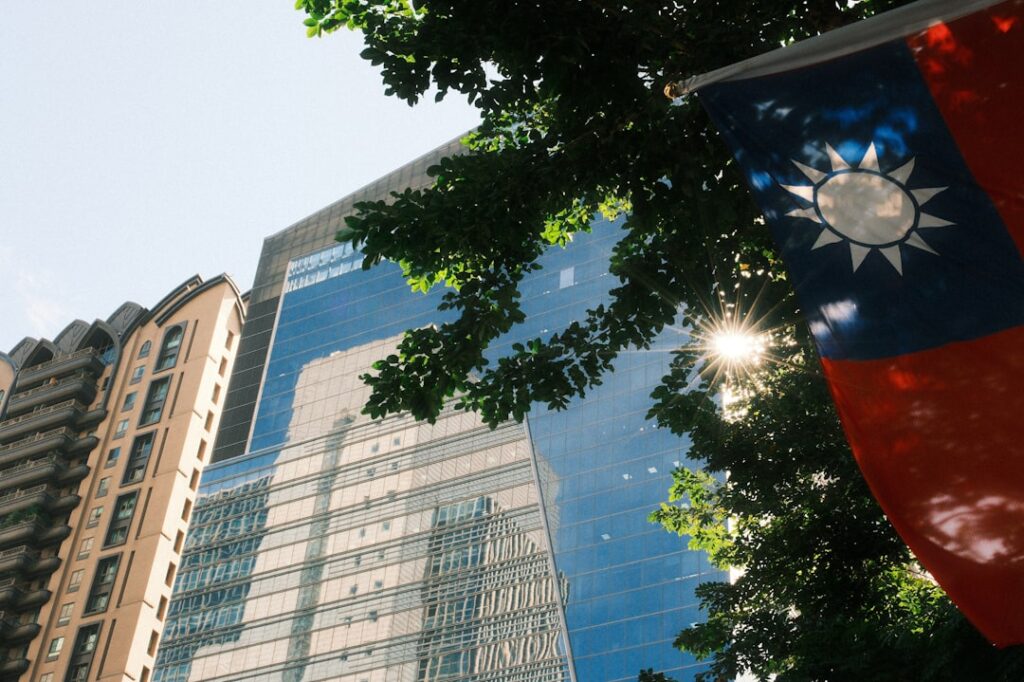
Image: GlobalBeat / 2026
Trump Taiwan China comment prompts Beijing military response
Muhammad Asghar | GlobalBeat
President Donald Trump said he would “negotiate with China” over Taiwan’s future, sending shock waves through Taipei and triggering Chinese naval drills off the island.
The White House offered no timeline for any talks, but China’s Eastern Theater Command announced live-fire exercises within 3 hours of Trump’s remarks late Thursday.
Taiwan has never been ruled by Beijing since the Chinese civil war ended in 1949. The island operates as a de-facto independent state with its own military, currency and elected government, yet only 12 countries grant it formal diplomatic recognition. Washington switched recognition to Beijing in 1979 but kept a pledge to help Taiwan defend itself.
“We will negotiate with China on Taiwan,” Trump told reporters outside the White House after returning from Florida. “We want peace. We want stability. And we think we can get a great deal for everybody.”
Pressed on whether the U.S. defense commitment to Taipei remained intact, Trump replied: “Everything is on the table.”
Taiwan’s presidential office responded within 45 minutes. “Our sovereignty is not for sale,” spokesperson Karen Kuo said in a midnight statement. “Any change to the status quo must respect the will of 23 million Taiwanese.”
China’s Foreign Ministry followed at dawn with sharper language. “Taiwan is China’s internal affair,” spokesman Lin Jian said in Beijing. “No outsider has the right to bargain away Chinese territory.”
Satellite images released by the U.S. Naval Institute showed a carrier group led by the Shandong sailing 200 km southeast of Taiwan by Friday noon. Taiwan’s Defense Ministry tracked 43 Chinese aircraft and 8 warships conducting “simulated blockade” drills, the largest such surge since August 2022.
Financial markets recoiled. Taiwan’s benchmark index fell 4.3 percent, wiping $62 billion off share values. The island’s dollar dropped 1.1 percent against the greenback, its steepest slide since Covid hit in March 2020.
Japan’s Defense Ministry warned that any conflict would “inevitably spill into our territory,” noting that Okinawa hosts 26,000 U.S. service members. South Korea called an emergency National Security Council session, while the Philippines moved to open two new bases facing the Taiwan Strait under its 2024 Enhanced Defense Cooperation Agreement with Washington.
Congress reacted along partisan lines. “Unilateral negotiations over a democratic ally are reckless,” Senate Foreign Relations Chair Jack Reed told reporters. Republican Senator Tom Cotton countered that “creative diplomacy beats stale status quo.”
Trump’s own former security adviser Robert O’Brien broke ranks. “Taiwan isn’t a real-estate parcel,” O’Brien said on Fox Business. “Signaling we might trade it away invites aggression.”
Private equity groups with chip exposure rushed calls Friday. Taiwan Semiconductor Manufacturing Company supplies 92 percent of the world’s most advanced processors. One Taipei-based fund manager, asking not to be named, said clients wanted “out of anything fab-linked by Monday.”
The episode revises a decades-old script. Since 1979 Washington has sold Taiwan arms under the Taiwan Relations Act but avoided formal recognition. Trump himself approved $18 billion in weapons sales during his 2017-2021 term while president, yet his new rhetoric hints at a transaction model similar to Ukraine rare-mineral talks.
Several factors may be driving the shift. Treasury data released Wednesday showed China dumped another $12 billion in U.S. debt in April, taking holdings to an 18-year low. Trump wants Beijing to revive purchase pledges made in the 2020 Phase One trade deal he once hailed.
Domestic politics also loom. Trump faces a budget showdown with Congress this fall and campaigned on slashing overseas spending. Floating a Taiwan deal pressures lawmakers to fund his domestic agenda.
Background
Taiwan split from the mainland in 1949 after Mao Zedong’s forces defeated the Nationalists in the Chinese civil war. The defeated Kuomintang regime fled to the island 180 km across the strait and maintained it was the legitimate ruler of all China. Beijing has claimed sovereignty ever since, pledging eventual “reunification” while Taipei embraced full democracy in the 1990s.
Washington established diplomatic ties with Beijing in 1979 but Congress simultaneously passed the Taiwan Relations Act, requiring the U.S. to provide defensive weapons and treat threats to the island as a matter of “grave concern.” Every president since has approved arms sales while verbally endorsing a “One China” policy that acknowledges Beijing’s position without recognizing its claim.
What’s Next
Taiwan’s parliament will vote next week on an extra $8.6 billion defense package that includes shore-to-ship missiles and U.S.-made drones. China finishes its 3-day drill Sunday; analysts expect another sortie near the median line dividing the strait. Treasury Secretary Scott Bessent is scheduled in Beijing on June 2 to discuss tariff relief, giving both sides a venue to gauge whether talks on Taiwan are real or rhetorical.
Trump’s suggestion unleashes a variable Washington long kept locked. The next move belongs to Beijing, which must decide if the offer is bait or capitulation, while America’s allies calculate whether U.S. security guarantees still cover their own borders.
Senior Correspondent, World & Geopolitics
Muhammad Asghar covers international affairs, conflict zones, and US foreign policy for GlobalBeat. He has reported on events across the Middle East, South Asia, and Eastern Europe, with a focus on the intersection of diplomacy and armed conflict. He has been writing wire-service journalism for over a decade.