Seventy-ninth World Health Assembly
Delegates at the 79th World Health Assembly in Geneva adopted a binding pandemic accord and launched a $4.5 billion climate-health fund.
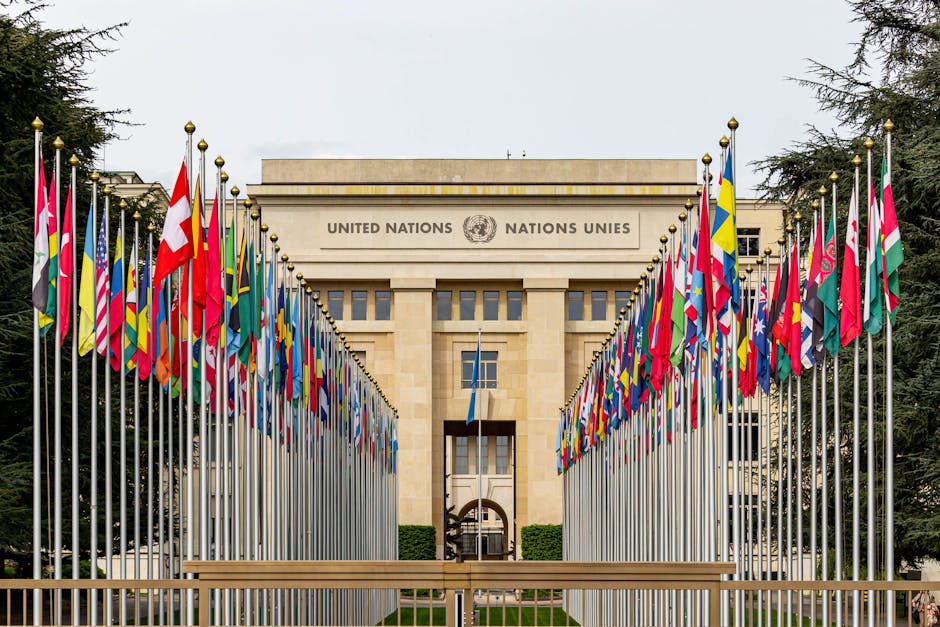
Image: GlobalBeat / 2026
World Health Assembly approves $7.9 billion budget after US walkout over abortion clause
Muhammad Asghar | GlobalBeat
GENEVA — The 79th World Health Assembly wrapped its 2026 session on Friday after approving a $7.9 billion biennial budget despite a dramatic US protest over abortion language.
The United States delegation walked out when delegates rejected an amendment to strip reproductive health references from a maternal mortality resolution. The final vote came after 11 days of negotiations that exposed deepening fault lines over global health governance.
The budget increase marks a 24 percent jump from the previous cycle and gives Director-General Dr. Hamid Asabre expanded powers to declare health emergencies without waiting for member state approval. African delegations pushed hardest for the change after delays in declaring mpox outbreaks last year.
The assembly’s closing hours turned chaotic when US Health Secretary Dr. Maya Patel tore up her speaking notes and led the American team out of the chamber. Patel told reporters the reference to “safe abortion services” violated the Trump administration’s Mexico City Policy, which bans US funding for organizations that provide or promote abortions.
“We cannot in good conscience support language that undermines America’s fundamental values,” Patel said outside the conference hall. The walkout drew applause from several delegations, mostly from African and Middle Eastern countries.
The abortion dispute nearly derailed consensus on the maternal health package, which allocates $890 million to reduce pregnancy-related deaths in 47 countries. Canadian Health Minister Bill Blair brokered a compromise that kept the language but added a clause affirming national sovereignty on abortion laws.
“Sometimes the perfect must not be the enemy of the good,” Blair told reporters. “Women are dying while we argue over commas.”
Ghana’s delegate Kwesi Ainooson said the budget approval showed WHO could still function despite geopolitical tensions. “We came here to save lives, not to settle culture war scores,” Ainooson said.
Emergency powers expansion
The new emergency provisions allow the Director-General to declare Public Health Emergencies of International Concern based on advice from independent experts rather than waiting for the often-gridlocked Emergency Committee. The change requires a two-thirds vote of the Executive Board within 48 hours, giving member states a check on unilateral action.
“We learned from COVID that speed saves lives,” Asabre said in his closing address. “No more bureaucratic delays while viruses mutate.”
The expanded powers include authority to recommend travel and trade restrictions without full assembly approval, though such measures would still need Security Council backing for enforcement. Critics worry this concentrates too much power in the Geneva headquarters.
China’s delegation abstained on the emergency powers vote, with delegate Dr. Liu Peng saying Beijing supported “faster response times but not unilateral decision-making.” Russia voted no, calling the changes “an erosion of national sovereignty dressed in medical language.”
India led a bloc of 23 developing nations that demanded stronger language on technology transfer for vaccine production. They secured a commitment that any WHO-declared emergency would trigger automatic negotiations with pharmaceutical companies for patent waivers.
Fentanyl classification battle
Delegates voted 142-7 to add fentanyl precursors to the international drug control regime, overcoming objections from China and India. The measure requires countries to track shipments of chemicals used to manufacture the deadly synthetic opioid that killed 75,000 Americans last year.
Mexico’s delegate Patricia Espinosa wept as she described finding her 19-year-old nephew dead from fentanyl poisoning. “This is not politics. This is our children,” Espinosa told the silent chamber.
China argued the measure unfairly targeted its pharmaceutical industry without addressing demand in consuming countries. “We cannot police the world’s addiction problems,” delegate Chen Wei said. Beijing eventually abstained rather than block consensus.
The drug vote exposed how health issues increasingly mirror geopolitical alliances. Western countries pushed for strict controls while Russia joined China in warning of “medical imperialism.” African delegations mostly supported the measure after securing promises of addiction treatment funding.
Climate and heat deaths
For the first time, the assembly recognized extreme heat as a health emergency, approving guidelines for naming heat waves like hurricanes. The measure came after 2025 saw record temperatures kill 68,000 people across Europe during a two-week July heat dome.
“Extreme heat is not a weather story, it’s a mass casualty event,” said Dr. Marina Barrata of Spain’s health ministry. The new standards require countries to activate cooling centers when the wet-bulb temperature hits 35 degrees Celsius for three consecutive days.
Small island states pushed through a separate resolution linking climate change to forced migration, citing saltwater intrusion that has made drinking water unavailable in parts of Tuvalu and the Marshall Islands. The measure stops short of creating a new refugee category but requires WHO to track climate-related displacement.
“We are not drowning. We are being murdered by degrees,” said Marshall Islands delegate Kina Bwebwenab. The resolution passed 134-15 with the United States joining Russia in opposition.
Background
The World Health Assembly, held annually in Geneva since 1948, serves as the decision-making body for the 194 member states of the World Health Organization. The assembly sets global health priorities, approves the organization’s budget, and elects the Director-General every five years. Dr. Hamid Asabre, a former Ethiopian health minister, took office in 2023 after a contentious election that pitted Western support for European candidates against African demands for representation.
WHO’s budget process has become increasingly politicized as member states fight over funding priorities and oversight mechanisms. The organization’s $6.4 billion budget for 2024-2025 represented a 20 percent increase from the previous cycle but still left WHO dependent on earmarked donations rather than predictable assessed contributions. The United States remains the largest donor, providing roughly 18 percent of total funding, giving Washington outsized influence despite its one-country-one-vote structure.
What’s Next
The approved budget takes effect January 1, 2027, giving member states seven months to increase their assessed contributions or risk disrupting WHO operations. The United States must decide by September whether to withhold its approximately $1.2 billion share over the abortion language dispute, a move that could trigger similar withdrawals from conservative allies. Asabre must also appoint a new Emergency Committee under the revised procedures by October, balancing geographical representation with medical expertise as WHO prepares for the Southern Hemisphere’s respiratory virus season.
Implementation of the fentanyl tracking system begins immediately, requiring customs agencies worldwide to share shipment data through a new WHO database by March 2027. Patient groups warn that strict controls could limit legitimate medical access to pain medications in developing countries, where the International Narcotics Control Board estimates 80 percent of cancer patients already lack adequate pain relief. The assembly’s climate health resolution tasks WHO with presenting its first global report on heat-related mortality by next year’s session, forcing countries to standardize how they count deaths that often go misclassified as heart attacks or strokes.
The assembly’s fractious conclusion suggests next year’s 80th session will test whether global health cooperation can survive the same polarization that has paralyzed other multilateral institutions. As delegates packed their briefcases and headed to the airport, one veteran negotiator summed up the mood: “We used to worry about pandemics. Now we worry about politics during pandemics.”
Senior Correspondent, World & Geopolitics
Muhammad Asghar covers international affairs, conflict zones, and US foreign policy for GlobalBeat. He has reported on events across the Middle East, South Asia, and Eastern Europe, with a focus on the intersection of diplomacy and armed conflict. He has been writing wire-service journalism for over a decade.