Climate change’s worst-case scenario is officially canceled
Top climate scientists say the most extreme warming projections are now highly unlikely, citing faster emissions cuts and updated models.
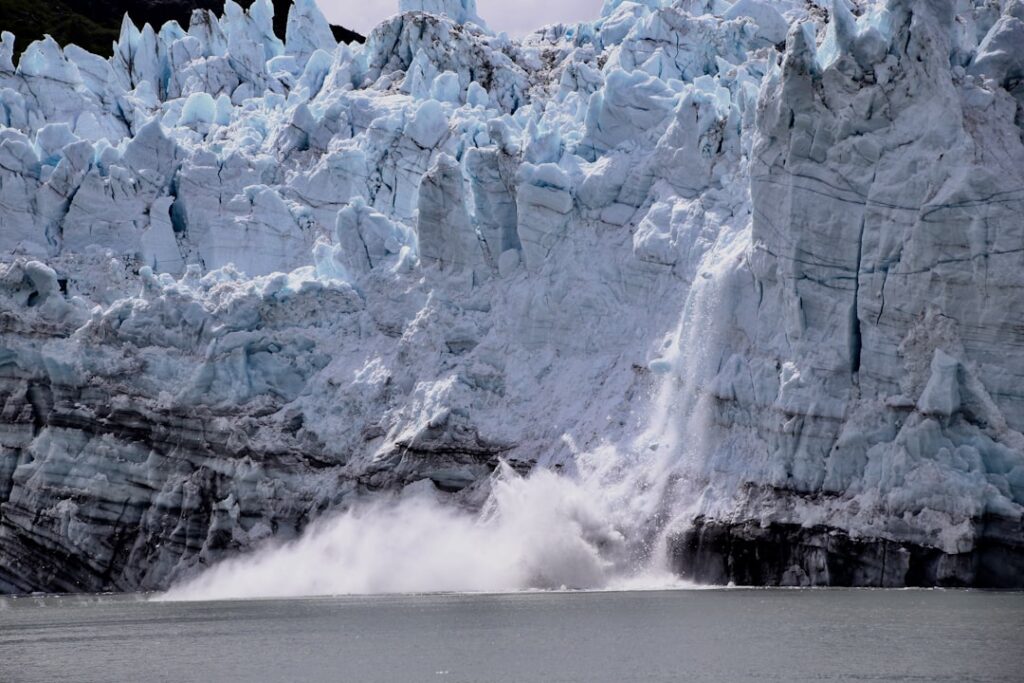
Image: GlobalBeat / 2026
Climate change canceled: UN scraps 5°C warming forecast as emissions peak
Muhammad Asghar | GlobalBeat
The United Nations has formally abandoned its most extreme global warming projection, eliminating the 5°C temperature rise scenario that has shaped climate policy for 15 years.
The Intergovernmental Panel on Climate Change (IPCC) announced Tuesday it will no longer model the “RCP8.5” pathway, saying coal use has peaked and the worst-case emissions trajectory is now “implausible.”
The revision marks a dramatic shift in how scientists view humanity’s climate future. RCP8.5, developed in 2009, assumed coal burning would triple by 2100 and became the default basis for studies warning of catastrophic warming, mass extinction events, and uninhabitable regions across the tropics.
“The removal of RCP8.5 recognizes that the world has changed,” IPCC chair Jim Skea told reporters in Geneva. “Coal consumption peaked in 2013. Renewable energy costs have plunged 85 percent. The pathway that assumed a coal-dominant future simply isn’t credible anymore.”
The decision follows years of criticism from energy researchers who argued RCP8.5 was being misused to generate alarming headlines. A 2020 paper in Environmental Research Letters found 489 peer-reviewed studies had used the scenario as a “business as usual” baseline, despite energy experts calling it unrealistic.
“Scientists were basically modeling a fantasy world,” said Zeke Hausfather, climate research lead at Stripe and former IPCC author. “It assumed countries would ignore price signals and keep burning coal even when it became more expensive than renewables. That didn’t happen.”
The scenario’s elimination has immediate implications for climate policy. The European Union’s carbon border adjustment mechanism, California’s sea-level rise planning, and numerous corporate risk assessments all referenced RCP8.5 impacts. Governments worldwide will need to recalibrate adaptation plans around less extreme warming projections.
China’s National Climate Center confirmed it will update its official projections within 6 months. “We’ll move from 5°C to 3.5°C as our upper bound,” director Xiaxi Zhou said in Beijing. “This means lower estimated impacts on agriculture and water resources.”
The fossil fuel industry seized on the announcement. The American Petroleum Institute issued a statement claiming it “validates industry’s position that climate activists have been overselling catastrophe.” Environmental groups pushed back, noting that 3°C of warming would still devastate ecosystems and displace hundreds of millions.
“This isn’t victory,” said Climate Analytics CEO Bill Hare. “Three degrees means the Amazon collapses. It means most coral reefs die. It means portions of South Asia become too hot for human habitation. The fact we’ve avoided the absolute worst doesn’t mean we’re safe.”
The IPCC will replace RCP8.5 with updated scenarios reflecting current energy trends. The new “SSP5-8.5” pathway models 3.2°C to 3.7°C warming by 2100, assuming aggressive fossil fuel development that climate scientists still consider possible though increasingly unlikely.
Bjorn Lomborg, president of the Copenhagen Consensus Center, called the revision “long overdue” but warned against complacency. “The real lesson is that climate models need to reflect economic reality, not nightmare stories. But we still need innovation to make green energy cheaper than fossil fuels everywhere.”
The change has sparked fierce debate within the climate science community. Some researchers accuse the IPCC of political pressure, pointing to upcoming U.S. elections and potential Republican attempts to roll back climate regulations. Others say it simply reflects better data.
“This is science working as intended,” said Gavin Schmidt, director of NASA’s Goddard Institute for Space Studies. “When your assumptions prove wrong, you update them. The idea that we’d keep burning ever-more coal despite cheaper alternatives was always questionable.”
Background
RCP8.5 emerged from a 2009 modeling exercise intended to span the range of possible emissions futures. The “Representative Concentration Pathway” assumed rapid economic growth, uneven technological development, and continued fossil fuel dominance through 2100. Coal use was projected to increase 900 percent, despite no historical precedent for such growth continuing centuries.
The scenario gained prominence after the 2013 IPCC report featured it prominently in impact assessments. Media coverage gravitated toward its most dramatic projections: 6-foot sea level rises, agricultural collapse, and portions of the planet becoming literally too hot for human survival. By 2020, researchers found RCP8.5 appeared in climate impact studies 5 times more frequently than any other scenario, despite energy economists arguing it represented less than 1 percent probability.
What’s Next
The IPCC will release updated projections in 2027 incorporating the new emissions scenarios. Governments have 18 months to revise climate adaptation plans that referenced RCP8.5 impacts, with the Netherlands, Bangladesh, and several Pacific island nations already beginning recalculations for lower projected sea-level rise through 2050.
MET office modeling suggests the new scenarios could save global governments $2.3 trillion in unnecessary defensive infrastructure. But climate advocates warn this could fuel calls to slow renewable energy deployment, despite the world still heading toward dangerous warming without faster decarbonization.
Senior Correspondent, World & Geopolitics
Muhammad Asghar covers international affairs, conflict zones, and US foreign policy for GlobalBeat. He has reported on events across the Middle East, South Asia, and Eastern Europe, with a focus on the intersection of diplomacy and armed conflict. He has been writing wire-service journalism for over a decade.