‘Scotland’s wild ride from false dawns and fatalism to tilt at history’
Scotland face Ireland on Saturday with a first Six Nations title in 25 years within reach after decades of near-misses.
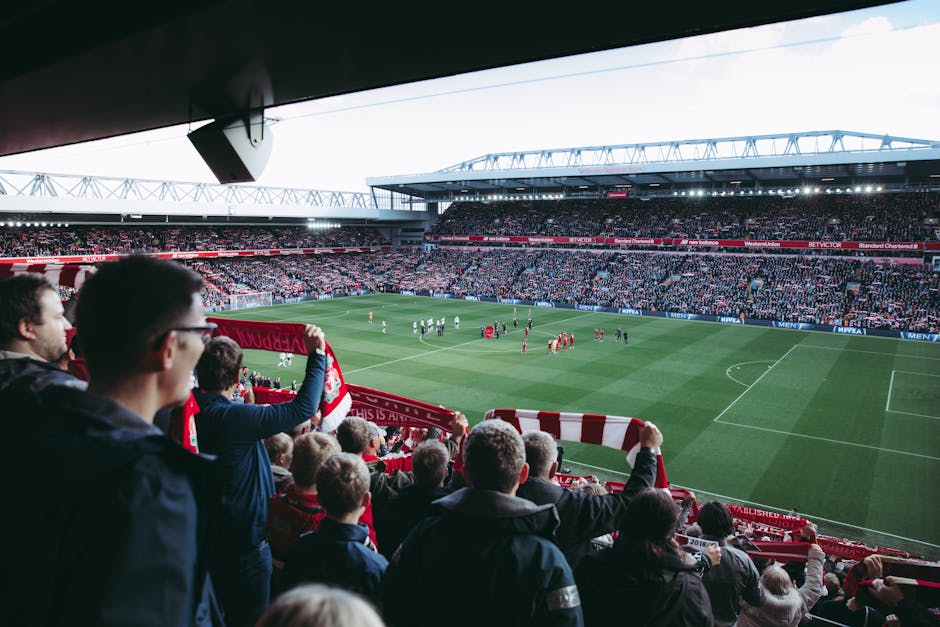
Image: GlobalBeat / 2026
Scotland rugby history on brink at Dublin showdown
A Six Nations title eluded Scotland for 25 years — Saturday offers redemption
James Okafor | GlobalBeat
📌 KEY FACTS
• Scotland have not won the Five/Six Nations title since the tournament expanded in 2000
• Ireland, the reigning Grand Slam champions, stand between Scotland and the trophy in Dublin
• A Scotland victory of eight points or more coupled with England beating France would clinch the championship
• Kick-off 4.45 pm local time at Aviva Stadium, final round of 2024 Six Nations
• Last Scottish outright championship: 1990, when they denied England a Grand Slam at Murrayfield
Edinburgh’s pubs emptied in slow motion last weekend as Italy’s last-second conversion sailed wide, gifting Scotland a 26-18 escape that kept their title dream breathing. Forty-eight hours later, tournament arithmetic showed the path: win in Dublin by eight and hope England do them a favour in Lyon. After a quarter-century of false dawns, Scotland rugby history could finally turn a fresh page on Saturday.
For the first time since Italy joined in 2000, the Scots enter the final round in control of their own fate. Three wins from four, including a first victory at Twickenham since 1983, gives Gregor Townsend’s side 16 table points, one behind Ireland and level with France. Yet a superior points difference means a big win at the Aviva Stadium could end 25 years of waiting.
Broken windows and battered belief
Between 2000 and 2015 Scotland finished last eight times, their championship campaigns often over by March. The nadir came in 2012 when a wooden-spoon decider against Italy in Rome produced a 13-6 defeat so limp that angry fans smashed the team bus window. “We probably deserved it,” former lock Jim Hamilton reflected this week on BBC Scotland. “Losing felt normal.” The squad that travels to Dublin carries none of that fatalism; ten starters are aged 26 or under and seven play for clubs that have won European titles in the past five seasons.
Townsend’s quiet revolution
When the former fly-half replaced Vern Cotter in 2017 he vowed to “make Scotland富有弹性 again”, borrowing a phrase from his mentor at Northampton, Wayne Smith.弹性 never appeared in the press release, but the intent translated: stop being easy to beat. Since 2021 Scotland have lost only twice at Murrayfield in 17 Tests, an ironclad home record that provided the platform for rare away wins in London and Paris. The coach’s willingness to pick form players from outside the traditional Edinburgh-Glasgow axis—Newcastle’s Finn Smith, Saracens’ Andy Christie, Exeter’s Sam Skinner—has deepened squad depth without diluting the attacking ethos that produced 18 tries this championship.
Sexton’s last waltz complicates plot
Johnny Sexton will trot onto the Lansdowne turf for his 125th and final Ireland cap, chasing a fairytale send-off that would mirror 2018, when the skipper’s injury-time drop goal secured only the third Grand Slam in Irish history. The 38-year-old’s two previous championship-ending defeats came against Scotland, in 2010 and 2017, statistical fuel for a narrative that refuses to die. “I’m not sentimental about sport,” Sexton said on Thursday, “but I’d be lying if I said the lads didn’t want this for me.” Ireland have won their last 17 home matches; Scotland have not left Dublin with a victory since 2010.
Gain-line gamble that could define era
Townsend’s game plan hinges on tempo. Ireland concede the fewest kicks in the competition, preferring to choke opponents through 25-phase sets, yet they have leaked more metres per carry than any other top-three side. By selecting Blair Kinghorn at full-back instead of the safety-first Stuart Hogg, Scotland signal an intent to counter from deep and attack the edges where James Lowe and Hugo Keenan leave space when hunting turnovers. Analyst Ross Hamilton, who worked with both coaching staffs, says the tactical chess is “a coin-flip: if Ireland dominate territory they cruise; if Scotland can force broken field, their back three terrify anyone”.
Financial stakes soar with pride
A championship would unlock £3.2 million in prize money and an estimated £12 million in sponsorship bonuses, according to Scottish Rugby’s 2023 annual report. More importantly, it would secure a top seeding at the 2027 World Cup draw scheduled for January in Miami. That pathway avoids New Zealand or South Africa in the pool stage, a slice of luck worth up to £5 million in broadcast and ticketing revenue. “We’re conscious of the economics,” SRU chief executive Mark Dodson told The Scotsman, “but the players just want to see 1990 on the wall replaced.”
But the challenge runs deeper than arithmetic. Scotland’s average winning margin in Dublin since 2000 is four points, and only twice have they crossed 25 points on Irish soil in championship rugby. To chase an eight-point buffer risks the very errors—loose kicks, over-chased exits—that allowed Ireland to rack up 82 points in the past two meetings.
Should the dream materialise, the ripple will reach every municipal pitch from Jedburgh to John o’Groats. Picture 11-year-old Eilidh McCann at Gala Rugby Club, togged out on Sunday morning because she stayed up to watch Kinghorn shred Ireland’s fringe defence. A title would mean free coaching clinics, new floodlights funded by SRU legacy grants and, crucially, a fresh poster on the clubhouse wall beside the fading image of Gavin Hastings lifting the 1990Calcutta Cup. One swing of history can reroute a childhood.
Scotland’s bid mirrors a wider northern-hemisphere power shift. Japan’s stunning pool-stage wins in 2019 and 2023 accelerated World Rugby’s $200 million investment in tier-two nations, forcing traditional powers to expand tactical arsenals. France coped by blooding youthful squads; Ireland leaned on central contracting; Scotland mined a diaspora that produced Duhan van der Merwe in South Africa and Pierre Schoeman in South Africa-via-France. A Scottish title would be the third different champion in as many years, the competition’s most democratic era since the 1990s.
The equation is brutal but clear: win by eight or better, then wait for England to topple a French side chasing their own six-point swing. Inside the Scotland camp phones stay off until full-time in Lyon, scheduled 75 minutes after the Dublin whistle. If both results tilt north, the squad will return to Edinburgh airport on Sunday morning where Murrayfield’s west stand will open for a trophy presentation that ends a 25-year itch in Scotland rugby history.