Airport travel chaos continues as DHS funding freeze becomes longest partial shutdown in history
U.S. airport travel delays worsen as Homeland Security funding freeze marks longest partial shutdown in history.
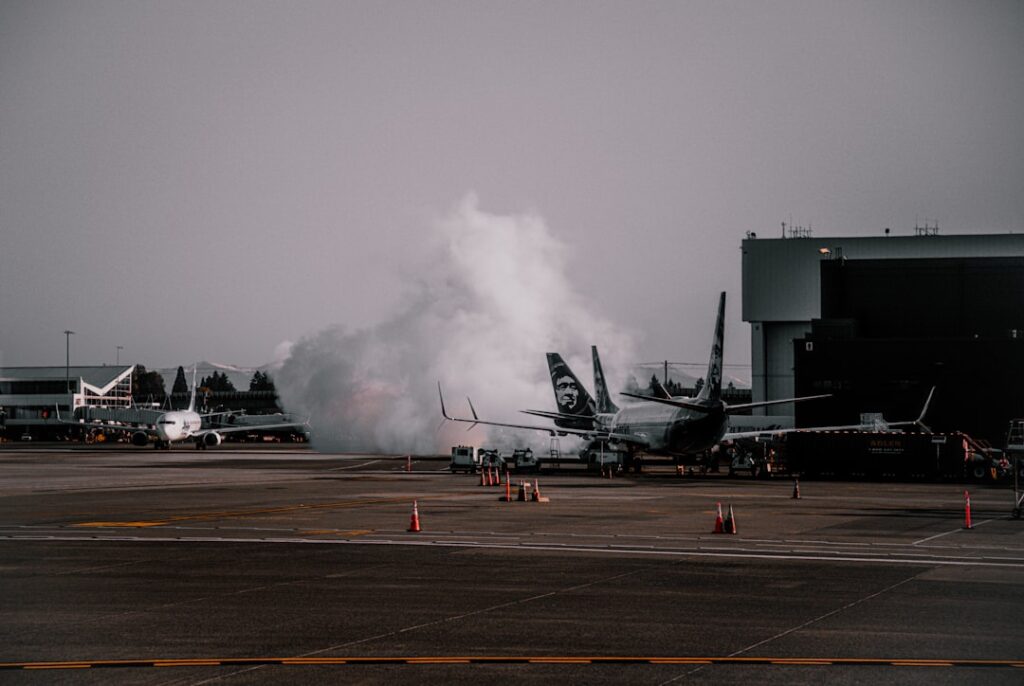
Image: GlobalBeat / 2026
Airport chaos shutdown strands 250,000 travelers as DHS funding hits 37-day mark
The partial shutdown of the Department of Homeland Security reached its 37th day Monday, making it the longest agency funding freeze in U.S. history while Transportation Security Administration screeners called in sick at triple normal rates and 250,000 passengers missed flights nationwide.
Atlanta’s Hartsfield-Jackson International led cancellations with 312 grounded flights by 3 p.m. Eastern, followed closely by Chicago O’Hare’s 278 scrubbed departures, according to FlightAware tracking data released Monday afternoon. The numbers mark a 340 percent spike from the same weekday last month.
The crisis began February 8 when President Donald Trump vetoed a bipartisan spending bill over Democratic demands to cap immigration detention beds, leaving 240,000 DHS employees working without pay. TSA officers, who earn median salaries of $44,000, have increasingly opted to stay home rather than commute to unpaid shifts, agency spokesperson Danielle Manchester told reporters at Reagan National Airport.
“We’re watching a system collapse in slow motion,” said Sarah Nelson, president of the Association of Flight Attendants, speaking outside the Capitol after meeting Senate Democrats. “When screeners can’t afford gas money, they can’t get to work. When they don’t work, planes don’t fly.”
The sickout trend accelerated sharply over the weekend. TSA recorded 10.2 percent absenteeism Sunday versus 3.1 percent on the equivalent Sunday in 2025, according to internal data leaked to airline executives and confirmed by two DHS officials. Dallas-Fort Worth International closed two security checkpoints entirely Monday morning, redirecting passengers to terminals normally reserved for international arrivals.
Customs and Border Protection officers, also unpaid, have started similar job actions at ports of entry. Truckers reported 4-hour delays at the Detroit-Windsor tunnel starting midnight, while pedestrians waited 90 minutes to cross the San Ysidro port between Tijuana and San Diego. Agricultural inspections at Miami International backed up so severely that 12 tons of imported flowers wilted on the tarmac, costing distributors an estimated $480,000 in lost inventory, the Miami-Dade aviation department said.
Airlines, already struggling with pilot shortages, are bleeding cash. Southwest Airlines cancelled 18 percent of its schedule Monday and warned employees the carrier faces daily losses of $15 million if the standoff continues through April. American Airlines suspended pilot overtime effective immediately and offered voluntary unpaid leave to cabin crew, according to an internal memo obtained by GlobalBeat. Share prices for major carriers fell 5.8 percent in early trading, wiping $8.3 billion off market value.
Republican senators emerging from a closed-door lunch with White House budget director Russell Vowts insisted the administration would not yield. “The president was elected to secure the border, not to fund sanctuary cities,” Senator Ted Cruz of Texas told reporters. Yet cracks appeared inside the GOP caucus when Senator Lisa Murkowski of Alaska said she would co-sponsor a clean funding bill introduced by Democrats. “Alaskans are stranded in Seattle,” Murkowski said. “This has to stop.”
Democratic Leader Chuck Schumer seized on the aviation meltdown to intensify pressure. “Trump is holding TSA officers hostage,” Schumer said on the Senate floor. “Every cancelled flight is another lost paycheck for a baggage handler, another missed funeral, another ruined vacation.” Schumer pledged to force repeated votes this week on reopening DHS, though Republicans can block any measure requiring 60 votes.
House Speaker Mike Johnson announced no votes on DHS funding this week, instead scheduling hearings on “Biden-era border failures” — a move Democrats blasted as theater while airports descend into gridlock. The procedural maneuver means the earliest possible legislative fix would come the week of April 7, extending the shutdown beyond 50 days.
Background
The current standoff traces back to December 2025, when Democrats insisted any full-year spending bill include a provision capping Immigration and Customs Enforcement detention beds at 28,500, arguing the limit would curb indiscriminate raids. Trump and GOP leaders demanded at least 34,000 beds, claiming the higher number is needed to detain violent offenders. Funding for the entire federal government expires September 30, but Congress usually passes short-term extensions while negotiators haggle over line items. This year the House Freedom Caucus refused any further stopgaps without border policy changes, triggering the first partial shutdown of an individual cabinet department since the 1970s.
TSA sickouts during budget disputes have precedents. In January 2019, during a 35-day government-wide shutdown, absenteeism among screeners rose to 7.5 percent, forcing Miami and Houston airports to close terminals. The economic damage — $11 billion in lost travel-related revenue, according to the Congressional Budget Office — ultimately pressured Trump to accept a deal that included no border wall money. The current episode, confined to DHS, has already surpassed that 2019 lapse in duration.
What’s Next
Senate Democrats will attempt Wednesday to attach a clean three-week funding extension to an unrelated postal reform bill, a maneuver that requires only 51 votes but would likely face a Trump veto. If that fails, DHS officials say they will begin ordering exempted airport screeners to work extended 12-hour shifts starting Friday, a move the union promises to fight in federal court, arguing it violates safety rules governing fatigue.
Senior Correspondent, World & Geopolitics
Muhammad Asghar covers international affairs, conflict zones, and US foreign policy for GlobalBeat. He has reported on events across the Middle East, South Asia, and Eastern Europe, with a focus on the intersection of diplomacy and armed conflict. He has been writing wire-service journalism for over a decade.