UMW Inaugural AI Expert-in-Residence Shares Insight on Technology’s ‘Tremendous’ Impact
UMW inaugurates first AI expert-in-residence, citing technology’s “tremendous” impact on university programs and regional workforce.
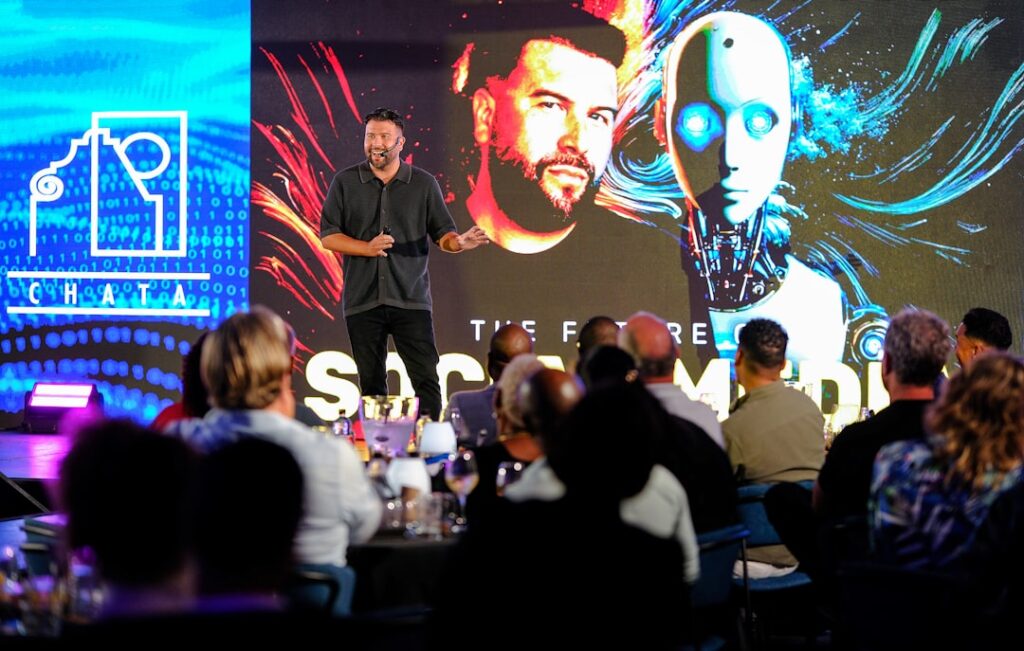
Image: GlobalBeat / 2026
AI expert residence: University of Mary Washington names first AI expert-in-residence to guide campus integration
Sarah Mills | GlobalBeat
Computer scientist Dr. Kiran Misra has taken up the first AI expert-in-residence post at the University of Mary Washington.
Misra spent his inaugural day on the Fredericksburg, Virginia campus demonstrating how large language models can compress a semester of biology notes into 5-minute animated reviews.
The public liberal-arts university created the one-year pilot position after faculty surveys showed 68% felt unprepared to answer student questions on generative AI, according to August results released by the school’s Center for Teaching.
Misra told GlobalBeat the reaction reminded him of his undergraduate campus in 1998 “when the first Napster debates hit — people knew the tech was big, but no one had a playbook.”
His mandate is deceptively simple: give every department, from classics to chemistry, a working recipe for AI tools that still preserves academic integrity.
Misra brings eight years of machine-learning product work at health-tech startup CardioX and a side career building poetry-writing bots that have placed work in 11 literary journals.
University president Troy Paino said the hire signals “we will not outsource the AI conversation to Silicon Valley sales decks” during a faculty reception last Thursday.
Misra will teach no formal courses this fall. Instead he holds drop-in hours in a basement lab whose whiteboard already carries the scribbled question: “What can’t a chatbot grade?”
History chair Allyson Poska said she visited during launch week to ask whether AI could help transcribe 17th-century Spanish ship logs. She left with a Python script that handled 40 pages overnight.
Not every encounter ends in code. English professor Mara Amster argued that asking first-year students to compare their own sonnets to AI output “just teaches them to doubt their voice.” Misra responded by suggesting reverse roles: let the AI doubt itself.
The provost’s office set aside $75,000 for the initiative, covering Misra’s salary, a graduate assistant, and cloud-computing credits drawn from a state fund for experiential education.
Student government passed a resolution Monday asking that AI literacy workshops also target “non-majors who can’t fit extra seminars into work-study schedules.”
Junior biology major Caleb Ng said he attended Misra’s brown-bag lunch out of curiosity and left convinced AI could cut his Western Civilization response time in half. “But the trick is still sounding like me, not the bot,” he added.
Misra’s next project is a discrimination audit. He is feeding 5 years of anonymized grade data into fairness-testing software to see whether earlier AI-infused plagiarism detectors flagged non-native speakers at higher rates.
Results are due in December. If disparities appear, Misra will recommend either re-tuning the tools or scrapping them entirely.
Background
Mary Washington, founded in 1908 as a women’s college, enrolls roughly 4,000 undergraduates and has historically punched above its weight in undergraduate research. The school’s 2022 strategic plan pledged to “explore emergent technologies” without specifying AI, leaving individual professors to improvise.
Across Virginia, public universities have taken varied tacks since ChatGPT arrived. The College of William & Mary convened an AI task force in January 2023 that still has not issued final guidelines, while Virginia Tech embedded AI modules into every first-year writing section last spring. George Mason University opted for a paid plagiarism-detection license that scans submissions against chatbot text.
Private liberal-arts peers beat Mary Washington to the residence concept. Bryn Mawr College appointed an AI scholar-in-residence in 2021, but the position lasted only one semester after grant funding expired.
What’s Next
Misra will present preliminary findings on grade-equity testing at the university’s January faculty retreat, then host a public demo day where each department must pitch one AI assignment ready for spring classes. Failure to participate, Provost Timothy O’Donnell warned, “will not look sympathetic when you request new tech funds.”
Technology & Science Editor
Sarah Mills is GlobalBeat’s technology and science editor, covering artificial intelligence, cybersecurity, public health, and climate research. Before joining GlobalBeat, she reported for technology desks across Europe and North America. She holds a degree in Computer Science and Journalism.