Day 50 of Middle East conflict — Iran says it’s closing Strait of Hormuz again
Iran again announced closure of the strategic Strait of Hormuz on the 50th day of the Middle East conflict, Reuters reported.
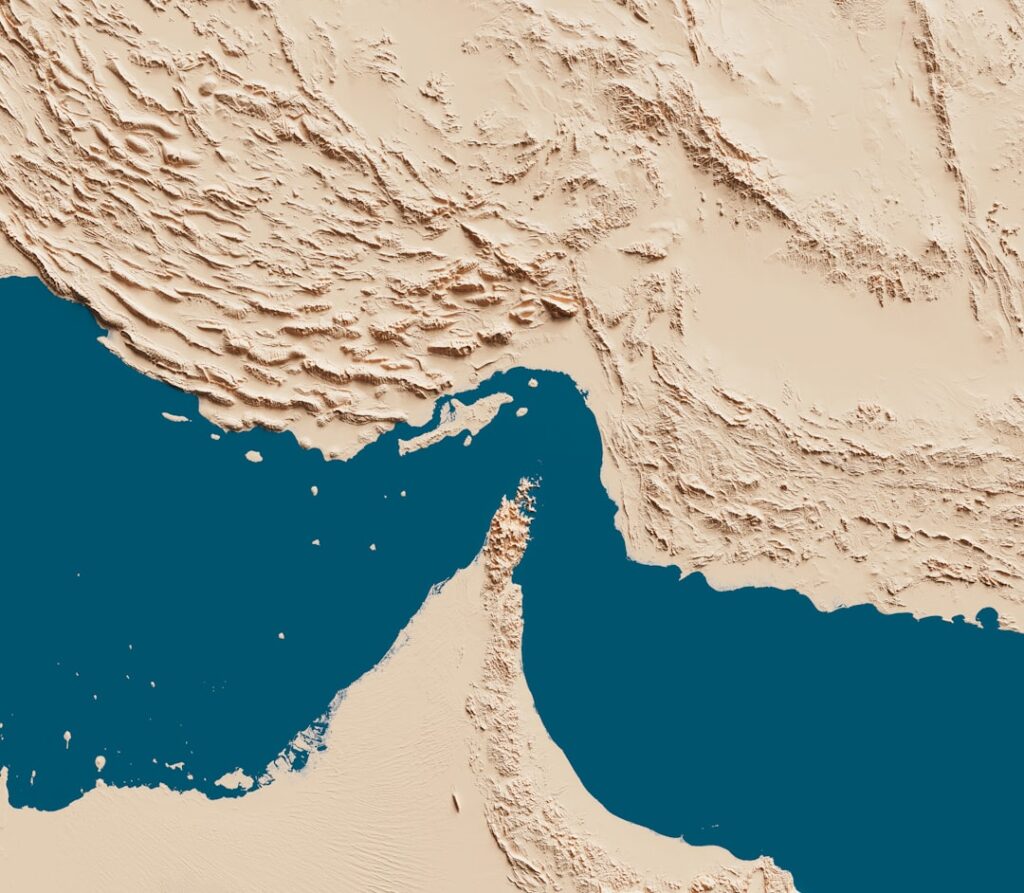
Image: GlobalBeat / 2026
Iran Strait Hormuz closing: Tehran seals oil chokepoint on conflict day 50
Muhammad Asghar | GlobalBeat
Iran’s Revolutionary Guards announced they are again blocking all tanker traffic through the Strait of Hormuz, the world’s most critical oil shipping lane.
The order took effect at dawn, 50 days after Israel first struck Iranian-backed sites across Lebanon and Syria. State television broadcast speedboats circling a halted Suezmax tanker as Guards commander Gen. Ali Reza Tangsiri warned “any hostile ship will be seized.”
Roughly 20 percent of global petroleum exports normally pass through the 33-km wide waterway. Brent crude leapt $8 to $99 per barrel in early Asian trade while insurers priced war-risk premiums at levels unseen since the 1980s Tanker War.
Revolutionary Guards naval units began radioing merchant vessels at 0500 local time, ordering them to anchor in Iranian waters “for inspection,” ship-tracking data showed. At least 11 very-large crude carriers, holding a combined 18 million barrels mainly for Indian and Chinese refiners, complied within three hours. Lloyd’s List Intelligence reported a VLCC bound for Japan was diverted to Omani ports.
Washington warned Tehran it will “act decisively” to keep the strait open.
“If Iran tries to disrupt commercial shipping, it will face consequences,” National Security Adviser Michael Waltz told reporters aboard Air Force One. He did not spell out what measures are planned but said President Donald Trump had been briefed overnight. The Pentagon moved additional F-35 fighters to Al-Dhafra base in the UAE and dispatched destroyer USS Stethem toward the entrance of the strait, officials confirmed.
Britain and France called for an emergency UN Security Council meeting, expected Monday in New York.
UK Prime Minister Keir Starmer condemned the closure as “unlawful interference with international navigation” while French Foreign Minister Jean-Noël Barrot urged “maximum restraint” and said Europe would protect its energy supplies. The EU’s foreign policy chief Kaja Kallas warned any sustained blockade “will not go unanswered,” hinting at additional sanctions on Iran’s drone and missile industries.
A similar Iranian move in January lasted only 36 hours after an Indian-flagged tanker was briefly impounded. This time officials in Tehran vowed “no reversal” until Israel ends its air campaign across the region.
Israeli Defence Minister Israel Katz said the navy had raised its alert level but gave no indication Israeli commerce had been directly targeted. “We have our own ways of securing freedom of navigation,” Katz told Army Radio. Israeli ports of Haifa and Ashkelon remained open Sunday, port authority spokesman Shahar Havilio said. Israel imports no oil by sea although it exports refined products to Europe.
Oil traders factored in immediate shortages.
India, the world’s third-largest crude buyer, sources 60 percent of its supply through Hormuz. State-run refiners Indian Oil Corp. and Bharat Petroleum braced for delays, officials in New Delhi said. South Korea’s industry ministry held an emergency session after learning two super-tankers scheduled to load this weekend were stuck outside the strait, spokesman Park Sung-hyun confirmed. Analysts at Goldman Sachs raised their 3-month Brent forecast to $105 a barrel, citing a potential draw of 2 million barrels per day if the closure persists.
Asian stock markets opened lower, with Tokyo’s Nikkei down 2.4 percent and Shanghai off 1.9 percent on energy-cost fears.
Strategic Petroleum Reserves could offer a buffer, but action is not yet imminent.
The US holds 365 million barrels in government stockpiles, roughly 60 days of Hormuz flow. Analysts said a formal drawdown would need an International Energy Agency agreement, a process that takes weeks. OPEC kingpin Saudi Arabia maintains pipelines to the Red Sea able to reroute about 5 million barrels daily, yet traders doubt Riyadh can fully make up lost Iranian, Iraqi and UAE exports, especially while juggling voluntary output cuts agreed with OPEC+.
Iranian grievances centre on repeated Israeli strikes on its nuclear and missile depots.
Tehran says the week-long Israeli bombing of Syria, Lebanon and Iraq has killed 78 Revolutionary Guards advisers and destroyed drone assembly workshops in Isfahan and Shiraz. Israel rarely confirms individual raids but Minister Katz wrote on social media Saturday that Israel “will continue to act against any threat on our borders.” Iran responded last month with a 400-missile salvo that injured 12 Israeli civilians and led to limited Israeli retaliation on military sites.
Background
The Strait of Hormuz, sandwiched between Iran and Oman, has been a commercial artery since antiquity. Its 3-km wide shipping lanes handle up to 21 million barrels of crude and refined products daily, according to the US Energy Information Administration. During the 1980-88 Iran-Iraq war both belligerents attacked tankers, prompting US-led convoys. Mines, missile boats and helicopters turned the waterway into a graveyard of hulls until a UN-brokered cease-fire ended what traders dubbed the Tanker War.
Tehran has long threatened to choke the strait if its own oil exports are blocked. In 2019 mines damaged several vessels amid the last US “maximum pressure” sanctions campaign; Iran denied responsibility but later seized a British tanker for two months. The current administration in Washington has pledged to stop Iran obtaining nuclear weapons yet has mused about looser oil sanctions if Tehran curbs uranium enrichment, a diplomatic juggling act further complicated by Sunday’s events.
What’s Next
All eyes turn to the Security Council session where the US is expected to push for a resolution condemning interference with shipping. EU diplomats said harsher sanctions targeting Iran’s drone programme could advance as early as Tuesday, while insurers canvassed expanding the Middle East war-risk zone that already adds $400,000 to each tanker voyage.
Insurance exclusions threaten longer-term trade routes.
The world’s largest shipping associations will meet privately in London on Tuesday to decide whether to advise members to avoid Hormuz, a move that could officially classify the strait as a war-risk area and further push up premiums. If the blockade endures, analysts say European and Asian governments might turn to emergency stock releases, but prices at $110-$120 a barrel are “entirely plausible” by summer driving season, JPMorgan commodity strategist Natasha Kaneva warned.
Senior Correspondent, World & Geopolitics
Muhammad Asghar covers international affairs, conflict zones, and US foreign policy for GlobalBeat. He has reported on events across the Middle East, South Asia, and Eastern Europe, with a focus on the intersection of diplomacy and armed conflict. He has been writing wire-service journalism for over a decade.