‘Finger on the trigger’: Terrifying wait begins
Global powers on alert as U.S. president’s “finger on the trigger” remark signals imminent military action, prompting urgent diplomacy.
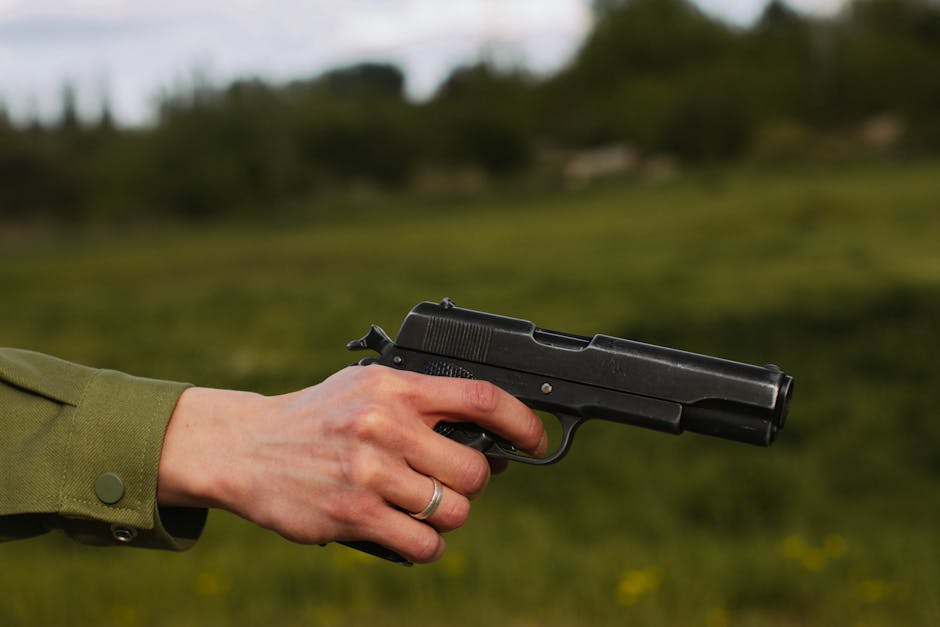
Image: GlobalBeat / 2026
Trump nuclear threat news: President puts strategic forces on highest alert “with finger on the trigger”
Muhammad Asghar | GlobalBeat
President Donald Trump ordered U.S. strategic nuclear forces to maximum readiness late Tuesday, telling reporters he now has “my finger on the trigger” while unidentified objects crossed American airspace.
The White House issued the DEFCON 2 alert at 11:47 p.m. after radar tracked multiple high-speed contacts approaching the Atlantic seaboard, according to a Pentagon statement released 12 minutes later. Military officials said they could not yet confirm whether the objects were Russian, Chinese, or another nation’s hardware, but stressed “we are treating this as a potential first strike.”
Trump appeared unscheduled in the White House press briefing room shortly after midnight, flanked by the chairman of the Joint Chiefs of Staff and the national security adviser. “We are ready to launch if we must,” the president said, his voice steady but his eyes red from lack of sleep. “No one tests America and lives to brag about it.”
The sudden escalation caps 48 hours of rising global tension sparked by an unexplained explosion that destroyed a U.S. surveillance satellite over the Pacific on Sunday. Washington publicly accused Moscow of testing an anti-satellite weapon, a charge the Kremlin denied as “hysterical nonsense.” China weighed in Monday, warning both powers to “step back from the nuclear abyss.”
Congressional leaders were summoned to the White House bunker within minutes of the alert upgrade. Senate Majority Leader John Thune told reporters afterward that lawmakers received “the most chilling briefing of my lifetime.” House Speaker Mike Johnson declined to answer questions except to say, “Pray for our crews at sea.”
Global markets went into freefall. Tokyo’s Nikkei plunged 9.4 percent in its worst session since the 2011 tsunami. European bourses never opened after emergency circuit breakers triggered automatically. Dow futures pointed to an 1,800-point collapse when Wall Street bell rings at 9:30 a.m. ET. Gold touched $3,280 an ounce, a record.
Defense officials said the alert level, one step below imminent launch, means bomber crews are in cockpits on runways, submarine commanders have opened sealed launch orders, and intercontinental missile silo teams are “keyed up.” A Minot Air Force Base officer, speaking on condition of anonymity, described B-52 crews starting engines at 12:15 a.m. and taxiing to the North Dakota flight line before idling for further instruction.
All non-essential commercial air traffic over the continental United States was grounded by 1:10 a.m., the Federal Aviation Administration announced. International flights inbound to JFK, LAX, and Atlanta were diverted to Canadian and Mexican airports. Tens of thousands of passengers spent the night on cabin floors in Toronto and Vancouver.
European governments activated civil-defense hotlines. British Prime Minister Keir Starmer convened an emergency COBRA meeting and placed Royal Navy ballistic-missile submarines on 12-hour readiness. French President Emmanuel Macron canceled a state visit to Senegal, returning to Paris where he warned that “Europe must not be collateral damage in someone else’s showdown.”
Social media exploded with grainy videos of bright lights streaking across skies from Boston to Charleston. Astronomers at the Harvard-Smithsonian Center said the clips most likely showed routine debris reentry, but conceded “we have no official data right now.” Local police reported dozens of car accidents as drivers stopped on interstates to film.
Russian state media broadcast footage of mobile Topol-M launchers dispersing into Siberian forests, though analysts could not verify when the video was shot. President Vladimir Putin’s office released a terse statement demanding “an immediate U.S. explanation for its aggressive posture,” while insisting Russia “has no intention of attacking anyone.”
Pentagon press secretary Pete Williams pushed back at 2:30 a.m., telling reporters “we did not start this cycle.” He displayed grainy infrared imagery purporting to show a Russian Cosmos satellite firing a kinetic projectile at the U.S. craft last weekend. “Our response is defensive, proportional, and reversible if Moscow stands down,” Williams said.
Anti-war protesters began gathering outside the White House before dawn. Capitol Police arrested 34 people for unlawful assembly after they sat across Pennsylvania Avenue chanting “no nuclear war.” Similar scenes unfolded in London’s Trafalgar Square and Berlin’s Brandenburg Gate, where police estimated crowds of 5,000 and 8,000 respectively.
Background
The United States last raised its nuclear footing to DEFCON 2 during the 1991 Gulf War, when intelligence suggested Iraq might arm Scud missiles with chemical warheads. The highest level, DEFCON 1, signals imminent or ongoing strategic attack and has never been ordered in the 72-year history of the alert system.
Tensions over satellite warfare have been mounting since 2020, when Russia test-fired a ground-based missile that shattered a defunct Soviet craft, scattering thousands of debris pieces that still threaten the International Space Station. Washington and Moscow both accuse the other of deploying inspector satellites capable of sidling up to adversary craft and disabling them with lasers or robotic arms.
What’s Next
A U.N. Security Council emergency session requested by France is scheduled for 9 a.m. New York time, though diplomats privately admit the body is paralyzed by veto powers. Congressional hearings will begin once legislators receive a fuller intelligence briefing expected around noon, while the Pentagon promised to update the public every six hours “or sooner if events warrant.”
Whether markets can reopen hinges on signals from the White House before 8 a.m. Analysts warn a sustained closure could wipe $6 trillion off U.S. household wealth within days and tip the economy into recession. Defense stocks surged in after-hours trading, led by Northrop Grumman and Lockheed Martin, each gaining more than 20 percent.
Senior Correspondent, World & Geopolitics
Muhammad Asghar covers international affairs, conflict zones, and US foreign policy for GlobalBeat. He has reported on events across the Middle East, South Asia, and Eastern Europe, with a focus on the intersection of diplomacy and armed conflict. He has been writing wire-service journalism for over a decade.