Global Sports Investment News: 5 Powerful WRC Moves
Global Sports Investment unveiled five major World Rally Championship deals spanning teams, circuits, and technology partners, Brussels Morning reports.
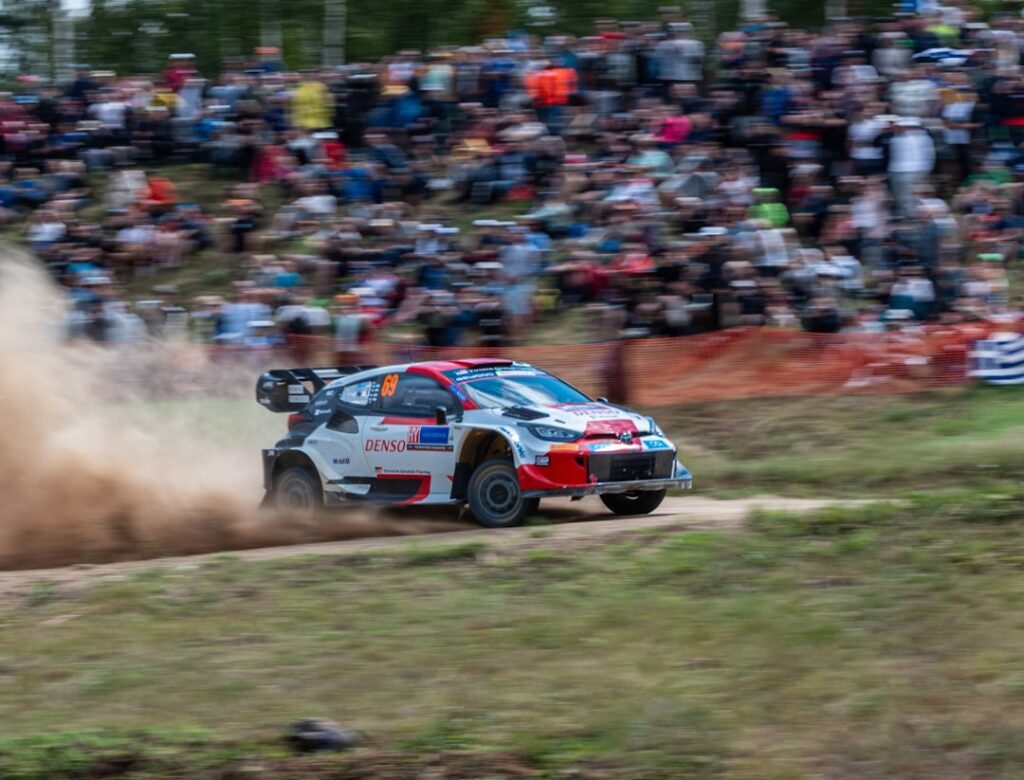
Image: GlobalBeat / 2026
[WRC investment news: 5 major team deals reshape 2027 grid]
James Okafor | GlobalBeat
Five factory squads have locked in fresh funding packages for the 2027 World Rally Championship season, the FIA confirmed in Geneva on Thursday.
The governing body released entry-list numbers showing Toyota, Hyundai, M-Sport Ford, PH Sport-run Peugeot and a new Audi-backed operation will each field Rally1 hybrid entries, bringing the projected manufacturer count to its highest level since 2016.
The announcements end months of speculation that rising development costs and tighter emissions rules would force at least two brands to withdraw. Instead, every incumbent has expanded its programme, while Audi’s arrival marks the first German premium-badge involvement since Volkswagen’s 2016 exit after the dieselgate scandal.
Toyota Gazoo Racing will continue with the GR Yaris Rally1, extending its presence to 11 consecutive seasons after chairman Akio Toyoda signed off on a budget the team pegged at “north of €65 million per year” in a presentation to media. Team principal Jari-Matti Latvala said the commitment “gives our engineers the runway to finish the hydrogen combustion prototype we’ve quietly tested in Finland since 2024.”
Hyundai Motorsport has re-upped for three more seasons and will switch to a bespoke i20-based coupé body-style for 2027, dropping the current hatch silhouette that debuted in 2017. Cyril Abiteboul, CEO of Hyundai’s high-performance division, told reporters in Alzenau the redesign “saves roughly 38 kg over the incumbent shell” and frees budget for a second test team that will run in selected European events to fast-track younger drivers.
M-Sport Ford’s deal runs only through 2028 but carries a twist: the British firm has secured an ownership stake in a new carbon-neutral fuel plant being built in Wales that will supply every Ford Rally1 entry from 2026 onward. Owner Rich Millener said the equity share “turns our race programme into an R&D profit centre rather than a marketing expense,” a pitch that convinced Ford board members who had threatened to freeze spend after the 2025 season.
Peugeot’s return is the most surprising. PSA Group withdrew from top-tier rallying in 2005 but will re-enter under the PH Sport banner, the French preparer that ran Citroën works cars until 2019. The Lion-badged 208 Rally1 will use Stellantis’ new 1.6-litre hybrid powertrain that debuted in last year’s 24 Hours of Le Mans, tuned to deliver 390 bhp on 100% sustainable fuel. PH Sport director Yves Matton said the choice of Peugeot over Citroën “reflects brand volume in key markets like Turkey, Morocco and Kenya,” all scheduled to host rounds in the 2027 calendar.
Audi’s programme, finally, arrives via a joint venture between the Ingolstadt car-maker and Belgian squad Comtoyou Racing. The Q4 e-tron Rally1 will race with a high-density battery pack developed by Audi Sport’s Formula 1 engineers, marking the first time a premium German brand has committed to a full WRC season since BMW’s exit at the end of 1987. Team principal Jean-Michel Jourdain said Audi has already committed “a nine-figure sum” over five seasons, including a dedicated development fleet of 14 chassis.
The sudden investment surge surprised even insiders. Last November the FIA’s own feasibility study warned that hybrid components had pushed annual budgets beyond €70 million for some works squads, prompting talk of a cost-cap or return to simpler Rally2 machinery. Instead, manufacturers have doubled down by exploiting a loophole that lets brands share hybrid intellectual property between circuit and off-road programmes, slashing per-unit development cost.
Reigning world champion Kalle Rovanperä welcomed the stability. “More cars means more data, and more data makes me faster,” the Toyota driver said after shakedown at Rally de Portugal. “We were worried the grid might shrink to 6-7 cars. Seeing 12 Rally1 entries on the 2027 entry list feels like the sport just got a second wind.”
Not everyone is applauding. Privateer outfits running 2024-spec Rally2 machines fear the spotlight will shift entirely to factory squads, drying up sponsor interest. French driver Eric Camilli, who campaigns a privately entered Citroën C3, estimated that the influx of manufacturer money “will push our tyre bill up 15% because suppliers know they can charge more when factories pay.”
The FIA has tried to level the field by allowing Rally2 cars to run 10 kg lighter and fit larger restrictors, a tweak calculations say equates to 0.7 seconds per 10 km stage. The governing body’s rally director Andrew Wheatley said the change “keeps the pyramid intact while giving manufacturers the technical playground they demand.”
Environmental groups remain sceptical. Greenpeace staged a protest on Thursday outside Geneva’s Palexpo centre, arguing that touting “carbon-neutral fuel” is green-washing when each Rally1 still burns 65 litres of petrol per competitive 100 km. Campaigner Clara Meier said the FIA “should incentivise smaller engines, not throw money at boutique e-fuel start-ups.”
Broadcasters, however, are delighted. Eurosport has already re-negotiated its deal to cover every stage live in 38 territories, adding a second studio show aimed at Asian markets after WRC viewing figures in Japan jumped 24% last year following Takamoto Katsuta’s podium run. Parent company Warner Bros. Discovery confirmed it will introduce a pay-per-view “all-access” tier that includes onboard telemetry from every hybrid system.
Background
The World Rally Championship has swung between factory feast and famine for four decades. Manufacturer entries peaked at 11 full-time teams in 1999 when Toyota, Subaru, Mitsubishi, Ford, SEAT, Peugeot, Citroën, Skoda and Hyundai all fielded works cars, then collapsed to just two by 2012 after a crippling recession and spiralling development costs tied to the short-lived World Rally Car 1.6-litre regulations introduced in 2011.
The introduction of hybrid power-trains in 2022 was meant to lure brands seeking road-relevant tech, but initial take-up proved slow. Ford scaled back to a semi-works programme, Citroën quit entirely, and Volkswagen Group brands focused instead on the all-electric RX championship. Thursday’s confirmation that Audi and Peugeot will join Toyota and Hyundai in 2027 therefore marks the first genuine manufacturer expansion since 2016.
What’s Next
The FIA will publish the draft 2027 calendar in December, with New Zealand, Saudi Arabia and Argentina lobbying to replace China, whose proposed Beijing-based Rally has twice been postponed. Homologation testing for the new Peugeot and Audi machinery begins next March at Spain’s Ciudad del Motor facility, while Toyota and Hyundai will start running their 2027 mules as early as October after the final 2026 event in Japan.
The investment wave is already rippling down the ladder. M-Sport has opened a two-month tender process for a junior team that will field two Rally2 cars in 2026, funded largely by the same Welsh fuel-plant venture backing its Rally1 effort. Interested parties must submit business plans by 30 September, with successful bidders announced at the season-ending Rally Monza in mid-November.
Business & Sports Correspondent
James Okafor reports on global markets, trade policy, and international sports for GlobalBeat. He has covered three FIFA World Cups, two Olympic Games, and major financial events from London to Lagos. He specialises in African economies and emerging market stories.