Iran war live: Trump’s visit to China shadowed by conflict with Tehran
Trumps Beijing talks clouded by rising Iran war threats, Xis demand for calm.
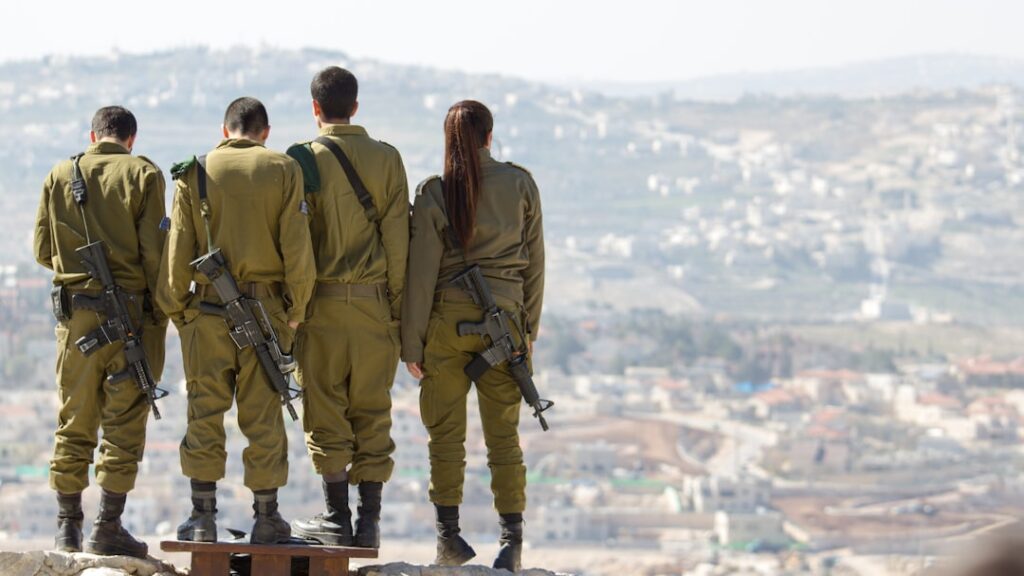
Image: GlobalBeat / 2026
Iran war: Trump lands in Beijing as Tehran threatens Gulf shipping
US President Donald Trump arrived in Beijing on Monday for talks with Xi Jinping hours after Iran vowed to target any vessel supplying American forces in the Persian Gulf.
The Islamic Revolutionary Guard Corps issued the threat as Trump departed Washington, raising immediate concerns about escalation in a region already bracing for wider conflict after the strike that killed Quds Force commander Esmail Qaani last week.
China has condemned the US assassination but remained largely on the sidelines as tensions spiral. Trump’s meeting with Xi was planned months ago to focus on trade and Taiwan, aides said, though the president told reporters aboard Air Force One that Iran “will figure prominently” in their discussions.
Beijing’s foreign ministry spokesman Wang Wenbin reiterated China’s opposition to “any form of military pressure” from Washington. “We urge relevant parties to exercise restraint and avoid actions that could ignite fires across the Middle East,” Wang told reporters during the afternoon briefing.
The IRGC statement came shortly after 9 a.m. local time, promising to “respond to every hostile move at sea by striking the logistical arteries of the aggressor.” Naval commanders specifically named the US Fifth Fleet, which maintains a carrier group off Bahrain, and warned Gulf states against cooperating with Washington.
Tehran’s move marked a dangerous shift from last week’s land-based retaliation, analysts said. “Targeting tankers risks dragging the global economy into this spat,” said Ali Vaez, Iran director at the International Crisis Group. Roughly 30 percent of the world’s seaborne oil transits the Strait of Hormuz each day.
Energy markets reacted swiftly. Brent crude pushed past $92 a barrel, the highest since August, while shipping insurers raised war risk premiums for Persian Gulf routes by 21 percent, according to data from Lloyd’s List Intelligence.
Japanese Prime Minister Shigeru Ishiba convened an emergency security meeting after Tokyo learned two of its supertankers were diverted from Iranian waters overnight. “We cannot accept disruptions to energy shipping,” Ishiba said, adding Japan would consider joining US-led patrols “if necessary.”
European capitals remained spooked by memories of the 2019 tanker crisis, when Iran seized commercial vessels after Washington reimposed sanctions. France deployed a frigate to the eastern Mediterranean on Monday in a “precautionary measure,” a defense ministry spokeswoman in Paris said.
Pentagon officials said the US Navy had “full freedom of movement” despite the threats. “We have not adjusted our defensive posture,” Lieutenant Commander Jessica McNulty told reporters. Diplomats, speaking on condition of anonymity, said planning continues for a limited maritime coalition with Britain, France and several Gulf monarchies.
Inside Iran, lawmakers closed ranks around Supreme Leader Ayatollah Ali Khamenei, chanting “Death to America” during a televised session shortly after the IRGC announcement. Parliament speaker Mohammad Bagher Qalibaf vowed that “no conciliatory negotiations will occur while enemy forces remain near our shores.”
Background
Tensions between Washington and Tehran have simmered since Trump’s first term, when he unilaterally exited the 2015 nuclear accord and reimposed sweeping sanctions that choked Iranian oil exports. President Joe Biden’s attempt to revive the deal faltered in 2023 amid Iranian demands for guarantees against future US withdrawal, leaving the pact effectively dead.
Hostilities flared anew this spring when proxy groups aligned with Iran launched a wave of rocket attacks at bases hosting US troops in Iraq and Syria. Washington responded with airstrikes against militia camps east of the Euphrates. The standoff turned personal last week when a US drone struck a convoy near Baghdad airport, killing Qaani, who had assumed command of the Quds Force after a similar American strike took out his predecessor Qassem Soleimani in 2020.
What’s Next
Xi hosts a lavish welcome ceremony for Trump on Tuesday, though any joint statement will likely paper over their sharp disagreements on Iran policy, diplomats said. Back in the Gulf, US naval planners expect skirmishes to begin this week if Tehran follows through on its maritime threats, raising odds of further American strikes that would ripple through energy markets and global supply chains.
European Union foreign ministers meet in Brussels on Thursday to weigh reactivating a 2023 naval mission. Failure to reassure shippers could push crude above $100 a barrel, economists warn, complicating inflation battles worldwide and adding another thorn to Trump’s visit with Xi, whose country is the world’s biggest oil importer.
Senior Correspondent, World & Geopolitics
Muhammad Asghar covers international affairs, conflict zones, and US foreign policy for GlobalBeat. He has reported on events across the Middle East, South Asia, and Eastern Europe, with a focus on the intersection of diplomacy and armed conflict. He has been writing wire-service journalism for over a decade.