Live updates: Iran war news; US forces rescue missing F-15 crew member, Trump says
U.S. forces rescued a missing F-15 crew member amid rising Iran tensions, Trump said.
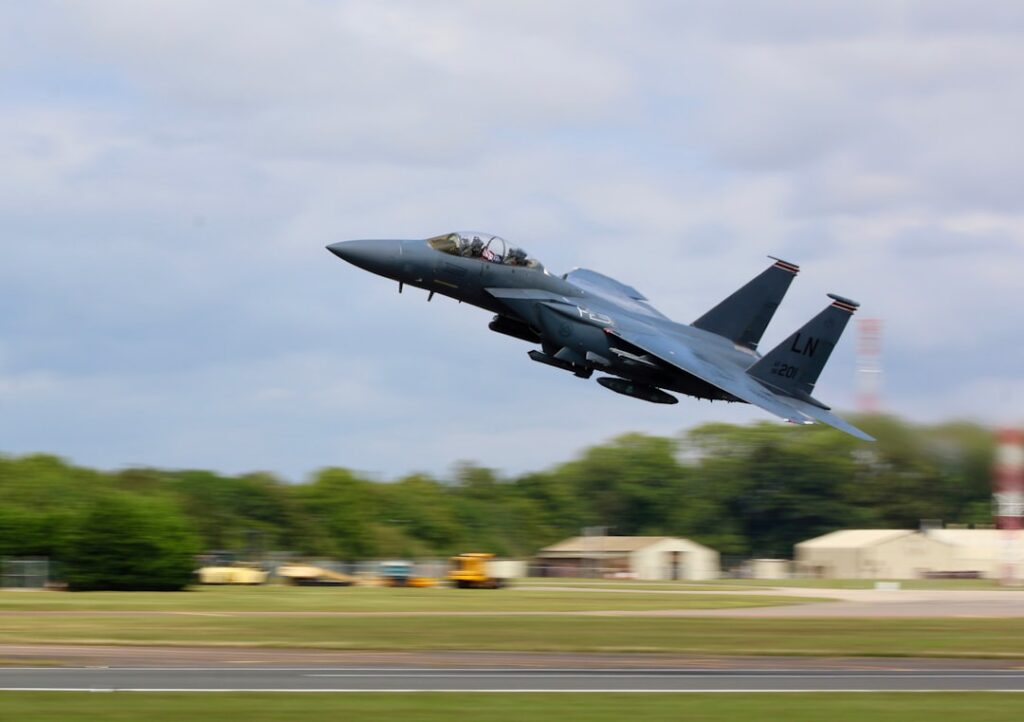
Image: GlobalBeat / 2026
Iran war news: Trump confirms US special forces rescued F-15 crew member
GlobalBeat | Muhammad Asghar
US special operations forces rescued a missing American F-15 pilot inside Iran early Monday, President Donald Trump announced in Washington, marking the deepest US ground incursion into Iranian territory since hostilities erupted last month.
Trump said the pilot had been shot down during Friday’s air strikes and described the rescue as “our most dangerous rescue operation in years,” without detailing how special forces had penetrated Iranian airspace. Defense officials told reporters one crew member remains unaccounted for from the two-seat fighter, which crashed in western Lorestan province.
The rescue reinforced how US-Iran fighting has escalated beyond skirmishes into sustained combat, with both countries trading missile strikes and Washington deploying an additional aircraft carrier to the Gulf. Stocks fell in early trading on Monday after oil prices jumped above $120 per barrel.
An E-3 warning aircraft had tracked the F-15’s ejection from 25,000 feet, Pentagon spokesman Maj. Pete Nguyen said, directing helicopters to the pilot who “evaded for 36 hours using public forests along the Zagros.” The operation involved Navy SEALs and Air Force pararescuemen, a defense official confirmed, speaking anonymously to discuss classified missions.
Iran’s foreign ministry said the incursion violated national sovereignty, writing that US forces had engaged Revolutionary Guards at multiple locations. The ministry did not confirm casualties but posted images on Monday showing helicopter wreckage it claimed came from American aircraft, without offering evidence.
Republican senators praised the mission as proof of Trump’s willingness to risk troops inside Iran, a flashpoint in domestic debates about whether the administration should fight wider war. Sen. Tom Cotton, a hawkish Arkansas Republican, called the rescue “the kind of American resolve Tehran fears,” while declining to say if he supported ground raids aimed at Iran’s nuclear facilities.
Democratic lawmakers questioned why a single pilot justified the breach of Iranian borders. “We should celebrate the safe return of our service member,” Senate Democratic leader Cory Booker said after classified briefing ended early Monday. “But this president has gone much further. He’s bombing inside Iran with no exit strategy.”
The Pentagon acknowledged 17 aircraft launched from the carrier USS George Bush struck missile depots near Shahabad early on Sunday, expanding US bombing beyond coastal installations and targeting inland weapons sites. Satellite photos released by private firms showed buildings leveled at one site Iran had used to supply nerves to Iraqi militants, analysts at the Institute for Study of War said.
Shipping data on Monday showed at least 6 tankers rerouted away from the Strait of Hormuz after Iran targeted a Liberian-flagged petroleum carrier Saturday. Petroleum facilities around Al Ruwais in the UAE raised security to maximum after threats that Iran could hit regional producers, an Emirati energy official told regional media, requesting anonymity.
Israeli Prime Minister Benjamin Netanyahu’s office said the country’s defense minister spoke overnight with his US counterpart, Michael Waltz, about “sharing intelligence” on Iranian nuclear sites. Israeli officials have weighed limited strikes on Iranian atomic facilities if negotiations in Ba’Aqin tank over a potential ceasefire fail, two senior officials in Jerusalem told GlobalBeat on condition of background.
Background
The current exchange of fire began after a Houthi drone struck an Israeli Sea of Galilee resort on March 15, killing 18 people and wounding 40. Trump blamed Iran for supplying the unmanned aircraft and ordered the first wave of air strikes on Iranian soil three days later. Iran responded by launching over 200 precision missiles at US bases in Iraq and naval facilities in Bahrain, killing 22 American service members, according to Pentagon figures.
Previous confrontations between Washington and Tehran since the 1979 Islamic revolution have involved proxy clashes or naval skirmishes, including the 2020 drone killing of Quds Force commander Qasem Soleimani. But the United States has not conducted sustained bombing of Iranian territory since the 1980s Tanker War when President Ronald Reagan targeted oil platforms and naval vessels. Experts now describe the intensity as a “hot war” short of formal declaration.
What’s Next
Trump is scheduled to address the nation on Tuesday evening, an administration official said, where he will outline “plans to destroy Iran’s ability” to target Americans. Senior military planners have drafted options ranging from bombing nuclear sites to naval blockades against Iranian oil exports, according to prepared slides leaked to Pentagon reporters. European diplomats trying to mediate a 7-day ceasefire said Tehran offered to cease missile fire at US bases if Washington stops drone raids, a swap US officials reportedly rejected.
Broader outlook
The rescue operation demonstrates an increasing appetite by the United States to project ground power inside Iran, raising the odds of capture or an expanded conflict should special forces come under fire. Oil markets signal traders expect supply disruptions to persist, and airlines have suspended flights over Iranian airspace through at least April 15, widening the economic toll well beyond the Gulf. Meanwhile Tehran is likely to reinforce inland air defenses and retaliate for the high-profile raid, officials in Washington warned, triggering further civilian evacuations near US compounds.
Senior Correspondent, World & Geopolitics
Muhammad Asghar covers international affairs, conflict zones, and US foreign policy for GlobalBeat. He has reported on events across the Middle East, South Asia, and Eastern Europe, with a focus on the intersection of diplomacy and armed conflict. He has been writing wire-service journalism for over a decade.