Live updates: Trump warns Iran as US military blockade on Iranian ports takes effect
Trump threatens Iran as U.S. naval blockade halts port traffic, escalating tensions in the Gulf.
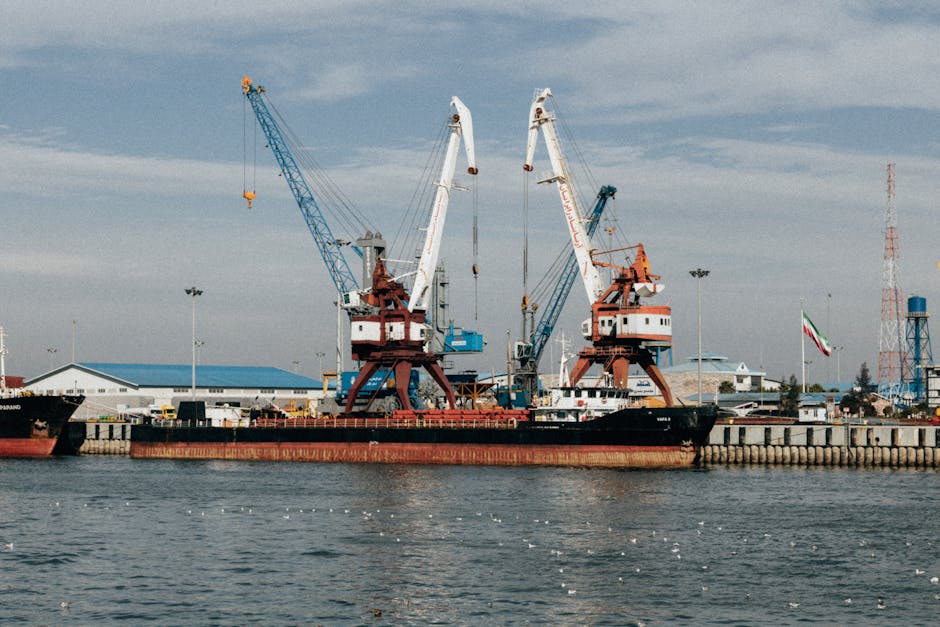
Image: GlobalBeat / 2026
Trump Iran blockade: US warships seal Persian Gulf as Tehran vows retaliation
Muhammad Asghar | GlobalBeat
President Donald Trump warned Iran of “severe consequences” as US warships began turning away vessels approaching Iranian ports early Tuesday, implementing a full naval blockade that Tehran called “an act of war.”
The blockade started at 6 a.m. local time with the aircraft carrier USS Dwight D. Eisenhower and three destroyers establishing a 50-kilometer exclusion zone around Bandar Abbas, Iran’s largest commercial port. Defense Secretary Pete Hegseth announced the operation would continue “until Iran abandons its nuclear program completely.”
The move marks the first time since 1988 that the United States has attempted to physically choke off all maritime access to Iran, a country that depends on sea trade for 80 percent of its food and medicine imports. Iranian state television showed empty piers at Bandar Abbas as container ships already in port remained docked, their crews reportedly refusing new cargo.
Revolutionary Guards commander Hossein Salami appeared on Iranian television within hours, declaring that “the Islamic Republic will not surrender to American pirates” and promising “painful responses in the Persian Gulf and beyond.” The semi-official Tasnim news agency reported that naval mines were being deployed along Iran’s coastline, though this could not be independently verified.
Oil markets convulsed on the news. Brent crude surged 18 percent to $98.50 per barrel, its highest level since September 2022. The spike triggered emergency meetings at the White House and Treasury as administration officials calculated the political cost of $5-per-gallon gasoline returning to American pumps six months before midterm elections.
European allies distanced themselves quickly. German Chancellor Friedrich Merz told reporters in Berlin that “Germany cannot support a blockade that violates international maritime law,” while French President Emmanuel Macron’s office released a statement calling for “immediate de-escalation.” Both countries, along with Britain, announced they would not participate in enforcement operations.
The Pentagon provided details of the operation shortly before noon. Rear Admiral John Meier, commander of the Eisenhower strike group, said US forces had already intercepted 14 vessels attempting to reach Iranian ports, ordering them to divert to ports in UAE or Oman. “No shots have been fired,” Meier told reporters via video link from the carrier’s bridge. “But we are authorized to use disabling fire if captains refuse lawful orders.”
Commercial shipping companies scrambled to reroute cargoes. Maersk, the world’s second-largest container line, announced it was suspending all service to Iranian ports indefinitely. “We cannot risk our crews or vessels in what has become a combat zone,” company spokesperson Janina von Stein said in Copenhagen. Insurance rates for vessels transiting the Strait of Hormuz jumped 400 percent according to Lloyd’s of London.
Inside Iran, the economic shock arrived instantly. The Iranian rial collapsed to 720,000 against the dollar on black markets, down from 620,000 on Monday. Videos circulated on social media showed long lines at Tehran pharmacies as residents stocked up on imported medicines. “My daughter needs diabetes medication that’s made in Germany,” said Hassan, a 52-year-old engineer who asked that his surname not be used. “The pharmacy says they have two weeks left, maybe less.”
Background
The blockade represents Trump’s most aggressive move yet to force Iran to abandon its nuclear program after withdrawing from the 2015 JCPOA agreement in 2018. Previous sanctions have targeted Iranian oil exports, reducing them from 2.8 million barrels daily in 2017 to roughly 400,000 barrels, but Tehran has continued advancing its uranium enrichment program. The International Atomic Energy Agency reported last month that Iran now possesses enough enriched uranium for 4-5 nuclear weapons if further refined.
Naval blockades carry significant legal implications under international law. The 1856 Declaration of Paris and subsequent conventions establish blockades as acts of war unless authorized by the United Nations Security Council, where Russia and China hold veto power. Both nations immediately condemned the American action, with Russia’s foreign ministry calling it “piracy on a state level” and China’s ambassador to the UN warning of “severe consequences for global stability.”
What’s Next
Iran’s next move remains uncertain but potentially explosive. Revolutionary Guards naval forces have hundreds of small fast-attack boats capable of swarming larger warships, while Iran controls the western shore of the Strait of Hormuz, a 21-mile-wide chokepoint through which 21 percent of global oil supplies pass. US intelligence officials told reporters they expect Iranian attempts to mine the strait or attack oil tankers within days, moves that could trigger the wider regional war Trump claims he wants to prevent.
The economic pain will likely spread far beyond Iran. India, which imports 10 percent of its oil from Iran, saw its rupee tumble to record lows against the dollar. Japan and South Korea, both heavily dependent on Gulf oil, activated emergency petroleum reserves. “We’re looking at $150 oil if this escalates,” said energy analyst Amrita Sen of Energy Aspects in London. “That’s recession territory for the global economy.” Trump, speaking to reporters on the White House lawn, remained defiant. “Iran will cave, or they will starve,” the president said. “Those are their only options.” The world now watches to see whether Supreme Leader Ayatollah Ali Khamenei chooses defiance over survival, and how many other nations get dragged into the confrontation.
Senior Correspondent, World & Geopolitics
Muhammad Asghar covers international affairs, conflict zones, and US foreign policy for GlobalBeat. He has reported on events across the Middle East, South Asia, and Eastern Europe, with a focus on the intersection of diplomacy and armed conflict. He has been writing wire-service journalism for over a decade.