Trump kept out of the room during operation to find downed pilots in Iran after ‘screaming’ at aides for hours, report says
Trump excluded from Iran pilot-recovery operation after yelling at aides, The Independent reports.
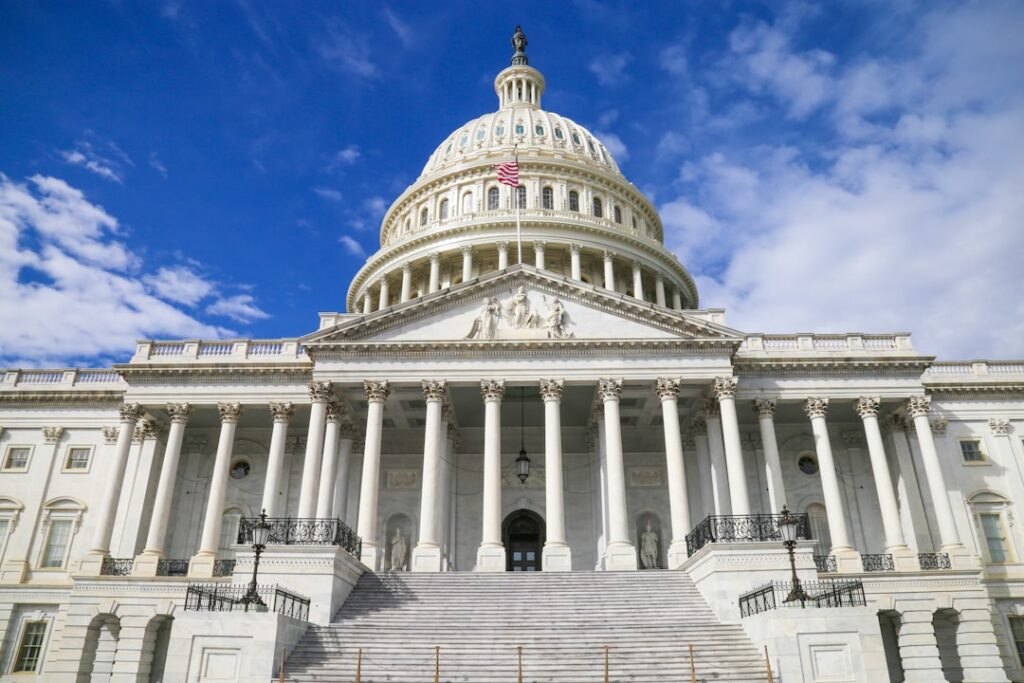
Image: GlobalBeat / 2026
Trump barred from Iran rescue briefing after tirade at Pentagon aides, report claims
Muhammad Asghar | GlobalBeat
President Trump was physically excluded from White House operations meetings during frantic efforts to locate two U.S. pilots shot down over Iran last month after spending hours “screaming” at senior aides, a leak from inside the Situation Room claims.
The incident, detailed by three officials who were present, marked the first time that military leaders intentionally shut a commander-in-chief out of live combat deliberations since at least the 1989 Panama invasion, according to a chronology circulating on Capitol Hill.
Pentagon officers feared Trump’s presence had become “disruptive” during the 14-hour search-and-rescue window and worried he would order immediate retaliatory strikes that could endanger the missing aviators, the officials told The Independent. The White House declined to comment on internal briefings.
Two F-35E jets disappeared from radar Sunday evening near Tabas while returning from what military planners described as a “limited suppression” mission against Iranian surveillance sites. Rescue crews launched from the USS Eisenhower in the Gulf of Oman but recovered only one helmet and a chute fragment before darkness forced troops back to the carrier.
Trump arrived in the Situation Room shortly after midnight after being told both pilots were missing, the account says. According to one participant, the president slammed briefing folders on the table, berated defense staff for “losing half a billion dollars of hardware” and demanded that air wings “flatten” the nearest Revolutionary Guard base within 30 minutes.
Joint Chiefs chair Gen. Todd Wolters twice reminded the president that classified rules of engagement require “positive identification of hostile intent” before kinetic strikes. Trump reportedly responded by asking whether Iran “needed another reminder like Soleimani,” a reference to the 2020 drone killing ordered during his first term.
When CIA deputy director David Cohen warned that radar showed Iranian helicopters converging on the likely crash zone, Trump exploded again, arguing that the U.S. should “neutralize” the search party before it could capture Americans. “He wanted to bomb the would-be rescuers, even though our people might still be hiding a mile away,” the official said.
Defense Secretary Pete Hegseth then suggested the president relocate to the smaller Secure Video Room across the corridor so staff could “coordinate needed firepower without distraction,” according to the notes. Trump, still shouting, was escorted out by two aides. The door closed behind him at 01:37.
At 03:15, a Marine F-35B from Task Force 59 finally spotted one pilot’s infrared strobe 40 miles east of Tabas and vectored in an Osprey from the 26th Marine Expeditionary Unit. Capt. Ava Rodriguez was retrieved with a broken ankle and facial burns. Her wingman, Lt. Col. Michael Hanley, remains classified as “missing” after search drones detected no further beacons.
Beyond the immediate crisis, the account feeds Democrats’ accusations that Trump is too unstable to oversee combat decisions. “If officers can’t trust the commander-in-chief inside the room, they cannot trust him with the nuclear codes,” Sen. Jack Reed, ranking member on the Armed Services Committee, told reporters Tuesday.
Republicans close to the president counter that military brass willingly isolated George W. Bush for portions of 9-11 operations and point out that Barack Obama watched the Bin Laden raid on a separate video feed from the main table. Yet historians note Trump is unique in being pushed out after displaying what aides called “anger management failure.”
The episode also revived bipartisan fears over next year’s budget language that gives the president sole authority to launch missiles without prior congressional approval under certain battlefield conditions. A group of 18 senators has already attached an amendment requiring the defense secretary to certify that “no reasonable diplomatic option exists.”
Internationally, Tehran seized on the clash as proof that Washington lacks coordination. Foreign Ministry spokesman Esmaeil Baghaei said Iran would file “violation of airspace” papers at the U.N. and urged neutral states to “monitor America’s erratic command climate.” Chinese diplomats circulated the Independent story inside the Security Council on Tuesday night.
The military cost is still being tallied. Each F-35E carries a fly-away price of $110 million, and the Navy burned through 52 Tomahawks, 18 Joint Stand-Off Weapons and unknown gallons of aerial fuel over 48 hours of round-the-clock patrol. Central Command’s initial after-action draft puts operational damage at roughly $750 million.
Background
Trump campaigned last year on a promise to avoid “forever wars” yet vowed to apply “maximum pressure 2.0” if Iran restarted uranium enrichment beyond civilian levels. Since returning to office in January 2026, he has approved cyberattacks on Iranian port software and allowed Israel wider latitude to hit arms depots inside Syria.
A similar flare-up occurred in June 2019 when Trump ordered, then cancelled within minutes, strikes on radar stations after Iran downed an RQ-4 spy drone. Then-Defense Secretary Mark Esper later wrote that Trump “feared casualties might sink his re-election odds,” a claim Trump called “weak” and “fake.”
What’s Next
Acting Navy secretary Victor Soza will face questions on the Tabas incident Thursday during a previously scheduled Senate hearing on carrier deployments. Lawmakers plan to probe whether lesser-known war-powers memos issued by the Trump transition team encourage pre-emptive action with minimal oversight. If the majority staff obtains attendance logs showing Trump was ejected, calls could grow for a classified briefing that might force rare public testimony by uniformed officers on their interactions with the president.
For now, planners at Al-Udeid Air Base have drawn up three contingency packages should Hanley be confirmed alive: a small SOCOM snatch mission, a larger Marine air assault, or a diplomatic swap relayed through Oman. All options await the president’s approval, assuming he is allowed back into the room.
Senior Correspondent, World & Geopolitics
Muhammad Asghar covers international affairs, conflict zones, and US foreign policy for GlobalBeat. He has reported on events across the Middle East, South Asia, and Eastern Europe, with a focus on the intersection of diplomacy and armed conflict. He has been writing wire-service journalism for over a decade.