U.S. prepares for new military strikes against Iran
U.S. readies new military strikes on Iran, officials tell CBS, amid escalating regional tensions.
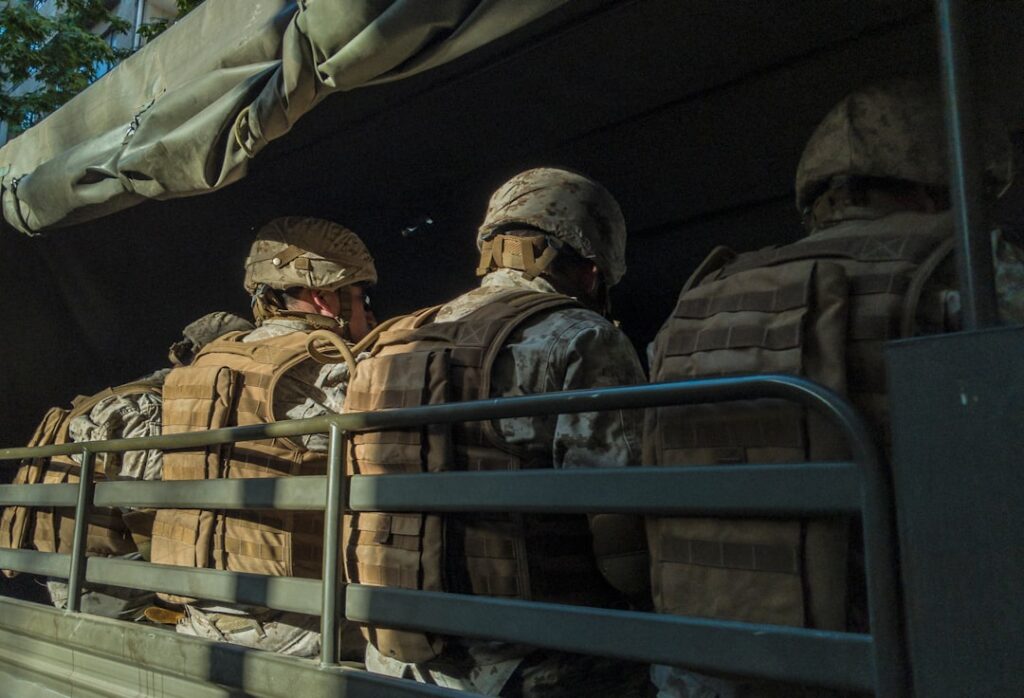
Image: GlobalBeat / 2026
US Iran strikes: Pentagon readies carrier group for retaliatory attack
Washington DC | Muhammad Asghar | GlobalBeat
The Pentagon moved the USS Harry S. Truman carrier strike group into the Gulf of Oman on Thursday while senior officials drafted target lists for strikes inside Iran, CBS News reported.
Defense Secretary Pete Hegseth told the network that the White House had narrowed the response to “three distinct packages” after Iran-backed militias killed three American soldiers at a Jordanian base last weekend.
Any attack on Iranian soil would mark the first direct US strike on the Islamic Republic since 1988 and risk igniting a wider Middle East war weeks after President Donald Trump’s return to office.
72-hour window
Two Defense officials who spoke on condition of anonymity said the strikes could begin as early as Friday night if Trump signs the execute order, giving military planners a 72-hour window to hit radar sites, drone factories and Revolutionary Guard bases before weekend prayers in Tehran.
The officials said the largest package includes strikes on as many as 18 facilities across eight provinces, using B-2 stealth bombers flying from Diego Garcia and Tomahawk missiles fired from the Truman group. A more limited option focuses on three militia training camps near the Iraqi border, while the smallest envisions cyber attacks plus a single symbolic strike on an air-defense battery.
“Every option crosses into Iranian territory,” one official said. “We’ve spent 48 hours gaming out their response.”
No green light yet
Hegseth stressed that Trump had not approved any package and insisted the president wanted to avoid “a broader regional conflict.” Speaking to CBS Evening News, he said the goal remained “deterrence, not escalation” but conceded that striking Iran itself carried “inherent risk.”
The defense secretary’s careful wording contrasted with comments earlier Thursday from Senator Tom Cotton, the Arkansas Republican who has urged massive retaliation. Cotton told reporters that “anything less than bombs falling on Bandar Abbas is weakness” and predicted public support for strikes “in the 80 percent range.”
Trump himself stayed silent on camera, issuing only a written statement that “all options are on the table” and promising “a response like they’ve never seen.” The White House cancelled his scheduled trip Friday to the Mexican border, keeping him in Washington as the national-security team met for a third straight day.
Markets jittery
Oil futures jumped 4.2 percent on the news, pushing Brent crude above $92 a barrel for the first time since October. The Pentagon briefing ignited a brief sell-off on Wall Street that shaved 260 points off the Dow before a late recovery, while gold rose to a two-month high of $2,067.
Airlines routed passenger jets away from Iranian and Iraqi airspace, adding up to 90 minutes to Europe-Dubai flights, and the Federal Aviation Administration widened an existing ban on US carriers flying below 32,000 feet over the region.
Allies on edge
European diplomats urged restraint after Hegseth’s call with NATO counterparts. German Chancellor Friedrich Merz told parliament that Berlin “sees no justification for attacks on Iranian sovereign territory,” while France’s Élysée Palace released a statement calling for “proportionality and maximum diplomatic pressure.”
British Prime Minister Keir Starmer’s office said the UK had received no US request for support and stressed that London was “not involved in target selection.” One British official, speaking anonymously, said London feared a repeat of January 2020 when a US drone strike on Iranian general Qasem Soleimani triggered Iranian missile attacks on bases housing British troops.
Iran warns of wider war
In Tehran, Foreign Minister Abbas Araghchi told state TV that any American strike “will receive an immediate and decisive response” and said Iran had already shared intelligence with regional allies about potential targets inside Gulf states that host US forces. The Revolutionary Guard’s naval commander warned that the Strait of Hormuz “will not remain open” if Iranian territory is hit.
Supreme Leader Ayatollah Ali Khamenei convened an emergency session of the Supreme National Security Council late Thursday, the third such meeting since Sunday’s drone attack on Tower 22 in Jordan that killed Specialist Kennedy Sanders, 24, Sgt William Rivers, 46, and Sgt Breonna Moffett, 23. Iranian media reported that Khamenei authorized commanders to “respond at the level and timing of our choosing.”
Proxy network activated
A spokesman for Kata’ib Hezbollah, the Iraqi militia that claimed the Jordan strike, released a video vowing to hit 11 further US bases if Iran is attacked. The group circulated coordinates of facilities in Kuwait, Qatar and Bahrain, urging local supporters to surround them with human shields “starting Friday prayers.”
US Central Command responded by placing Patriot batteries at Al-Udeid air base in Qatar on full alert and deploying additional counter-rocket artillery to the Ali Al Salem base in Kuwait. About 900 US troops in Syria were ordered to stay inside fortified compounds, and surveillance drones reported a 60 percent increase in militia convoy movements across central Iraq.
Background
US and Iranian forces have come close to open warfare several times since Trump withdrew from the 2015 nuclear deal and re-imposed sanctions in 2018. The closest call came in June 2019 when Trump approved then cancelled strikes on radar sites after Iran shot down a $130 million Global Hawk drone. Weeks later Iran attacked Saudi Arabia’s Abqaiq oil facility, temporarily knocking out half the kingdom’s production, yet Trump opted for more sanctions rather than military force.
Direct American strikes inside Iran have been extremely rare. The last confirmed attack came in April 1988 during the so-called Tanker War, when US naval forces destroyed two Iranian oil platforms and sank the frigate Sahand after the USS Samuel B. Roberts struck a mine. That operation, codenamed Praying Mantis, killed about 60 Iranian sailors and helped push Tehran to accept a cease-fire in its eight-year war with Iraq.
What’s Next
Pentagon planners have pencilled in a 96-hour execution window starting Friday, betting that the weekend lowers the chance of Iranian retaliation hitting civilian areas and gives Washington room to assess Tehran’s next move before global markets reopen Monday. If Trump signs an order, commanders intend to alert regional allies two hours before the first bombs fall, but officials admit that calculation depends on whether Iran chooses to pre-empt with missile launches of its own.
The final decision rests with a president who campaigned on ending Middle East wars yet has repeatedly threatened to “obliterate” Iran. As one White House aide put it: “He’s torn between his base, which hates endless wars, and his instinct to hit back harder than anyone expects.”
Senior Correspondent, World & Geopolitics
Muhammad Asghar covers international affairs, conflict zones, and US foreign policy for GlobalBeat. He has reported on events across the Middle East, South Asia, and Eastern Europe, with a focus on the intersection of diplomacy and armed conflict. He has been writing wire-service journalism for over a decade.