US names six crew killed in refuelling plane crash in Iraq
Six U.S. service members died when a KC-135 refueling tanker crashed during a combat mission against Iran-linked targets in western Iraq.
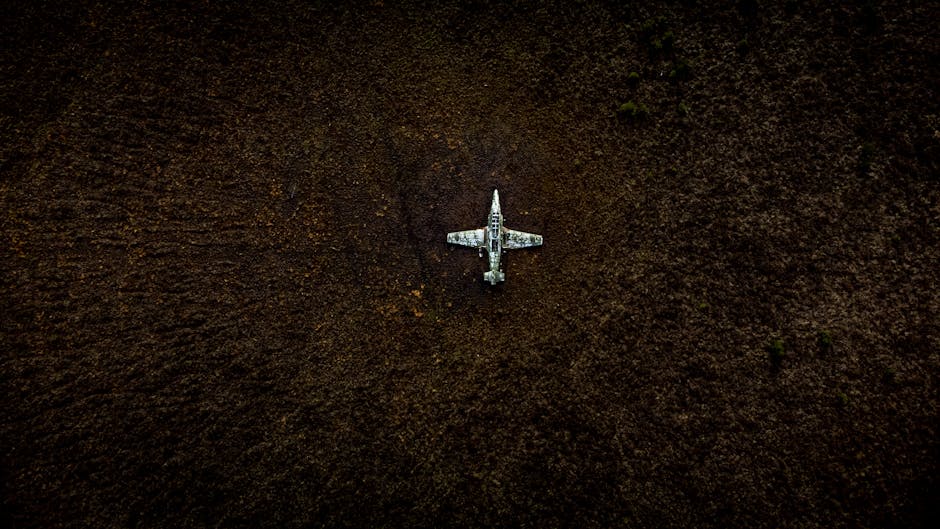
Image: GlobalBeat / 2026
Six American aircrew perish in US military plane crash on Iraq combat sortie
All six crew members died when a US military tanker crashed during a refuelling mission against Iran-linked targets
Muhammad Asghar | GlobalBeat
Six American airmen died when a US military refuelling aircraft crashed while supporting combat operations against Iran-linked targets in western Iraq on Thursday night, the Pentagon confirmed, marking the deadliest single US aviation incident in the region since 2020.
The loss of the KC-135 Stratotanker comes amid intensifying US strikes on Tehran-backed militia bases and underscores the thin margin for error in stretched crew rotations conducting round-the-clock tanker sorties that keep American strike aircraft over Iraq and Syria.
Who died and what went wrong
US Central Command identified the dead as Maj. Jonathan P. Brunelle, 34, of New Hampshire; Capt. Kristin E. Giglio, 31, of Illinois; Capt. Andrew P. Southard, 31, of Connecticut; Capt. Nicholas C. Whitcomb, 32, of Minnesota; Senior Master Sgt. Michael C. Brodeur, 42, of Massachusetts; and Master Sgt. Christopher M. Kennedy, 37, of Rhode Island.
A senior defence official speaking on background said the four-engine tanker, assigned to the 6th Air Refueling Wing at MacDill Air Force Base, Florida, had taken off from Al-Udeid Air Base, Qatar, two hours before it disappeared from radar at 21:47 local time. Wreckage was located in a sparsely populated area of al-Anbar governorate, roughly 70 km south-west of the al-Asad airbase that houses several hundred US troops.
The official declined to speculate on whether hostile fire was involved, noting “there was no distress call” and “weather conditions were acceptable for night refuelling operations.”
A mission carried out in the shadow of Iran
The flight was part of Washington’s month-long air campaign aimed at degrading Iran’s Islamic Revolutionary Guard Corps supply lines and allied militia rocket stockpiles after a drone attack killed three US soldiers in Jordan on 28 January. Locals near Haditha said they saw multiple jets circling overhead before the crash.
Thursday’s crash happens at a time when Washington continues its aerial onslaught as President Joe Biden tries to hit Iranian proxies hard enough to deter further attacks without triggering a region-wide war. Pilots told reporters earlier this week that refuelling tracks have moved closer to the Syrian border to keep strike packages airborne longer.
The Pentagon calculates it now conducts roughly 25 aerial refuellings per night over Iraq and Syria, up from ten before the Jordan assault, placing extra stress on crews flying 12-hour rotations.
Why heavy tanker losses are so rare
A loss of an entire KC-135 crew is unusual even in high-tempo theatres; the last fatal mishap was in 2013 in Kyrgyzstan. The Boeing-built aircraft, a militarised version of the 1950s-era 707, has logged more than five million flight hours and is prized for mechanical simplicity that allows rapid maintenance in dusty desert conditions.
Retired USAF Col. Kelly O’Connor, formerly a squadron commander of KC-135s, said Stratotanker crews train for single-engine failures because “the plane can fly perfectly well on three” but acknowledged that “catastrophic structural failure at night over desert terrain gives you almost zero reaction time.”
The US military plane crash now accounts for the single largest American death toll of the Biden administration’s Middle East escalation, eclipsing the three soldiers killed at Tower-22 in Jordan.
The numbers tell a different story about the cost of air supremacy: according to Air Forces Central statistics, US and coalition tankers flew 4,200 sorties in 2023 over the Middle East, transferring 265 million lbs of fuel, yet lost only one aircraft to mechanical failure and none to enemy action until Thursday’s crash.
Desert families hear a night-time explosion
Haditha resident Umm Taha, 48, was preparing tea when “a thunder-like noise shook the windows.” She told Reuters that locals first assumed an Iraqi Air Force drill had gone awry; minutes later black smoke drifted across the Euphrates valley. Two herders reached the site by pick-up but were turned back by an American patrol.
In nearby villages, word of six deaths in a US military plane crash conjures memories of 2005 when a British Hercules came down nearby, killing ten. “We don’t care about politics; we just don’t want bodies falling on our fields,” said farmer Khalid Shukur, 31, whose olive grove borders the debris field.
How allies and adversaries reacted
Tehran’s Arabic-language Al-Alam channel ran a brief bulletin suggesting “engine fatigue” rather than militia fire caused the crash, while a Houthi television presenter hailed the incident as “a sign of divine punishment.” Pentagon spokeswoman Sabrina Singh called such rhetoric “predictable ghoulishness” and reiterated that operations would continue.
Britain and France, both providing intelligence flights in the region, issued statements of condolence. US defence secretary Lloyd Austin, speaking after a NATO meeting in Brussels, said the coalition “will honour the fallen by staying the course.”
An Iraqi defence ministry statement expressed sorrow for the loss of life and pledged “full cooperation” with American investigators expected on site by Saturday.
What happens when the next crash occurs
US Air Force investigators from the Safety Centre at Kirtland Air Force Base, New Mexico, will lead a crash board set to issue a preliminary safety report within 30 days. Congress’s House Armed Services Committee has already asked for a classified briefing next week, while CENTCOM is reviewing whether tanker routes can be altered to keep aircraft over friendlier skies for longer periods.
Military officials privately say that if inspections discover fleet-wide fatigue on ageing KC-135s, the Air Force may be forced to accelerate the troubled KC-46 Pegasus replacement programme, a move that would hike a refuelling modernisation budget already set at US$44 billion through 2030.
Thursday’s crash illustrates that even low-risk support missions can exact a grim toll. As crew members at Al-Udeid erected six small flags beside the flight line, commanders weighed whether to press ahead with the tempo they believe keeps pressure on Iran, or scale back and possibly embolden militias who already boast about America’s “overstretched air corps.”
KEY FACTS
📌 Six airmen killed when KC-135 tanker crashes on combat sortie in western Iraq
📌 Crash occurred during heightened US operations against Iran-linked militia sites after Jordan outpost deaths
📌 No distress call made; mechanical failure suspected; hostile-fire investigation ongoing
📌 Board of inquiry report due within 30 days; fleet-wide inspection of ageing Stratotankers expected
📌 First full US aircrew lost in Iraq since 2020 drone shoot-down near Baghdad airport