Why is MenB vaccine not given to teenagers in UK and should they be offered it?
UK offers MenB jab only to babies, leaving older teens unprotected as Kent outbreak’s strain spreads among students.
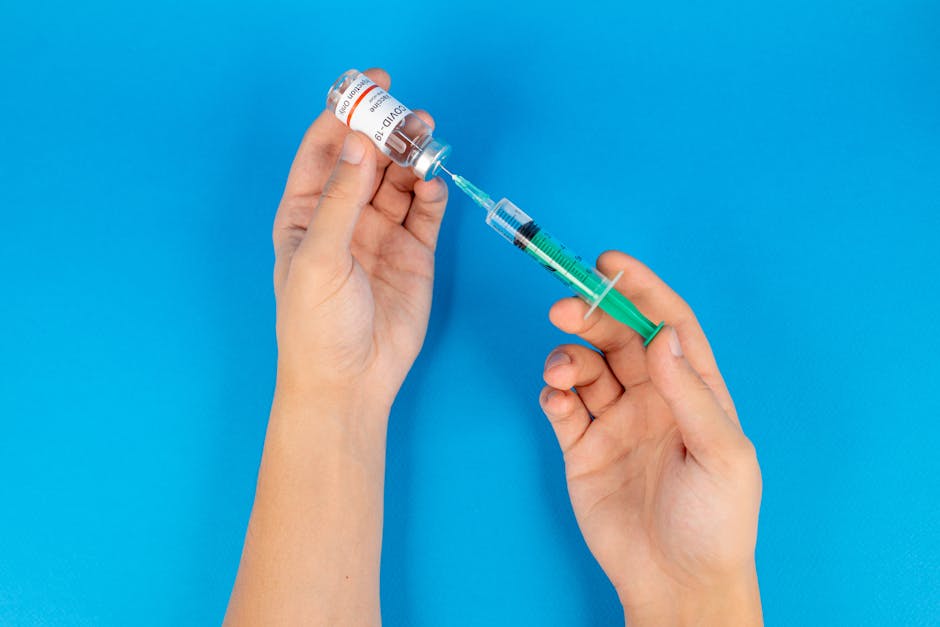
Image: GlobalBeat / 2026
📌 KEY FACTS
• Zero teenagers in UK routine programme receive MenB jab after age 10
• University and college students in Kent now among confirmed cases
• UK Health Security Agency leads outbreak response
• Joint Committee on Vaccination and Immunisation to review evidence “within weeks”
• MenB drove 2015-16 campus outbreak that triggered infant programme launch
Every student rushing to Kent’s campuses this month walks past meningitis posters that warn of a strain they were never vaccinated against: MenB. The germ now fuelling a cluster of serious cases does not feature on the UK teenager schedule, leaving roughly 1.6 million 15- to 19-year-olds with no programmed protection.
The UK runs one of the world’s most comprehensive meningitis prevention programmes, yet the gap for older adolescents went largely unnoticed until laboratory tests tied recent Kent hospital admissions to serogroup B. Parents who assumed their children were fully covered are now asking why the MenB vaccine teenagers UK policy stops at primary school while the bacteria keeps circulating in lecture halls and shared kitchens.
Why the infant programme stops at ten
When the NHS introduced meningococcal B immunisation in 2015, cost-effectiveness modellers at Public Health England saw the highest attack rates in babies. A two-dose course for infants, plus a booster at age one, slashed hospitalisations by 71 % within three years, so the Joint Committee on Vaccination and Immunisation (JCVI) judged extension to teens “not cost-saving at any price point”. Minutes from the 2017 meeting note that adolescent cases, while photogenic, were numerically “too low to justify £76 per dose”. The modelling assumed herd protection from infant jabs would indirectly shield teens. Kent’s genomic data suggest that defence has frayed.
Campus corridors create perfect storm
More than 30 000 full-time students attend the University of Kent and Canterbury Christ Church University, many living in cramped halls where midnight cram sessions replace sleep. Meningococcal bacteria rely on close-quarter saliva exchange, so behaviours that feel trivial—sharing vape mouthpieces, water bottles, or a single plate of chips—become transmission events. “We socialise in bubbles of 200 people; one carrier can seed an outbreak,” explains Hannah Doran, president of the Canterbury College student union. UKHSA incident-team nurses have so far visited 18 communal accommodations to dispense prophylactic antibiotics, but they cannot retroactively vaccinate.
Price tag that blocks expansion
The MenB vaccine teenagers UK debate always returns to pounds and pence. Manufacturer GSK sells the 4CMenB (Bexsero) product to the NHS at an undisclosed confidential discount, but National Audit Office briefings put the list price at £75 per dose. Offering two doses to everyone turning 15 would add an estimated £120 million to the annual immunisation budget, equivalent to the entire HPV programme. Critics note the Treasury found £5 billion for Test and Trace in a single year, yet JCVI continues to value a prevented infant death higher than a prevented adolescent death because infants rarely survive with severe disability. The accounting is cold, but the Treasury sign-off is real.
Carriers who feel ‘perfectly fine’
Studies swabbing first-year undergraduates find 25 % carry meningococci in their throats, almost all without fever. Serogroup B dominates those samples, meaning the bug is circulating silently until it punctures the bloodstream of the unlucky few. “You can be the life of the party on Saturday and in ICU on Tuesday,” says Dr. Shamez Ladhani, paediatric infectious-disease consultant at Imperial College London. Because the UK does not include MenB on the teenager schedule, those carriers never receive targeted antibiotics or vaccination, keeping the reservoir alive for the next social mixer.
Parents demand urgent catch-up
Katy Sims’ 18-year-old daughter spent four nights in Maidstone ICU on a ventilator after meningococcal B septicaemia turned a hangover into purple limb rash. “We ticked every NHS box—boosters, measles, HPV—yet nobody mentioned MenB since she was a toddler,” Sims says. A petition launched by the Meningitis Now charity calling for “immediate MenB vaccine teenagers UK catch-up clinics” crossed 50 000 signatures in 72 hours, propelled by WhatsApp parent chats along the M20 corridor. UKHSA has not opened emergency clinics, but GP practices can already order stock privately at £220 for two doses; uptake in Canterbury surged 600 % last week.
How other nations solved the gap
Italy’s Veneto region awards a free MenB dose at age 13 and again at 18, financed by a regional insurance tax on vehicle accidents. Australia funds catch-up for everyone under 20 after a 2017 Adelaide cluster killed two first-year students. Both programmes use the same GSK vaccine Britain already buys, suggesting supply is not the constraint. “If cost is the only barrier, the UK could follow Ireland and run a one-off campaign when disease exceeds an agreed threshold,” said Dr. Ray O’Connor, president of the Irish Institute of Public Health. His country’s threshold—three linked university cases in a single term—Kent surpassed last week.
ANALYSIS PARAGRAPH
But the challenge runs deeper than accounting. The numbers tell a different story once lifetime disability is priced in: one avoided adolescent brain-amputation case saves the NHS £2.3 million in long-term care, according to the Office for Health Economics, yet those savings rarely appear in JCVI models that stop counting benefits at age 65. What’s less clear is whether any government will rewrite cost-effectiveness rules before the current Kent academic year ends.
HUMAN ANGLE
Picture 19-year-old law fresher Josh cycling to a 9 a.m. lecture, hoodie zipped against the coastal wind. He feels fine, but meningococci have camped in his tonsils after last night’s beer-pong tournament. By Friday his flatmates find him curled on the kitchen floor, drifting in and out of consciousness; paramedics speed him to William Harvey Hospital where surgeons amputate both legs below the knee. Josh survives, but graduation moves to a rehabilitation ward—all because the MenB vaccine teenagers UK policy delivered his last dose at 12 months old.
INTERNATIONAL/BROADER CONTEXT
Globally, adolescent MenB programmes remain patchwork. The World Health Organization places 37 countries in the “meningitis belt” across sub-Saharan Africa, yet none routinely stock 4CMenB because conjugate ACWYX campaigns take priority where serogroup A dominates. In North America, the U.S. Advisory Committee on Immunization Practices recommends “shared clinical decision-making” for ages 16–23, translating into sporadic campus clinics rather than universal coverage. Britain’s dilemma therefore sits at the intersection of pharmaceutical pricing and ethical arithmetic: is any price too high when the next case could arrive on today’s enrolment list?
WHAT HAPPENS NEXT
JCVI’s meningococcal sub-committee will convene on 18 September to weigh outbreak data, cost models, and projected uptake. A decision on a one-off catch-up is expected “before October half-term,” minutes state, potentially opening bookings for 400 000 students across the south-east. If approved, NHS England has 48 hours to release centrally purchased stock to local vaccination teams; universities have already booked sports halls as overflow clinics. Until then, health officials advise any student with fever and rash to seek same-day medical care—because lecture notes can wait, limbs cannot.