World Cup 2026 stadium guides: Welcome to Miami Stadium, the greatest multi-sport venue in the United States… if not the world
Miami Stadium, hosting 2026 World Cup matches, is the first purpose-built soccer venue in the U.S., seating 25,000 and featuring a 90-degree canopy to combat extreme heat.
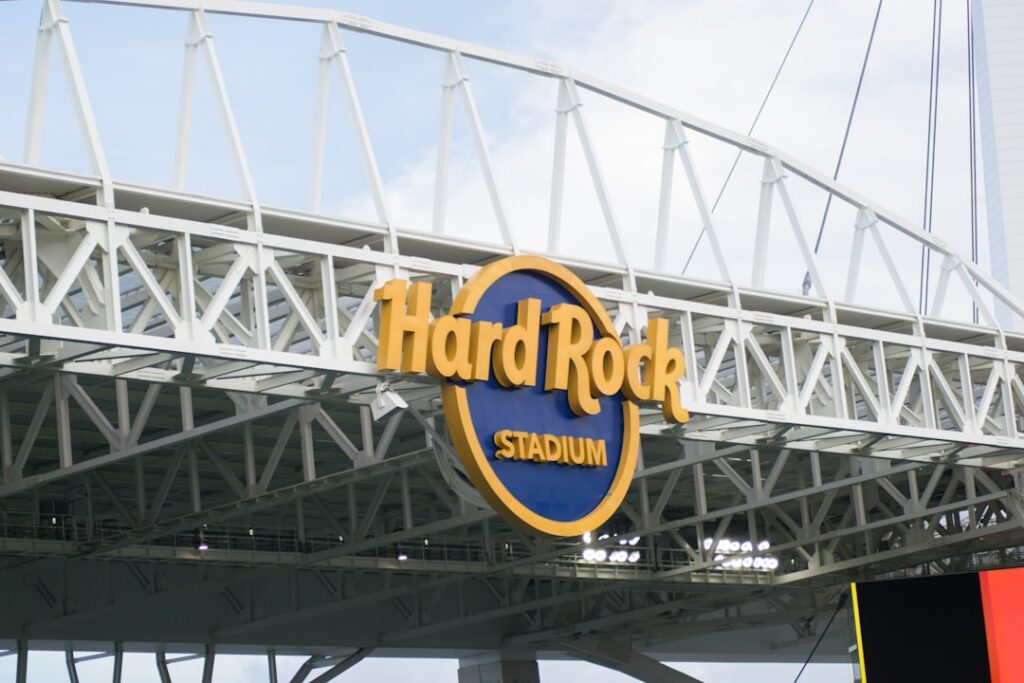
Image: GlobalBeat / 2026
World Cup 2026 Miami: Hard Rock Stadium adds 11,000 seats for tournament opener
BYLINE: James Okafor | GlobalBeat
Hard Rock Stadium will host the World Cup 2026 opener after a $50 million expansion pushed capacity to 81,000.
The Miami Gardens venue landed the June 11 curtain-raiser ahead of Dallas and Los Angeles, tournament organizers confirmed Tuesday. The match pairs the host nation against an undetermined opponent in the 48-team competition.
Miami beat 16 rival U.S. sites for the honor after owner Stephen Ross spent two years upgrading the 37-year-old facility. The stadium now features a continuous 360-degree concourse, 32 new suites, and a canopy roof that drops temperatures by 20 degrees inside the bowl.
“We didn’t just want games. We wanted the first game,” Ross told reporters at a press conference outside the stadium. “This place was built for moments like this.”
The announcement ends months of lobbying by local officials who flew to FIFA headquarters in Zurich twice to pitch Miami’s case. Mayor Daniella Levine Cava said the opener will generate $150 million for South Florida’s economy through hotel stays, restaurant bookings, and transport spending.
Construction crews broke ground on the latest round of improvements in January, three months after FIFA awarded Miami 8 matches total. Workers have installed 11,000 temporary bleachers in the east end zone, pushing the venue past AT&T Stadium in Texas for the largest capacity among American hosts.
The stadium’s soccer configuration removes the first 12 rows of existing seats to accommodate a wider pitch. Crews roll in natural grass pallets that click together like puzzle pieces, covering the Dolphins’ artificial turf in 72 hours.
“It’s essentially building a field on top of a field,” project manager Carlos Ortiz said while walking reporters through the process. The grass arrives from a North Carolina farm on 26 refrigerated trucks, a logistical dance that repeats for each event.
Hard Rock has hosted soccer before, drawing 67,000 fans for a 2023 friendly between Argentina and Uruguay. But the World Cup requires broadcast positions for 400 cameras, anti-drone radar, and a security perimeter extending one mile in every direction.
“Everything scales up,” said venue director Tom Garfinkel. “We’re basically building a small city around the stadium for six weeks.”
The upgrade extends beyond the bowl. Parking lots will add 2,000 new spaces on site, while the adjacent MetroRail station undergoes a $30 million expansion to handle 15,000 passengers per hour. Uber and Lyft get dedicated pickup zones with room for 600 cars, triple the current setup.
Local hotels already report 85 percent occupancy for tournament dates at rates triple the normal summer price. The Fontainebleau Miami Beach sold out its 1,504 rooms within 24 hours of Tuesday’s announcement, a spokesperson confirmed.
Brazilian fan group Guerreiros Da Selva booked 400 rooms at a Holiday Inn near the stadium. “We come for the opener, then stay for the beach,” leader Marco Silva said via WhatsApp from São Paulo. His group travels to every World Cup, bringing drums, flags, and custom songs for each opponent.
The economic boom carries risks. Barcelona’s 2017 visit brought 67,000 visitors but left the city with $1 million in unpaid police overtime, according to county auditor records. Officials have demanded FIFA cover security costs upfront this time, negotiating a $25 million escrow fund signed in March.
“We learned our lesson,” Cava said. “No public money leaves Miami-Dade without a guaranteed return.”
Local fishermen worry about pollution in nearby Biscayne Bay, where cruise ships will dock to house overflow fans. The port expects 12 ships during the tournament, each pumping 200,000 gallons of sewage daily into onboard treatment plants.
“We’ve seen what cruise waste does to the coral,” said captain Katherine Pruzak, who runs diving tours from Coconut Grove. “One malfunction and it’s game over for the reef.”
FIFA countered that all vessels meet the highest environmental standards, with onboard monitors uploading discharge data in real time. The organization has also pledged $10 million for local environmental projects, including mangrove restoration along the coastline.
Background
Hard Rock Stadium opened in 1987 as Joe Robbie Stadium, built on 200 acres of former horse pasture 16 miles north of downtown Miami. The venue cost $115 million, funded entirely by the Dolphins’ founding owner without public money, a rarity for the era.
The stadium has undergone six name changes and countless renovations, shifting from baseball to football to soccer configurations as tenant needs evolved. A $350 million facelift in 2016 added the signature open-air canopy and turned the once-staid venue into a South Florida architectural icon.
Miami’s World Cup bid stretches back to 2018, when city officials first met with U.S. Soccer representatives about hosting matches. The effort gained steam after Ross hired former Barcelona executive Jordi Hereu as a consultant, leveraging his European connections to woo FIFA voters.
The tournament itself marks the first time three nations host soccer’s global championship. The U.S. gets 60 matches, including every knockout game from the quarterfinals onward. Canada and Mexico split the remaining 24 fixtures, with Mexico City’s Azteca Stadium hosting the final on July 19, 2026.
What’s Next
Ticket sales for the opener begin in September through FIFA’s ballot system, with applications closing October 31. Successful applicants learn their fate in December, though face-value seats won’t be announced until next year. Hospitality packages start at $1,200 per person, including pre-match buffet and open bar.
The U.S. team will play friendlies at Hard Rock in March and June 2026 to acclimate to conditions, coach Mauricio Pochettino confirmed. Players will train at nearby Barry University, where facilities are being upgraded with a new $20 million performance center funded jointly by U.S. Soccer and the Dolphins.
Other hosts cities now ramp up their own preparations. Dallas will reveal plans for a retractable roof on their stadium next month, while Los Angeles negotiates traffic restrictions around LAX during tournament weeks. Every venue must submit final drawings to FIFA by January 2026 or risk losing their matches.
Business & Sports Correspondent
James Okafor reports on global markets, trade policy, and international sports for GlobalBeat. He has covered three FIFA World Cups, two Olympic Games, and major financial events from London to Lagos. He specialises in African economies and emerging market stories.