Iran War Live Updates: Lebanon-Israel Cease-Fire Goes Into Effect
U.S.-brokered Israel-Hezbollah cease-fire begins after 13 months of cross-border strikes; Israeli troops remain in south Lebanon as Iran-backed group vows compliance.
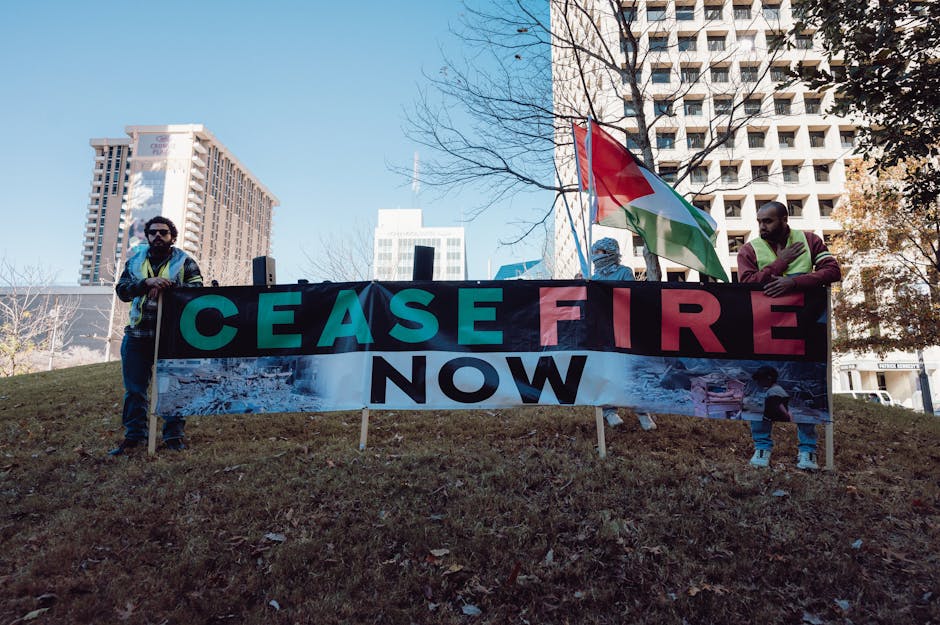
Image: GlobalBeat / 2026
Iran war news: Lebanon-Israel cease-fire takes hold after 13 months of fighting
Muhammad Asghar | GlobalBeat
A U.S.-brokered cease-fire between Israel and Lebanon began at 4 a.m. local time Monday, halting 13 months of cross-border attacks that have killed more than 2,000 people.
Both governments confirmed the truce minutes after it took effect, though Israeli Prime Minister Benjamin Netanyahu warned troops would remain deployed along the frontier “until we verify full compliance.”
The deal freezes a northern front that erupted when Hezbollah fired rockets at Israel on Oct. 8, 2023, one day after Hamas stormed the south. The violence has forced 60,000 Israelis and 200,000 Lebanese from border areas, flattened villages and disrupted global shipping through the eastern Mediterranean.
Under the 60-day agreement brokered by U.S. envoy Amos Hochstein, Israel will halt airstrikes within 40 kilometers of the frontier and withdraw troops from southern Lebanon within five weeks if no rockets are fired, according to statements from Netanyahu’s office and Lebanese caretaker PM Najib Mikati.
Hezbollah, which has lost much of its command structure since Israel began a major ground offensive on Oct. 1, has not formally signed but told Lebanese mediators it “will respect the cessation as long as Israel does,” Mikati told reporters in Beirut.
President Donald Trump called the accord “a critical de-escalation” in a post on Truth Social and said U.S. forces would not participate in any future enforcement mission, contradicting earlier speculation that American troops might join a planned multinational monitoring group.
The truce leaves Gaza as the only active war zone between Israel and Iran-backed factions. Israeli strikes on Gaza continued overnight, killing 18 people in Khan Younis, according to the territory’s Health Ministry.
Netanyahu framed the Lebanese pause as a way to “refocus resources” on dismantling Hamas, telling Likud lawmakers that operations in Gaza would intensify.
Market reaction was immediate. Brent crude fell 4.2 percent to $69.80 a barrel, while the Tel Aviv Stock Exchange’s TA-35 index jumped 3.1 percent in opening trade. Insurance premiums for vessels heading to Haifa port dropped by a third, shipping data showed.
Displaced civilians on both sides rushed toward home within hours. Traffic jams stretched 15 kilometers north of Nahariya as Israeli families headed back to border kibbutz that had been evacuated since last October. In Lebanon, a convoy of 200 private cars left Sidon for the hill town of Bint Jbeil despite appeals from the army to wait until engineers clear unexploded ordnance.
UNIFIL, the United Nations peacekeeping force that has patrolled the Blue Line since 1978, said it recorded no rocket launches or Israeli overflights in the first six hours. Spokesman Andrea Tenenti told GlobalBeat the situation was “quiet but fragile” and asked both armies to grant the mission access to blast sites to verify withdrawal timetables.
France and Germany welcomed the deal, urging the UN Security Council to expand the peacekeeper mandate before its renewal in August. China’s foreign ministry called for “immediate humanitarian access” to southern Lebanon, where local officials say at least 30 villages remain without water or electricity after weeks of bombardment.
Iran, which has bankrolled and armed Hezbollah since the 1980s, issued a terse statement through its mission in Beirut saying it “supports any measure that stops the Zionist aggression,” without mentioning the militia’s own pledge to pause attacks.
The cease-fire came together during a 36-hour sprint of phone calls between Hochstein, Netanyahu and Mikati after Israel threatened to bomb Beirut’s commercial district unless Hezbollah accepted terms similar to those proposed in September, three diplomats told GlobalBeat on condition of anonymity because they were not authorised to discuss the talks.
The final text gives Israel the right to resume strikes if it detects “preparations for attack,” language that could allow renewed bombing raids if rockets are being moved toward the border. That clause almost derailed the accord until the U.S. agreed to share real-time satellite imagery with the Lebanese army to distinguish between civilian and military vehicles, the diplomats said.
Background
The Lebanese frontier has stayed mostly calm since the 2006 war that killed 1,300 Lebanese and 165 Israelis. That conflict ended with UN Security Council Resolution 1701, which required Hezbollah to withdraw north of the Litani River and barred armed groups except the national army from southern Lebanon. The provisions were never fully implemented; Hezbollah built tunnels, stored rockets in village homes and flew surveillance drones into Israel throughout the past decade.
Tensions spiked after Hamas’s Oct. 7, 2023 assault that killed 1,200 Israelis. Hezbollah declared “unity with Gaza” and began daily rocket and anti-tank fire, prompting Israel to evacuate 42 northern communities. The tit-for-tat exchanges escalated gradually: Israeli strikes first targeted launch crews, then ammunition depots, then commanders including Hezbollah’s military chief Fuad Shukr in July 2024. The killing of Hezbollah leader Hassan Nasrallah in an underground bunker on Sept. 27 convinced Israeli leaders that a wider campaign could neutralise the group altogether, officials told reporters at the time.
What’s Next
The Lebanese army, which has fewer than 90,000 active personnel, now has five weeks to deploy 8,000 soldiers between the border and the Litani River while Israeli units pull back. Failure to meet either deadline could unravel the accord, diplomats warn. A monitoring committee made up of the United States, France, Qatar and Lebanon’s army will meet in Beirut next Monday to draft satellite verification protocols, according to a copy of the agreement seen by GlobalBeat.
Whether the pause holds depends largely on Gaza. If Israel expands its offensive in Rafah or if Hamas manages another large rocket salvo, Hezbollah could face pressure from its own supporters to resume fire under the pretext of defending Palestinians. Israeli officials have privately told European envoys they expect “at least one test violation within 10 days,” making the next fortnight a litmus test for whether the Iran-backed network has been deterred or is simply regrouping.
Senior Correspondent, World & Geopolitics
Muhammad Asghar covers international affairs, conflict zones, and US foreign policy for GlobalBeat. He has reported on events across the Middle East, South Asia, and Eastern Europe, with a focus on the intersection of diplomacy and armed conflict. He has been writing wire-service journalism for over a decade.