Iran closes Strait of Hormuz again over US blockade and fires on ships
Iran sealed the Strait of Hormuz Tuesday, firing on merchant vessels after the U.S. tightened its blockade, shipping trackers reported.
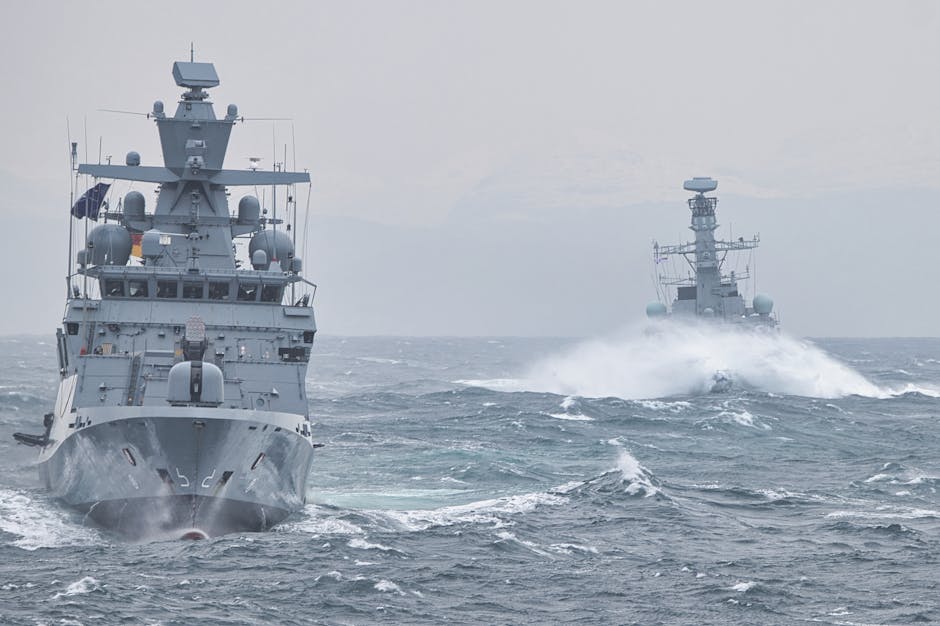
Image: GlobalBeat / 2026
Iran closes Strait of Hormuz, fires on tanker traffic after US oil embargo takes effect
By Muhammad Asghar | GlobalBeat
Iranian naval forces sealed the Strait of Hormuz early Thursday and opened fire on three commercial vessels, hours after Washington completed a naval embargo on Iranian crude exports.
Shipping monitors at Lloyd’s List Intelligence confirmed that at least one tanker, the Liberian-flagged Advantage Sweet, issued a mayday at 03:14 GMT reporting rocket fire from fast-attack craft belonging to the Islamic Revolutionary Guard Corps navy. The ship’s manager, Chevron-controlled operator Frontline, told reporters the vessel suffered “multiple hull breaches” 21 nautical miles off Bandar Abbas and requested immediate assistance from US warships that had assembled outside the strait.
The waterway carries 21 percent of the world’s seaborne oil. Brent crude futures spiked 17 percent to $117.42 a barrel within minutes of Iranian state media announcing the closure, the biggest intraday jump since Moscow’s troops rolled into Ukraine three years ago.
Tehran’s action comes three weeks after President Donald Trump signed an executive order instructing the US Navy to interdict any tanker loading Iranian crude, part of administration efforts to reduce Iranian oil revenue to “functionally zero.” The Treasury Department estimates the Islamic republic currently ships roughly 1.4 million barrels a day, mostly to China and Syria.
First shots
Captain Ramin Hosseinabadi, speaking on IRGC-run Press TV, said “all illegal traffic” would be halted “until American economic warfare ends.” He warned that any ship ignoring radio orders to stop “will be considered hostile and dealt with accordingly.” State television later broadcast footage of patrol boats firing machine guns across the bow of a tanker identified as the Marshall Islands-flagged Hafnia Lise. The vessel’s operator, Singapore-based Hafnia, told GlobalBeat it had diverted to Oman for inspection and reported no injuries among its 23 crew.
The US Fifth Fleet countered with a terse all-caps tweet at 04:03 GMT: “Iran’s actions threaten international commerce and freedom of navigation. We are responding.” Rear Admiral Sean O’Donnell, speaking from headquarters in Bahrain, said guided-missile destroyer USS Paul Hamilton had launched a helicopter that “observed IRGC units conducting warning fire” and relayed coordinates to regional navies. He gave no indication US ships had returned fire.
Markets reel
Oil traders scrambled to price in the worst disruption since Iraq’s 1990 invasion of Kuwait. Prices for Dubai-linked physical cargoes jumped to decade highs, while India’s state-run refiners declared force majeure on term contracts. New Delhi imports 85 percent of its oil needs and takes roughly 400,000 barrels daily through the strait. Finance Minister Nirmala Sitharaman convened an emergency cabinet meeting at 6 am local time, officials told Reuters. The Singapore Exchange briefly halted trading of Brent futures after circuit breakers triggered for the first time since the 2008 crash.
European gas prices also surged. Roughly a quarter of the continent’s liquefied natural gas transits the narrow sea lane feeding Mediterranean terminals. Wholesale Dutch TTF futures leapt 14 percent, piling pressure on manufacturers already hit by Germany’s industrial slowdown and persistent French nuclear outages.
Gulf reaction
Saudi Arabia released a measured statement calling on “all parties to ensure energy security,” while quietly activating an old pipeline to its Red Sea port of Yanbu that can carry 5 million barrels a day, according to analysts at Energy Aspects. Riyadh has built up crude inventories near the port precisely for such contingencies, traders said. Kuwait signalled similar contingency plans, activating a smaller 600,000-barrel link to the Gulf of Oman, but admitted it would take weeks to reroute normal flows.
The United Arab Emirates, which relies almost entirely on the chokepoint for exports, moved faster. The Abu Dhabi National Oil Company ordered immediate loading suspension at its main terminals, sending tankers waiting off Fujairah to drift. Emirates airline cancelled half its European departures citing “fuel-supply uncertainty.” Dubai’s stock index dropped 5.7 percent at the open, the steepest loss since the pandemic shutdown.
China’s stake
Beijing’s foreign ministry spokesperson Lin Jian issued an unusually blunt appeal for restraint, calling free passage through the strait “a shared interest of the international community.” China, the world’s largest oil importer, bought an estimated 1 million Iranian barrels daily through private traders despite US sanctions. Analysts estimate Beijing has strategic stockpiles equal to 90 days of imports, but panic buying could still drive global prices even higher.
State-run China National Petroleum Corporation told employees in an internal memo viewed by GlobalBeat to prepare for “an extended period of volatility above $120” and to prioritise domestic supply over export-oriented refining. Domestic retail gasoline prices were frozen to avert social unrest, the company said.
Pentagon moves
Defense Secretary John Phelan, appointed last month, briefed legislators on a secure call that the navy would “maintain a continuous carrier presence near Hormuz,” according to a Senate aide who asked not to be named. The USS Carl Vinson is already in the Arabian Sea, while USS Gerald R. Ford left Norfolk five days ahead of schedule under sealed orders. Officials expect the Ford group to transit Suez within a week.
Options being briefed to Trump include convoying tankers through the strait under US flag, copying the 1980s “reflagging” program when Washington protected Kuwaiti ships from Iranian attacks. Critics warn such a move could bring American sailors into direct combat with IRGC speedboats that operate under civilian cover.
Market manoeuvres
Analysts at Goldman Sachs raised their three-month Brent forecast to $130 but warned clients that “if strait disruption persists, $150 becomes the base case.” US shale drillers signalled they would ramp output, yet executives told investors on an earnings call that pipeline takeaway capacity out of the Permian basin is already maxed out until late next year. Any extra barrels would have to travel by costlier rail for months.
OPEC issued a bland statement affirming “readiness to support market stability,” but delegates told GlobalBeat that the cartel is unlikely to formally raise quotas before its December 17 ministerial meeting. UAE Energy Minister Suhail al-Mazrouei privately insists on maintaining current cuts to “protect prices,” an OPEC source said. That stance could fracture if Western governments lean on Gulf allies hard enough.
Background
Iran briefly shut the strait in July 2018 after Trump’s first administration exited the nuclear deal, an episode that sent Brent to $80. The passage, 33 km wide at its narrowest, is recognised as a global chokepoint by the US Energy Information Administration. Roughly one-fifth of traded petroleum, plus Qatari LNG worth $45 billion annually, passes through the channel bounded by Iranian and Omani waters.
Washington and Tehran have repeatedly clashed in the area. In 1988 the US launched Operation Praying Mantis, sinking half of Iran’s operational fleet after a mine struck the frigate USS Samuel B. Roberts. More recently, six merchant ships were sabotaged in 2019 attacks Washington blamed on Tehran. Iranian officials denied responsibility yet praised “brave” forces protecting national waters.
What’s Next
The UN Security Council will convene Friday to discuss the closure, diplomats confirmed. France drafted a resolution calling for “freedom of navigation,” but Russia is expected to veto any measure authorising force. Meanwhile Washington has given insurers until Thursday night to cancel cover on vessels entering Iranian territorial waters, a move that will likely freeze most remaining traffic even if guns fall silent.
Traders are now watching four conditions: any sign of a bilateral US-Iran back channel, damage assessments from the fired-upon tankers, Russian and Chinese willingness to vote for sanctions, and most crucially, whether Iran physically mines the strait. If mines appear, even neutral Oman would struggle to keep its side of the channel open, and Brent crude could race beyond the record $147 hit in 2008.
With global inflation already unsettling voters from Iowa to Istanbul, the political cost of $4 gasoline returns to the center of American politics just months before mid-term primaries. Trump, who campaigned on bringing fuel prices down to $2 a gallon, now faces the prospect of voters paying double that through summer. His choice: risk a shooting war or accept an oil shock that economists warn could tip slowing Western economies into recession.
Senior Correspondent, World & Geopolitics
Muhammad Asghar covers international affairs, conflict zones, and US foreign policy for GlobalBeat. He has reported on events across the Middle East, South Asia, and Eastern Europe, with a focus on the intersection of diplomacy and armed conflict. He has been writing wire-service journalism for over a decade.