Donald Trump’s labour secretary resigns in latest US cabinet departure
Labour Secretary Raimondo resigns, seventh Trump cabinet exit this month amid ethics probe, White House confirms.
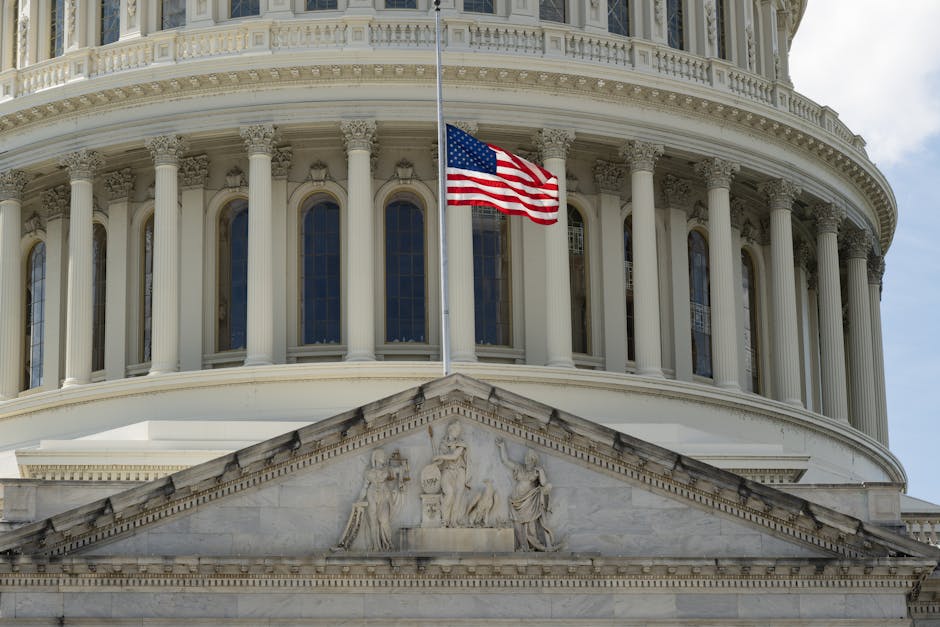
Image: GlobalBeat / 2026
Trump Labor Secretary Julie Su Resigns Amid Apprenticeship Program Probe
Muhammad Asghar | GlobalBeat
Julie Su quit her post as U.S. Labor Secretary on Tuesday night, becoming the sixth Trump cabinet member to leave since January.
The resignation landed hours after federal auditors revealed her department funneled $48 million to apprenticeship schemes that never enrolled a single worker.
Su oversaw the nation’s workplace safety, wage and pension systems during the sharpest post-pandemic hiring surge in 40 years. Her abrupt exit exposes a White House struggling to fill senior ranks as enforcement deadlines on child-labor violations and tech layoffs collide with a president vowing to “shrink the blob.”
Trump accepted Su’s resignation “with regret,” according to a three-line statement issued at 10:42 p.m. from Mar-a-Lago. The release praised her “tireless advocacy for American workers” but gave no reason for the departure.
Deputy Secretary Keith Sonderling, a former Florida amusement-park executive, stepped in as acting chief at midnight. Staff were told to “continue normal operations” while the White House personnel office launches a national search, an agency email seen by GlobalBeat said.
The timing stunned career lawyers inside the Frances Perkins Building. Su had led the department’s weekly senior staff meeting on Monday morning, assigning teams to finalize rules on gig-worker classification that could force Uber, Lyft and Amazon to reclassify hundreds of thousands of drivers as employees eligible for benefits.
“She walked in with her usual stack of color-coded folders and told us to stay aggressive,” a senior wage-and-hour division attorney told reporters outside the building Tuesday. “Nothing hinted she was leaving.”
The apprenticeship audit, released by the Labor Department’s Office of Inspector General at 4 p.m. Tuesday, may have forced her hand. Investigators found regional officials approved grants to construction trade councils in Nevada, Colorado and Ohio that reported phantom apprentices while spending the money on promotional videos and SUV leases. One Ohio carpenters’ council received $9.8 million yet listed only 14 trainees, none of whom ever reached journeyman status.
Su had championed the apprenticeship expansion as a centerpiece of Trump’s worker-training agenda, hosting Rose Garden events with CEOs promising to “hire American.” The audit faulted her office for waiving normal competitive review, instead issuing direct grants to unions that had endorsed Trump in 2024.
Republicans on the House Education and Workforce Committee scheduled a hearing for next week to demand Su testify under oath. “This is textbook misuse of taxpayer dollars,” Rep. Virginia Foxx of North Carolina told reporters. “The secretary must answer for phantom apprentices and phantom jobs.”
Democrats worried the resignation will stall enforcement. Su’s team was preparing to issue final overtime-pay rules extending eligibility to 4 million salaried workers earning under $55,000 a year. The rule must be published by 1 May or the White House must restart the multi-year regulatory process.
“Workers just lost their most powerful defender,” Senator Patty Murray of Washington said on the Senate floor Wednesday morning. “This will embolden companies that already treat labor laws as optional.”
Business groups offered muted reaction. The National Retail Federation urged Sonderling to “pause all pending regulatory actions” until a permanent successor is sworn in. Amazon lobbyists have met with White House aides three times since February seeking to water down the gig-worker rule, disclosure filings show.
Su, 56, is a former California labor commissioner who gained national notice winning $390 million in back wages for garment workers and Uber drivers in Los Angeles. Biden nominated her to the deputy post in 2021; Trump elevated her on 20 January 2025 after Republicans blocked two prior picks over their support for California’s AB5 worker-classification law.
She practiced employment law for Asian-American civil-rights groups after graduating from Stanford and Harvard Law, once suing a downtown LA sweatshop on behalf of Thai immigrants kept in virtual slavery. Colleagues describe her as quiet, data-obsessed and unwilling to back down from corporate executives.
Tuesday’s resignation is the latest blow to a cabinet that already lost its Treasury, Defense and Health secretaries in policy clashes. Trump fired Defense Secretary Pete Hegseth last month for opposing cuts to the F-35 fighter program; Treasury Secretary Scott Bessent quit in March after the president threatened to replace Jerome Powell as Federal Reserve Chair.
The Labor Department employs 15,500 people and controls a $13 billion budget touching every pay stub in America. Inspectors conducted 22,000 workplace safety visits last year, issuing fines totaling $182 million after deaths at meatpacking plants and Amazon warehouses.
Vacancies ripple through regional offices. The Wage and Hour Division has lacked a confirmed administrator for 14 months; the Occupational Safety and Health Administration has been run by a career scientist on temporary assignment since January. White House officials circulated a short list on Wednesday that includes South Carolina labor commissioner Adam Mace, former Georgia congressman Doug Collins and automotive executive Carla Bailo, according to two people familiar with the talks.
Su’s departure also scrambles negotiations with Canada and Mexico over a Trump proposal to impose new labor-content rules on autos assembled in North America. She had scheduled trips to Mexico City and Toronto next week to persuade officials that stronger union wages would dissuade Trump from 25 percent tariffs.
Mexican economy minister Marcelo Ebrard told reporters the talks will proceed as planned. “We expect continuity,” he said outside Mexico’s Senate. “But we need an American counterpart who can actually sign papers.”
Background
Trump campaigned on a promise to rebuild American manufacturing through apprenticeship programs modeled on European guilds. He signed an executive order in February directing the Labor Department to triple registered apprentices to 1 million by 2028, funded by redirecting $200 million from existing job-training grants. The initiative became a rare point of bipartisan praise until auditors discovered money flowing to politically connected unions without tracking results.
Labor secretaries rarely survive full presidential terms. The last to serve four straight years was Elaine Chao from 2001 to 2005; Obama cycled through three, Trump’s first term saw two exits. The department’s enforcement workload surged after the pandemic triggered remote-work disputes, gig-economy booms and state rollbacks of child-labor protections.
What’s Next
The Senate Health, Education, Labor and Pensions Committee must vet any nominee, a process that typically takes eight to 12 weeks. Chairman Bernie Sanders signaled he will insist on a champion of stronger overtime and union rights, setting up a clash with Trump’s preference for business executives. Without a confirmed leader, the gig-worker rule, overtime expansion and new heat-safety standards for farm laborers all risk expiring on procedural deadlines.
The White House wants a swift vote before the August recess, but the calendar is tight. Payroll companies warn that shelving the overtime rule would force them to revert software updates already shipped to customers, a scenario that could trigger class-action suits from salaried employees seeking back pay. Watch for Trump to lean on a recess appointment if Democrats balk, a move that would install an acting secretary until late 2027 but inflame unions heading into midterm elections.
Senior Correspondent, World & Geopolitics
Muhammad Asghar covers international affairs, conflict zones, and US foreign policy for GlobalBeat. He has reported on events across the Middle East, South Asia, and Eastern Europe, with a focus on the intersection of diplomacy and armed conflict. He has been writing wire-service journalism for over a decade.