Trump claims he could ‘take out Iran in one day’
Trump tells Virginia rally he could “take out Iran in one day,” offering no Pentagon support or operational detail.
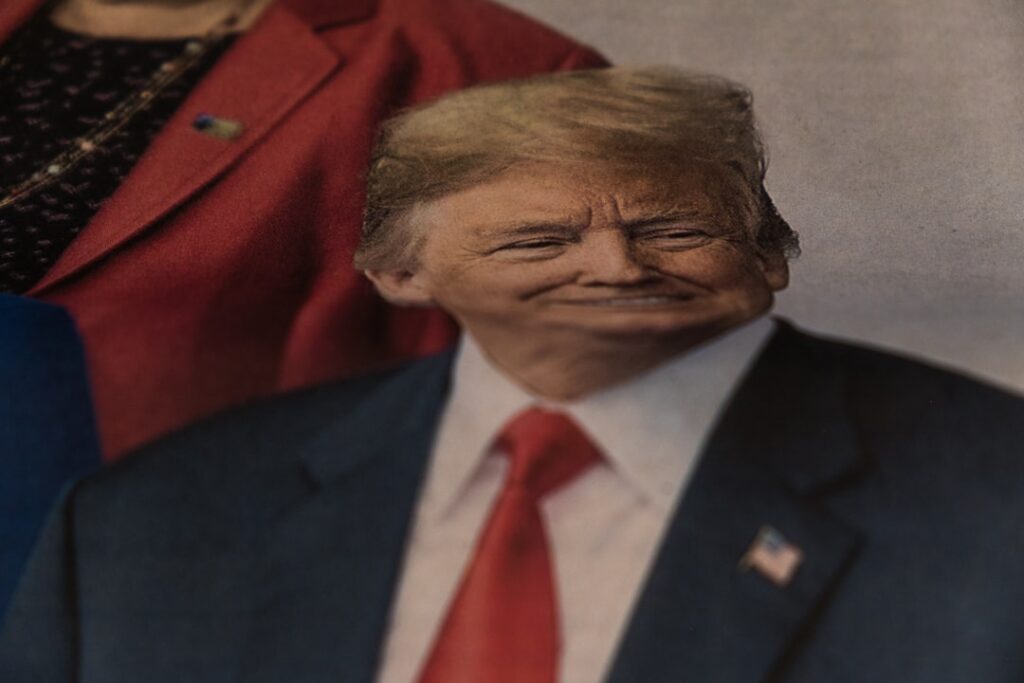
Image: GlobalBeat / 2026
Trump Iran threat: President claims he could ‘take out Iran in one day’
Muhammad Asghar | GlobalBeat
Donald Trump told reporters outside the White House he could obliterate Iran within 24 hours.
The president made the comment when asked about Tehran’s expanding nuclear program. Trump offered no details on how such an attack would unfold or whether he would use nuclear weapons.
His remarks land just days before Iranian envoys meet European diplomats in Geneva over stalled nuclear talks. Israel has urged Washington to present a united front against Iran’s uranium enrichment, which now reaches 84 percent purity according to the UN atomic watchdog. The Islamic Republic insists its program is peaceful.
Word of Trump’s threat ricocheted through Washington within minutes. Senator Tim Kaine, a Democrat who sits on the Armed Services Committee, told MSNBC that “loose talk about wiping countries off the map endangers American troops already stretched across the Middle East.” Senate Majority Leader John Thune offered a milder reaction, saying Republicans “trust the president to keep all options on the table” yet added that Congress expects consultation before any strike.
The Pentagon stayed quiet. Press secretary Major Pete Nguyen said in an emailed statement only that “the Department maintains robust defensive posture in the region.” He did not answer whether extra forces had been placed on alert. A senior defense official, speaking on condition of anonymity, said no fresh deployments had been ordered overnight.
Iran answered with contempt. Foreign Minister Abbas Araghchi wrote on X, formerly Twitter, that “the day America touches Iranian soil is the day forever engraved in its defeat.” The Revolutionary Guard staged a pre-dawn missile drill in the Persian Gulf, airing footage of Sejjil ballistic rockets blasting from desert launchers toward a mock aircraft carrier. State television claimed the exercise had been planned for weeks.
Oil markets shuddered. Brent crude jumped $1.80 to $74.15 per barrel in early London trading before settling back at $73.40. Analysts at RBC Capital warned that even verbal escalation threatens tanker traffic through the Strait of Hormuz, gateway for one-fifth of global supply. Insurance costs for supertankers sailing from Kuwait and Qatar rose 18 percent, ship brokers said.
European diplomats urged restraint. EU foreign policy chief Kaja Kallas said in Brussels that “the nuclear negotiations hang by a thread; we need measured voices, not ultimatums.” Britain’s Foreign Office summoned Iran’s ambassador in London to demand explanation for the missile drill, according to a UK official who requested anonymity because he was not authorized to speak publicly.
Trump has brandished the same threat before. During his 2016 campaign he pledged to “shoot out of the water” any Iranian boats that harass U.S. ships. Four years later he ordered the drone killing of General Qassem Soleimani in Baghdad, prompting Iran to fire ballistic missiles at an American base in Iraq that left more than 100 U.S. personnel with traumatic brain injuries. Both sides stepped back from further conflict after Tehran warned it had identified 400 American targets across the region.
The latest escalation stems from Iran’s nuclear advances since the U.S. quit the 2015 JCPOA deal. International Atomic Energy Agency inspectors reported last month that Iran has stockpiled 313.2 pounds of uranium enriched to 60 percent, close to weapons-grade. Israeli Defense Minister Israel Katz responded by telling his cabinet that “the window for diplomacy is closing faster than expected.” Washington has coordinated with Jerusalem on contingency planning, Israeli officials said without elaborating.
Inside Iran, hard-liners cheered the Revolutionary Guard show of force. Parliament member Mojtaba Zonnour told Fars news agency that “Trump’s tongue writes checks the Pentagon cannot cash.” Ordinary Iranians voiced deeper anxiety. “We keep hearing threats but see no bread on the table,” said Nasrin, a 37-year-old math teacher in Isfahan who declined to give her surname. Tehran’s rial traded at 712,000 to the dollar on unofficial markets, a record low that halves salaries paid in local currency.
Congress remains split along predictable lines. Senator Tom Cotton, Republican of Arkansas, tweeted “stand strong, Mr. President” while calling for new sanctions legislation within days. Representative Alexandria Ocasio-Cortez warned that “swaggering toward another endless war betrays the voters who want nation-building at home.” The House Foreign Affairs Committee is already scheduled to hold a hearing next Tuesday on Iran policy, where Secretary of State Marco Rubio will testify under subpoena threat if he refuses.
Background
The United States and Iran have circled each other since the 1979 Islamic Revolution turned Tehran from ally to adversary. Washington backed Saddam Hussein during the 1980-88 Iran-Iraq war, supplied weapons that killed thousands of Iranians, and later branded the country part of an “Axis of Evil” under President George W. Bush. Sanctions have strangled Iran’s oil exports for decades yet also spurred Tehran to build a network of allied militias across Iraq, Syria, Lebanon, and Yemen. The 2015 nuclear agreement offered a brief thaw, capping enrichment in exchange for sanctions relief, before Trump himself abandoned the pact in 2018 and reimposed sweeping penalties.
Since then Iran has expanded enrichment each time indirect talks in Vienna stumbled. Israeli sabotage attacks on nuclear facilities killed one scientist and damaged centrifuge halls, prompting Iran to build deeper underground sites at Natanz and Fordow. The Revolutionary Guard has also armed Russia with Shahed drones used in Ukraine, cementing a Moscow-Tehran axis that alarms NATO. U.S. troops in Syria and Iraq face near-weekly rocket fire from militias that Washington blames on Tehran’s directives, inflaming calls inside the Pentagon for retaliation even as both presidents profess no desire for wider war.
What’s Next
Iranian negotiators land in Geneva on Monday for the first technical session with European powers since November, and Trump has threatened to “pull the plug” if progress is not swift. Tehran wants guarantees no future U.S. president can reimpose sanctions, a demand Washington refuses, while the White House seeks limits on missile tests that Iran calls non-negotiable. Analysts expect more sanctions and military drills from both sides through July, raising the odds of accidental clashes in the crowded waters of the Persian Gulf.
Whatever the rhetoric, neither capital has mobilized for all-out war. The U.S. carrier Eisenhower remains in the Mediterranean, not the Gulf. Iran’s oil terminals loaded normally today. Yet Trump’s 24-hour vow hangs over every conversation with allies, Israel, and above all Tehran itself where the question is not just whether America can destroy Iran in a day, but what price it would pay across a region still littered with its soldiers, bases, and unfinished wars.
Senior Correspondent, World & Geopolitics
Muhammad Asghar covers international affairs, conflict zones, and US foreign policy for GlobalBeat. He has reported on events across the Middle East, South Asia, and Eastern Europe, with a focus on the intersection of diplomacy and armed conflict. He has been writing wire-service journalism for over a decade.