Liberty Media expanded F1’s global audience. It plans to do it again with MotoGP
Liberty Media, after boosting F1s global reach, aims to replicate growth with MotoGP acquisition.
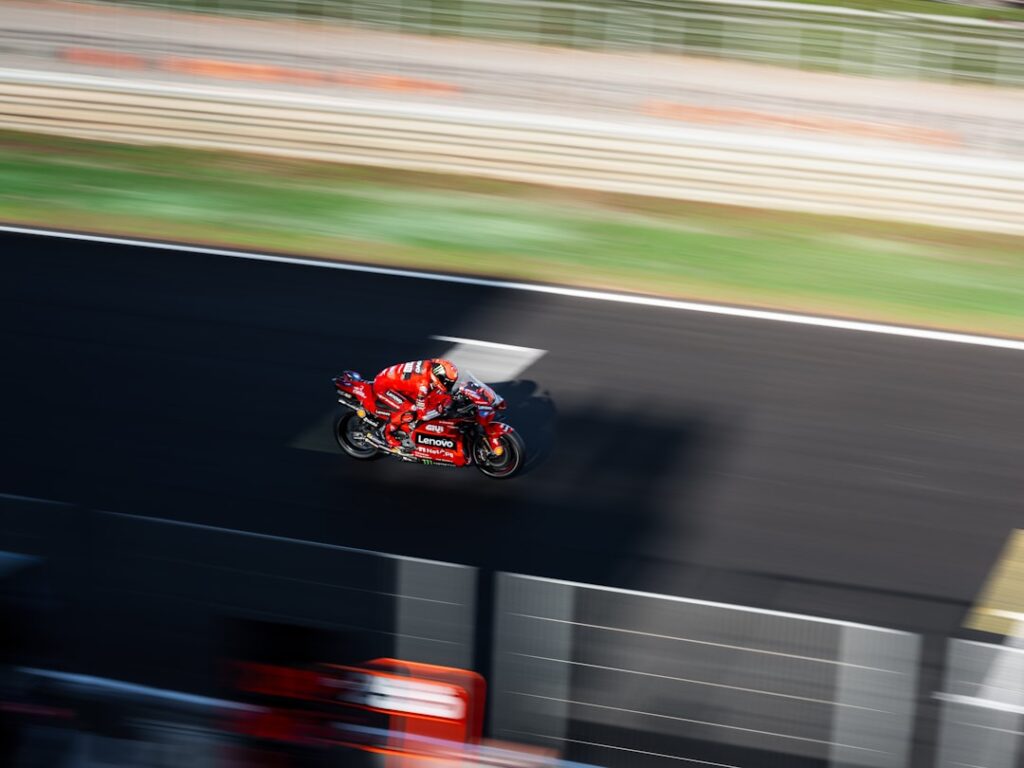
Image: GlobalBeat / 2026
Liberty Media MotoGP takeover targets 40% audience growth by 2028
James Okafor | GlobalBeat
F1 owner Liberty Media will pay 4.2 billion euros to buy MotoGP’s commercial rights from Spanish firm Dorna Sports, the companies announced Monday.
The deal gives Liberty control of motorcycling’s premier series starting January 1, 2027, following the same playbook that transformed Formula 1 into a streaming-era powerhouse.
Liberty paid $4.4 billion for F1 in 2017. The series now claims 450 million global viewers, up from 390 million. MotoGP’s current audience hovers around 300 million across 200 territories, according to industry data.
“We see massive untapped potential,” Liberty president CEO Greg Maffei told investors. “MotoGP has incredible racing, passionate fans, but limited global reach compared to where F1 sits today.”
The acquisition includes Dorna MotoGP, Moto2 and Moto3 operations, plus the electric MotoE series. Dorna will continue organizing races through 2026 while Liberty integrates operations.
MotoGP’s 22-race calendar has expanded rapidly since 2014, adding circuits in Asia and the Americas. The series drew 2.8 million spectators in 2023, down from pre-pandemic peaks near 4 million.
“We’re not changing the sporting format,” Maffei said. “We’re bringing Formula 1’s marketing muscle, digital platforms, and media expertise to motorcycling.”
The transaction valued MotoGP at 3.9 times annual revenue, discounting the deal by roughly 25% compared to F1’s valuation. Liberty shares gained 3.4% in New York trading.
Private equity firm Bridgepoint acquired Dorna in 2006 for 470 million euros. Canadian pension giant CPP Investment Board bought 39% in 2013 at an 875 million enterprise value.
“This represents a 379% return over our holding period,” Bridgepoint partner William Jackson told reporters in Madrid. “The sport was ready for a new steward with deeper pockets.”
Liberty will package MotoGP with Formula 1’s global sponsorship operation. The company already generates $1.3 billion annually from corporate partnerships across streaming, broadcast, and event naming rights.
“The synergies are obvious,” Macquarie analyst Tim Nollen wrote in a client note. “Same marketing partners, overlapping broadcasters, similar demographics. They’re buying a content library for Netflix specials.”
Another key element: sprint races. MotoGP introduced Saturday sprint events in 2022, echoing F1’s own sprint format launched two years earlier.
“Liberty proved there’s a significant TV audience willing to pay premium money for extra race content,” Gorman media rights expert Alex Brooks told GlobalBeat.
Licensing revenue remains largely unmonetized. Only 70 MotoGP-branded products exist globally compared to thousands of F1 items. Licensing revenue accounts for under 10% of MotoGP’s current total.
Derna has also struggled with streaming distribution compared to rivals. Liberty will integrate MotoGP into its F1 TV subscription platform across 180 countries.
Sports marketing executives predict Liberty will increase MotoGP’s average commercial rights fees by 800% within a decade.
“They basically did exactly this with F1,” Former ESPN executive John Skipper told GlobalBeat. “Added sprints, expanded into new markets, sold more rights and more series for each game.”
Not everyone’s optimistic about potential changes. F1’s aggressive expansion irked purists who feared commercialization over racing purity.
“Every day they make a new announcement about expanding the calendar,” five-time MotoGP champion Jorge Lorenzo told Spanish radio Monday. “We already have enough races.”
Japan’s Honda Sport, MotoGP’s largest manufacturer team, said it welcomes Liberty’s investment but stresses the need for cost control.
“We look forward to working with Liberty Media’s proven motorsport expertise while ensuring financial sustainability,” Honda Racing Corporation president Koji Watanabe confirmed.
Prices already skyrocketed. Top category MotoGP broadcast rights in major European markets doubled from 25 million euros in 2013 to 68 million for the 2023 season.
The acquisition still needs regulatory approval from the European Union’s competition authority. That process typically takes 4-6 months for sports media deals.
Background
Liberty’s $8 billion transformation of Formula 1 started conservatively. The company maintained the calendar, kept traditional circuits, and only gradually introduced changes. The biggest shift came in 2019 when it launched F1 TV for direct-to-consumer streaming outside traditional broadcast deals.
Revenue exploded from $1.8 billion in 2017 to $3.3 billion in 2023, driven by broadcasting rights fee inflation, sponsorship growth, and digital subscriptions. The F1 franchise value now exceeds $17 billion.
MotoGP’s commercial structure shares many historical similarities with F1. Dorna acquired exclusive rights to MotoGP in 1992, running the series primarily on broadcast rights revenue. The company has struggled to expand beyond traditional European strongholds.
What’s Next
MotoGP’s 2026 season contract includes 23 races across 18 countries. Liberty must renegotiate three major broadcast deals before 2027 covering Spain, Italy, and the UK. Those talks begin immediately with new terms taking effect August 2026.
The European Commission will likely approve the deal, an antitrust source tells GlobalBeat, though minor conditions around bundling discounts may apply. U.S. antitrust officials have shown little resistance to sports media consolidation.
The bigger question: will Liberty attempt merging F1 and MotoGP as a unified motorsports product? Some analysts predict a combined 46-race combined calendar and shared race weekends within five years.
Expect disputes. Traditional MotoGP power-brokers, particularly Spanish broadcasters respecting Dorna, have nurtured relationships since the 1990s. Liberty’s new broadcasting strategy will test loyalty against profits.
Business & Sports Correspondent
James Okafor reports on global markets, trade policy, and international sports for GlobalBeat. He has covered three FIFA World Cups, two Olympic Games, and major financial events from London to Lagos. He specialises in African economies and emerging market stories.