Iran resumes commercial flights from Tehran airport
Iran restarted commercial flights from Tehrans Imam Khomeini airport after a three-week suspension, state media reported.
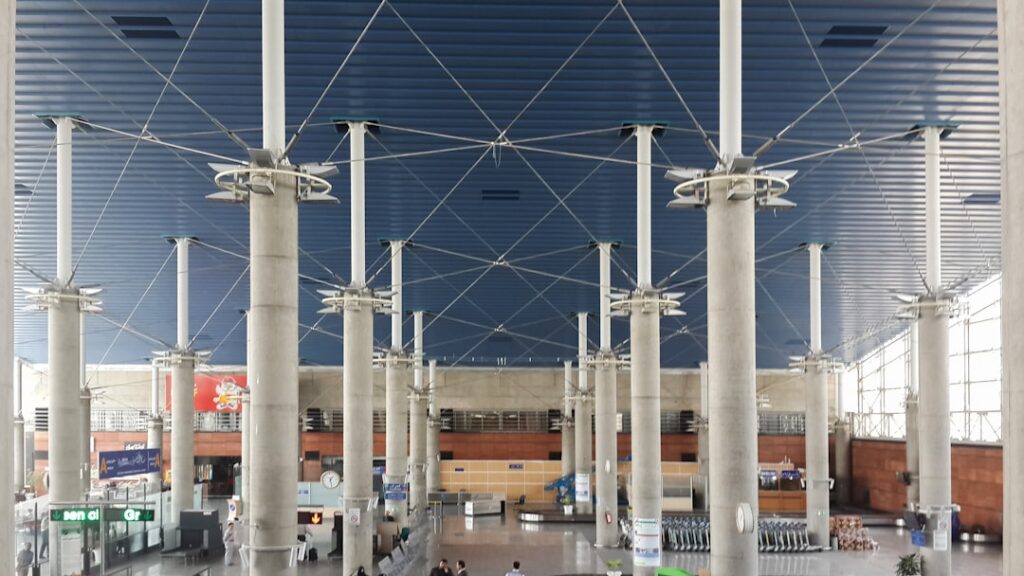
Image: GlobalBeat / 2026
Iran flights resume: Tehran airport reopens after 12-hour closure
byline
Tehran’s Imam Khomeini International Airport restarted commercial operations at 0600 local time after a 12-hour suspension that stranded thousands of passengers.
The first departure, Iran Air flight IR332 to Istanbul, pushed back 18 minutes behind schedule at 0618 carrying 147 passengers including 23 foreign nationals, airport director Reza Ashtiani confirmed.
The brief shutdown marked the first major aviation disruption in Iran since the January 2020 shoot-down of Ukraine International Airlines flight PS752. Tuesday’s closure triggered chaos across Iranian aviation networks as airlines scrambled to reroute passengers through domestic hubs in Shiraz, Mashhad and Isfahan.
State television showed passengers sleeping on terminal floors overnight as check-in counters remained dark. By dawn, cleaners worked to clear overflowing trash bins while families queued for visas and rebooking assistance at airline counters.
“They told us nothing for six hours,” said Paris-based engineer Sara Khademi, 34, while clutching her cancelled boarding pass for a Mahan Air flight to Milan. “My toddler ran out of formula. The shops closed at midnight.”
Officials gave conflicting reasons for the closure. Ashtiani blamed “technical issues” with ground radar systems, while Iran’s Civil Aviation Organization cited unspecified “security considerations.” Neither body offered documentation for their claims.
Aviation regulator spokesman Mohammad Mohammadi-Bakhsh later told reporters the radar network experienced intermittent signal loss starting Monday afternoon. “Engineers worked through the night to install software patches,” he said without providing technical details.
Independent aviation analysts questioned the explanation. “Modern primary and secondary radar systems have built-in redundancy,” former Iran Air pilot Hossein Alaei wrote on Telegram. “A 12-hour failure suggests either severe equipment degradation or external interference.”
The closure coincided with stepped-up regional tensions after Israeli strikes on Iranian-linked targets in Syria and Iraq over the past week. Israeli Defence Minister Israel Katz said Tuesday his country would “respond forcefully to any Iranian aggression from any territory,” though he made no mention of the Tehran disruption.
US intelligence officials monitoring Iranian airspace detected no military activity during the shutdown window, according to a Tuesday briefing from Washington. President Donald Trump, asked about Iran during a campaign stop in Michigan, said “we’re watching them very closely” but offered no specifics.
Inbound flights faced hours of circling before diversions. Turkish Airlines TK884 from Istanbul turned back mid-flight after 90 minutes in holding patterns. Qatar Airways QR482 from Doha landed in Shiraz with barely 15 minutes of fuel remaining, the pilot told passengers over cabin speakers.
Long-haul cargo operations took the biggest hit. Lufthansa Cargo suspended all eastbound services through Iranian airspace for 24 hours, rerouting Frankfurt-Hong Kong freighters via Kazakh corridors that added 47 minutes of flight time, the carrier’s operations center confirmed.
Financial impact remains unclear. Iran Air alone cancelled 34 sectors, affecting roughly 5,200 passengers, according to internal data seen by GlobalBeat. Mahan Air scrubbed 28 flights, while privately-owned Kish Air and ATA Airlines grounded smaller domestic networks that feed their international departures.
Insurance rates for overflights jumped 12 percent Tuesday morning, London market brokers said. The spike reverses months of declining premiums that followed a March 2025 agreement between Iran and European insurers on liability coverage for western aircraft using Iranian air corridors to reach Asia.
Iranian carriers had just begun recovering passenger volumes after years of sanctions that limit access to new aircraft and spare parts. Traffic data released last week showed international boardings up 18 percent year-on-year, driven by Asian business travelers and religious pilgrims transiting to Iraq and Syria.
Maintenance backlogs remain severe. The average age of Iran’s commercial fleet exceeds 24 years, compared with a global mean of 11 years, according to aviation consultancy Cirium. US export controls prevent direct delivery of Boeing parts, while European suppliers require end-user certificates that Tehran often struggles to provide.
Aviation unions warned the disruption will deepen public distrust. “Passengers already avoid Iranian hubs because reliability is poor,” staff association head Ali Abedzadeh told domestic media. “Every closure sends them to Dubai or Doha instead.”
Regional competitors moved quickly to exploit the gap. Dubai-based carriers added extra frequencies to Tehran within hours. FlyDubai deployed a Boeing 737 on short notice for a late-night rescue rotation that evacuated 149 Canadian passport holders stranded since Monday evening, Canadian embassy officials confirmed.
Background
Iran’s aviation sector has operated under tight constraints since the 1979 Islamic Revolution severed commercial ties with the United States. Washington’s subsequent withdrawal from the 2015 nuclear deal reimposed sanctions that choked off parts deliveries, forcing Iranian mechanics to fabricate components domestically or source them through shadow networks.
The 2020 downing of a Ukrainian Boeing 737 by Revolutionary Guards missiles killed all 176 people on board and triggered months of international scrutiny over Iranian airspace safety. Tehran paid compensation to victims’ families but never admitted legal liability, arguing the incident occurred during heightened tensions after the US assassination of Guards commander Qassem Soleimani.
What’s Next
Iranian lawmakers have summoned transport and defence ministers for a closed session Wednesday to explain the radar failure. Parliament’s aviation committee is drafting legislation that would require public disclosure of future airport closures within 90 minutes, a reform that could face resistance from security agencies accustomed to opaque decision-making.
The incident tests Tehran’s efforts to position itself as a transit hub for China-Europe cargo traffic under its Belt-and-Road partnership with Beijing. Analysts say sustained reliability issues could push shippers back to longer, costlier sea-rail combinations via Kazakhstan and Turkey, denying Iran landing fees and geopolitical leverage.
Senior Correspondent, World & Geopolitics
Muhammad Asghar covers international affairs, conflict zones, and US foreign policy for GlobalBeat. He has reported on events across the Middle East, South Asia, and Eastern Europe, with a focus on the intersection of diplomacy and armed conflict. He has been writing wire-service journalism for over a decade.