Live updates: US says two American-flagged merchant vessels have gone through Strait of Hormuz
U.S. says two American-flagged merchant ships transited Strait of Hormuz amid rising regional tensions.
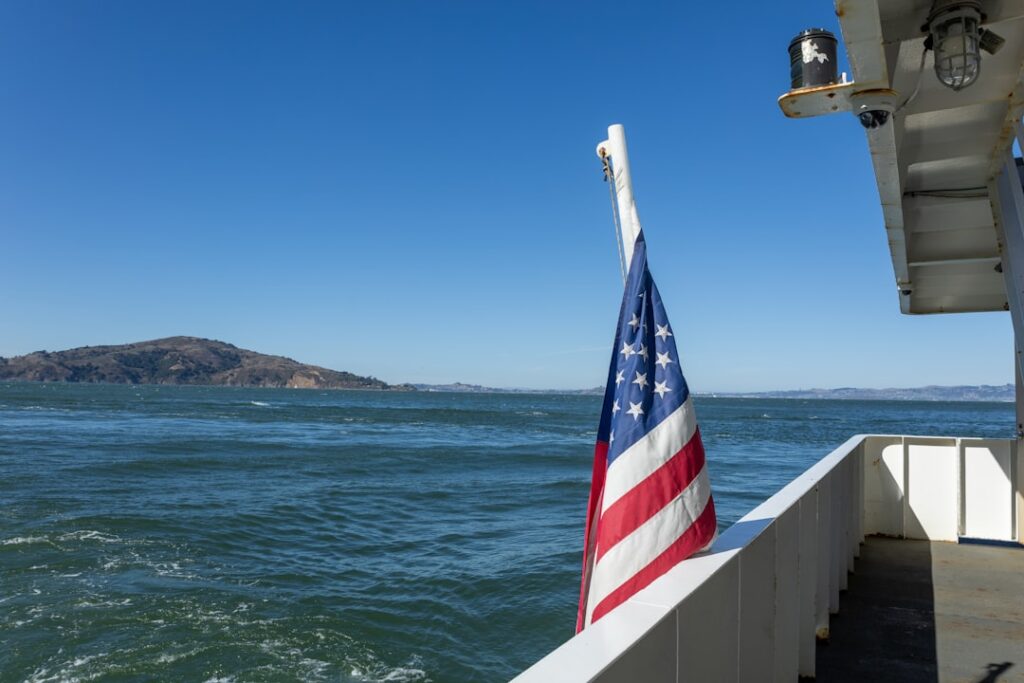
Image: GlobalBeat / 2026
US ships transit Strait Hormuz as tensions mount over Iran seizure
Byline: Muhammad Asghar | GlobalBeat
Two American-flagged merchant vessels transited the Strait of Hormuz on Monday under escort by U.S. naval forces, the Pentagon confirmed.
Defense officials said the commercial ships made the roughly 21-nautical-mile passage hours after Iran’s Revolutionary Guard seized the Portuguese-managed tanker MSC Aries, a move Washington condemned as an illegal act of piracy.
The narrow waterway carries 20 percent of the world’s traded oil, making any threat to shipping a flashpoint for global energy markets. Tehran had warned it could retaliate after the U.S. blocked a tanker carrying Iranian crude last month.
“These transits demonstrate the safe and professional coordination within the military-to-civilian mariner framework,” Pentagon press secretary Maj. Gen. Pat Ryder told reporters at the Pentagon. He declined to name the two U.S. vessels, citing commercial sensitivities.
Iran’s Foreign Ministry said the container ship Aries was seized for “violating maritime regulations,” without specifying which rules were broken. The 15,500-teu vessel sails under a Portuguese flag but is managed by Mediterranean Shipping Company and carries Indian crew members, Indian officials said.
New Delhi said it has demanded access to its 17 nationals aboard the MSC Aries. “Our embassy in Tehran is pressing the Iranian authorities for consular access,” Indian Foreign Ministry spokesman Randhir Jaiswal told reporters.
Shipping data showed the Aries was diverted toward the Iranian port of Bandar Abbas after leaving the United Arab Emirates emirate of Sharjah bound for Nhava Sheva in India. Satellite images taken by MarineTraffic on Monday showed the ship anchored inside Iranian waters.
Monday’s U.S. naval escort operation came after Washington deployed additional destroyers and patrol craft to the region, beefing up what it calls its “maritime security presence” around the Gulf. The USS McFaul, a guided-missile destroyer assigned to U.S. 5th Fleet, transited the strait within visual distance of the two American ships, according to a U.S. official who was not authorized to speak publicly.
Oil futures briefly climbed above $86 per barrel in London after news of the seizure broke, extending a 3-day rally driven by concerns of direct conflict. “Any action that disrupts Hormuz transits is immediately priced in,” said Alan Gelder of energy consultancy Wood Mackenzie. The 22-mile-wide chokepoint sits between Iran to the north and Oman to the south, its shipping lanes only 2 miles wide in each direction.
Tehran and Washington have repeatedly clashed over sanctions on Iranian oil exports. Last week the U.S. Justice Department said it had confiscated more than 980,000 barrels of Iranian crude bound for China, the latest in a series of sanctions-enforcement actions that have infuriated the Islamic Republic.
Background
The Strait of Hormuz has served as a geopolitical tinderbox since Iran’s 1979 revolution. During the 1980-88 Iran-Iraq war both sides attacked tankers in what became known as the “Tanker War,” prompting U.S. naval escorts under Operation Earnest Will. The U.S. Navy’s Fifth Fleet, headquartered in Bahrain, has patrolled Gulf waters ever since.
Washington reimposed sweeping sanctions on Iranian oil exports in 2018 after President Donald Trump exited the 2015 nuclear deal, triggering a series of maritime flashpoints. Tehran responded with what U.S. officials labeled “sabotage attacks” on tankers in May and June 2019, including limpet mines that damaged the Japanese-owned Kokuka Courageous and Norwegian-owned Front Altair. The U.S. also blamed Iran for drone strikes on Saudi Arabia’s Abqaiq processing facility in September 2019, temporarily knocking out 5 percent of global supply.
What’s Next
Tehran has scheduled a closed parliamentary hearing for Tuesday on maritime security, according to state media, while officials in Washington say further U.S. naval movements through Hormuz are “coming very soon.” Diplomats expect the issue to be raised this week at United Nations headquarters, where the Security Council discusses Israeli-Iran tensions on Wednesday under the agenda item “Middle East.”
Investors will watch Thursday for any new U.S. sanctions on entities linked to Iran’s Revolutionary Guard, an action the Treasury Department has reportedly prepared but not announced. Indian diplomats said they expect Iran to let consular officials meet the detained crew within 48 hours, and Oman’s foreign ministry, which has mediated past Gulf crises, said Muscat “welcomes dialogue to de-escalate maritime friction.”
The episode highlights how quickly shipping costs can spike when governments weaponize sea lanes. If Iran holds the Aries as leverage, insurers could raise war-risk premiums for hundreds of vessels passing Hormuz each day; owners have already asked Lloyd’s Market Association to widen the high-risk area. Washington’s next move, experts say, will hinge on whether it frames the seizure as a legal sanctions case or a strategic challenge to the global oil trade.
Senior Correspondent, World & Geopolitics
Muhammad Asghar covers international affairs, conflict zones, and US foreign policy for GlobalBeat. He has reported on events across the Middle East, South Asia, and Eastern Europe, with a focus on the intersection of diplomacy and armed conflict. He has been writing wire-service journalism for over a decade.