WAR SPILLS OVER: Panic ensues over satellite image of Iranian island
Satellite image shows Iranian military buildup on Qeshm Island, fueling Mideast war fears and global oil market jitters.
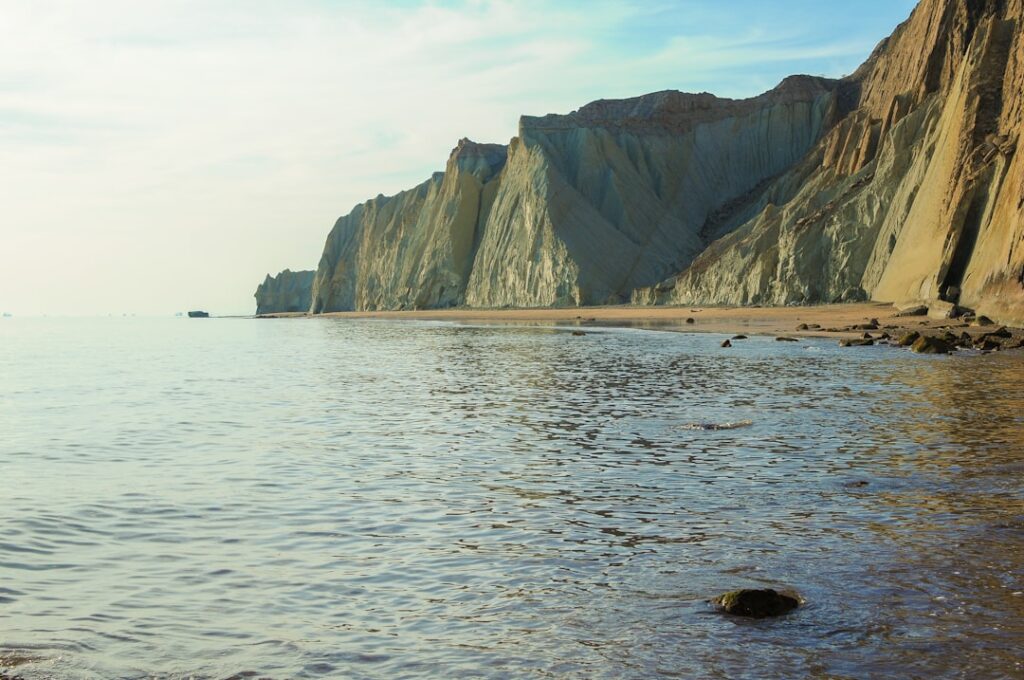
Image: GlobalBeat / 2026
Iran satellite image: Commercial photo shows Qeshm Island military buildup near Strait of Hormuz
Muhammad Asghar | GlobalBeat
Satellite imagery circulated Monday shows new Iranian fortifications on Qeshm Island, the tiny landmass commanding the Strait of Hormuz shipping lane.
The pictures, shot by the commercial firm BlackSky and first aired by News.com.au, reveal freshly graded roads, revetments and what analysts identify as anti-aircraft positions sprinkled along the island’s northern coast.
Rumour spread fast. By nightfall oil traders had pushed Brent crude up $1.80 to $76.40 a barrel while U.S. defence stocks ticked higher after a three-day slide. The Pentagon refused to confirm any “abnormal” activity but acknowledged “tracking” the images.
Iran has used the 135-square-kilometre island for decades to park artillery and speedboat units that could menace tankers. The new work suggests Tehran is hardening those assets against the air strikes President Donald Trump has refused to rule out if nuclear talks collapse.
Terrance Adams, a former imagery analyst at the National Geospatial-Intelligence Agency, said the soil scars visible in the 40-centimetre-resolution frame “match vehicle-sized berms built in less than two weeks.” Adams told reporters the spacing implies “short-range air-defence systems, probably Sevom Khordad or imported Russian Pantsir.”
The Pentagon would not say whether U.S. satellites had already recorded the build-up. Press secretary Eric Pahon wrote by email that “we don’t discuss classified intelligence” but added that “any Iranian attempt to disrupt maritime traffic would be met decisively.”
Oil markets reacted instantly. “Just the photo was enough,” said Bjornar Tonhaugen of Rystad Energy. Roughly 21 million barrels, a fifth of global supply, pass daily through the adjacent strait. “Traders remember 2019,” Tonhaugen said, when limpet mines tore holes in two tankers off Qeshm and sent prices soaring 4 percent in a morning.
Iran’s mission to the United Nations did not answer repeated calls. State television instead broadcast a short clip of Islamic Revolutionary Guard Corps speedboats circling the island, calling the exercise routine.
Israeli officials watched closely. “Another warning sign,” Defence Minister Israel Katz told army radio, repeating his view that “the world must act before Iran tips the region into war.” Katz gave no indication Israel planned an immediate response.
The photograph surfaced three days after Trump told Fox Business he would “not allow Iran to have a nuclear weapon, period.” When asked about possible strikes, he answered: “Everything is on the table.” His remarks followed European intelligence leaks suggesting Tehran now holds 210 kilograms of uranium enriched to 60 percent, near weapons grade.
Senator Jack Reed, the Democrat who chairs the armed-services committee, urged caution. “We’ve seen this movie before,” Reed said on the Senate floor, recalling 2003 satellite claims that helped drive the invasion of Iraq. Reed demanded “public, verifiable evidence” before any action.
Republicans pushed the opposite message. “Weakness invites provocation,” Senator Tom Cotton wrote on X, arguing the administration should “strike Iran’s missile sites now.” Cotton’s post gained 30,000 likes within an hour.
Social media amplified fear. #Qeshm trended worldwide, peppered by false claims the island had already been hit. TikTok videos spliced the satellite picture with Gulf War footage, racking up 7.8 million views before the platform flagged them as unverified.
Shipping firms tried to stay calm. MSC, the world’s largest container line, said it had not diverted vessels but was “monitoring” the strait. Maersk issued an identical statement almost word for word, underscoring the sector’s jitters.
Qeshm sits 30 kilometres south of Bandar Abbas, home to Iran’s main naval base. Its western shore narrows to barely 30 kilometres of water between the island and the Omani exclave of Musandam, making it an ideal perch for coastal missiles.
Western naval officers have war-gamed that scenario for years. A 2021 U.S. Navy simulation concluded Iran could sow mines and sink one tanker within 90 minutes, forcing insurers to suspend transit and choke world supply. The new revetments, analysts say, would help Iranian crews reload under cover, stretching the threat from hours to days.
France and Britain called for restraint. “Maritime security is non-negotiable,” French Foreign Minister Jean-Noel Barrot told reporters in Brussels, echoing a joint statement that urged “all parties to avoid escalation.” Neither country offered fresh naval patrols.
Gulf monarchies stayed quiet. Saudi Energy Minister Prince Abdulaziz bin Salman left an OPEC meeting in Vienna without speaking to the press. Kuwait’s cabinet held an emergency session, state news agency KUNA reported, but issued only a bland pledge to secure supply.
Background
The United States last bombed Qeshm, then an austere outpost, in 1988 during Operation Praying Mantis, sinking two Iranian patrol boats after a U.S. frigate struck a mine. Since then the island has sprouted missile batteries, drone hangars and a Chinese-built cruise-missile production plant that Pentagon briefers say can manufacture 30 guided warheads a month.
Tensions rose again after Trump abandoned the 2015 nuclear accord and imposed “maximum pressure” sanctions that now cut Iranian oil exports to about 700,000 barrels a day from a peak of 2.8 million. Tehran responded by breaching enrichment limits and harassing tankers, culminating in the 2019 limpet-mine incidents and a brief seizure of a British-flagged ship.
What’s Next
The International Atomic Energy Agency’s board meets in Vienna next week, where European powers may push a censure resolution that could trigger a snap-back of U.N. sanctions. Tehran has warned such a move would end its remaining cooperation and could coincide with further naval exercises near Qeshm.
Traders will watch the daily flow of tankers through the strait. Analysts say if Iran moves missiles onto the island’s new pads, insurers could impose war-risk premiums that add $300,000 to the cost of every supertanker transit, raising gasoline prices worldwide within days.
The satellite image, blurry but ominous, may prove less than meets the eye. Yet with diplomacy stalled and election-year pressure mounting in Washington, even routine earthworks on a speck of Iranian rock are enough to rattle markets and move fleets.
Senior Correspondent, World & Geopolitics
Muhammad Asghar covers international affairs, conflict zones, and US foreign policy for GlobalBeat. He has reported on events across the Middle East, South Asia, and Eastern Europe, with a focus on the intersection of diplomacy and armed conflict. He has been writing wire-service journalism for over a decade.