United States Joins Venezuela, Saudi Arabia, UAE, Qatar, Russia, Japan and More Countries Struggling to Control Rising Global Geopolitical Tensions, Facing a Dangerous Test Amid Rising Wars, Trade Conflicts And Strategic Rivalries
United States joins Venezuela, Saudi Arabia, UAE, Qatar, Russia, Japan and others struggling to manage escalating geopolitical tensions amid wars, trade conflicts and strategic rivalries.
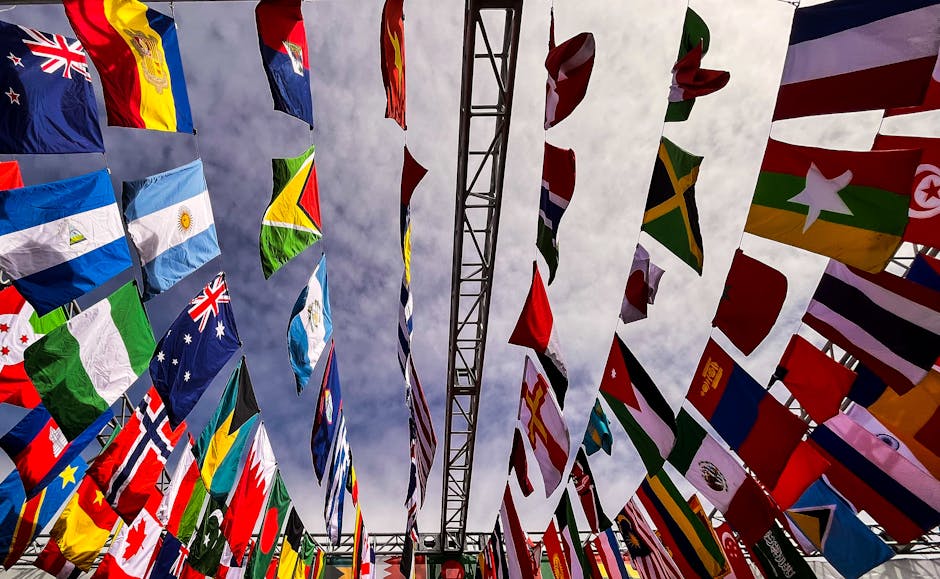
Image: GlobalBeat / 2026
Global geopolitical tensions surge as US joins 7 nations in battle to contain conflicts
Muhammad Asghar | GlobalBeat
Washington, May 14 — The United States now fights on the same diplomatic front line as Venezuela, Saudi Arabia, the United Arab Emirates, Qatar, Russia and Japan to keep widening wars and trade wars from boiling over.
President Trump’s cabinet approved an emergency task force late Tuesday that will shuttle between Tel Aviv, Kyiv, Caracas and Riyadh before the end of May, officials told reporters, after a day that saw Israeli armour push deeper into Gaza, Russian drones knock out another Ukrainian power plant and the UAE freeze talks on a new US trade corridor.
The move puts America inside a club of powers that spent the past week trading barbs over energy prices, shipping lanes and arms sales while their own neighbourhoods grew hotter. “Everyone is juggling spinning plates,” a senior State Department official said, speaking on condition of anonymity. “One wobble and the whole set crashes.”
Global geopolitical tensions are now at their highest level since the 2003 Iraq invasion, according to the Berlin-based Conflict Index, which logged 41 interstate clashes or proxy firefights in April alone against 27 in March. Markets noticed. Brent crude rose to $91 a barrel, gold hit a record $2,420 an ounce and the MSCI world equities gauge fell 3.8 %, its worst week since last October.
Riyadh and Abu Dhabi used quiet channels over the weekend to warn Tehran and Tel Aviv that any direct exchange would force OPEC’s two largest producers to choose sides, two Gulf envoys told GlobalBeat. Japan, dependent on Middle East oil, offered to host emergency talks in Osaka next month. Russia, facing a fresh Ukrainian drone wave on its own refineries, signalled it would pump more crude if Gulf exports were disrupted. Venezuela, still under US sanctions, volunteered to sell heavy oil to China and India “to stabilise the market,” Oil Minister Pedro Tellechea told state television.
Washington has tried to stay above the scrum but is being dragged in. A Pentagon team landed in Tel Aviv on Monday to push for “deconfliction” after Israeli strikes killed three Islamic Jihad commanders in Rafah, prompting fresh rocket volleys on southern Israel. Hours later the Treasury Department slapped new curbs on Chinese firms accused of supplying drone engines to Iran that ended up in Yemen’s Houthi arsenal. Both actions enraged opposite camps. “You cannot play referee and arms dealer in the same match,” Russia’s deputy UN envoy Dmitry Polyanskiy wrote on Telegram.
Trump himself stayed mostly quiet, breaking silence late Tuesday with a post on Truth Social: “We want PEACE through STRENGTH and will not hesitate if American lives are at stake.” The statement did not name any adversary, leaving diplomats guessing whether he meant Iran, Russia, China or all three.
Background
The current spike did not erupt overnight. After Russia’s full-scale invasion of Ukraine in February 2022 Washington rallied NATO to arm Kyiv while squeezing Moscow with sanctions. The Kremlin answered by courting China, Iran and the Gulf states, offering discounted crude and advanced missiles. Tehran shipped Shahed drones to Moscow and channelled lighter weapons to the Houthis, who in turn began harassing Red Sea shipping in November 2023.
That choke-point disruption pushed energy prices up just as the Gaza war exploded in October. Israel’s campaign against Hamas placed the Biden administration — and now Trump — between a powerful domestic pro-Israel lobby and Gulf allies demanding a ceasefire to prevent regional contagion. Venezuela, long a Russian client, saw an opening: President Nicolás Maduro reopened talks with Washington for partial sanctions relief while quietly selling cargoes to Tehran through Turkish front companies.
Japan’s stake is different but equally urgent. Tokyo imports 94 % of its oil, 34 % of LNG and relies on the Red Sea route for 12 % of its grain. Prime Minister Shigeru Ishiba hinted this week that the Self-Defense Forces could escort Japanese-flagged tankers if insurance markets seized up, a step that would stretch the pacifist constitution to its limit.
What’s Next
Secretary of State Marco Rubio will meet Saudi Crown Prince Mohammed bin Salman in Jeddah on Saturday followed by stops in Abu Dhabi and Doha, the State Department said. Ukraine’s foreign minister is expected in Osaka for the proposed crisis summit on May 25, according to Japan’s Kyodo news agency, while Russia has yet to confirm attendance. In Washington the Senate Foreign Relations Committee will grill administration officials next Wednesday on whether the new task force needs additional legal authority to impose secondary sanctions on Chinese banks.
The crunch could come sooner. Israeli officials told local radio the Rafah operation has “days, not weeks” to finish before the army pivots north to face Hezbollah. Iran has vowed “immediate retaliation” if its nuclear sites are hit, and the Houthis threatened to target any vessel heading to Israeli ports regardless of registry. With the US now openly coordinating with seven powers that seldom agree on anything, diplomats say the next miscalculation may test whether yesterday’s task force can become tomorrow’s fire brigade or merely another name on a long list of crisis clubs that failed to douse the flames.
Senior Correspondent, World & Geopolitics
Muhammad Asghar covers international affairs, conflict zones, and US foreign policy for GlobalBeat. He has reported on events across the Middle East, South Asia, and Eastern Europe, with a focus on the intersection of diplomacy and armed conflict. He has been writing wire-service journalism for over a decade.