Mission accomplished? The 2003 boast that haunts today’s Iran conflict
Bushs 2003 mission accomplished carrier speech looms over U.S.-Iran tensions as policymakers warn against repeating Iraq war errors.
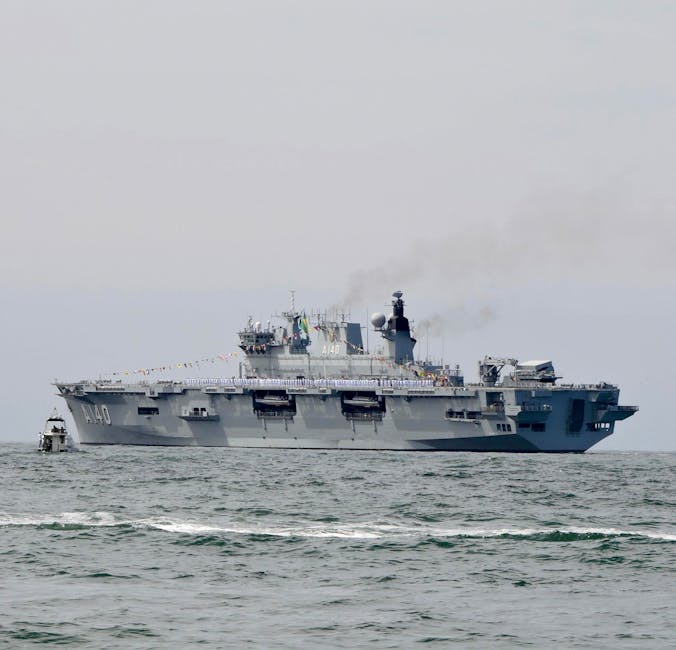
Image: GlobalBeat / 2026
Mission Accomplished Iran
Twenty-one years after Bush’s aircraft carrier moment, U.S. finds itself again on Mideast war footing
Muhammad Asghar | GlobalBeat
📌 KEY FACTS
• 21 years separate George W. Bush’s “Mission Accomplished” speech from today’s Iran-centred crisis
• U.S. Navy maintains two carrier strike groups within striking distance of Iranian coast
• Tehran has enriched uranium to 60%, close to weapons-grade threshold
• Washington–Tehran indirect talks on nuclear programme remain suspended since September
• 2003 toppling of Saddam Hussein opened regional space for Iranian influence Bush vowed to curb
Israeli tank shells whistled over southern Lebanon at dawn last week the same day a U.S. destroyer fired interceptors toward incoming drones in the Red Sea. The choreography recalled May 2003, when President Bush declared “Mission Accomplished” beneath a fluttering banner. Then Tehran cheered Saddam’s demise; now it arms the militias peppering the very fleet Bush saluted. History’s loop tightens.
The White House insists no wider war looms, yet every diplomatic cable reads like a 2003 flashback: carrier deployments, warnings to “axis” states, murky intelligence dossiers. American officials privately liken Iran’s enrichment surge to Saddam’s phantom WMD stockpiles, asking whether another categorical assurance—this time that Tehran won’t obtain a bomb—can be sold to a sceptical public. Washington has not formally offered a Mission Accomplished Iran statement, but the echo chamber is primed.
A banner that never folded
“Mission Accomplished Iran” already trends on U.S. social media, paired with clips of Bush’s flight-suit stroll. Analysts at the Quincy Institute note that banner became shorthand for premature victory claims; any similar photo-op today, they argue, would shatter domestic credibility within hours. Tehran’s English-language channels gleefully replay the footage, captioned “Remember this?” as nightly broadcasts highlight American bases encircling Iran like 2003’s ring around Iraq.
Sanctions, airstrikes and déjà vu
Treasury officials unveiled a new Iran sanctions package last month—17 rounds since 2018—mirroring the incremental escalation that preceded Operation Iraqi Freedom. While 2003 hawks cited UN resolution violations, today’s briefings lean on International Atomic Energy Agency censure reports. The playbook feels recycled, even down to PowerPoint diagrams shown behind closed doors to select lawmakers. One senator admitted “the graphics are updated, the argument isn’t.” Tehran calls both eras part of Washington’s “forever war addiction.”
The price of gas and groceries if Hormuz chokes
Energy traders predict Brent crude could breach $130 a barrel if missile exchanges close the Strait of Hormuz for even ten days, surpassing the 2003 spike that followed Iraq’s invasion. American motorists would face roughly $5.50 per gallon, adding an estimated $90 monthly to average household spending. European refiners, deprived of Russian barrels last year, now depend on West Asian grades; a new Mission Accomplished Iran moment that backfires could push euro-zone inflation back into double digits, economists at Commerzbank caution.
Inside Isfahan: citizens stockpile, not celebrate
In Isfahan’s oldest bazaar, pharmacist Leila Rahimi began restricting sales of iodine tablets after customers bought entire shelves, fearing Israeli strikes on nearby nuclear facilities. The mood contrasts sharply with spring 2003, when Iranians handed out sweets to mourn Saddam, a foe from the 1980–88 war. Today residents download offline maps of bomb shelters rather than parade in the streets. “Then we felt safe,” she says. “Now we brace for the unknown.”
Tehran’s own victory theatre
Iran’s Revolutionary Guard staged a tightly choreographed drone display last month above the Persian Gulf, timing the footage for U.S. evening news. State broadcasters labelled the exercise “Mission Accomplished—Defensive Shield,” a deliberate inversion of Bush’s 2003 slogan. The Guard’s navy commander boasted that no American carrier could approach within 2,000 km, a claim impossible to verify yet lapped up by domestic audiences weary of sanctions. Mimicking adversarial propaganda offers Tehran a rare narrative win without direct confrontation.
The Iraq symmetry trap
But the challenge runs deeper than slogan recycling. In 2003 Washington faced a largely isolated Baghdad; today Iran enjoys partnerships with Russia, China and key Gulf states seeking hedged diplomacy. The U.S. coalition is thinner: European allies push for revived nuclear talks while Asian buyers negotiate discounted Iranian crude. Military planners privately concede that target lists are longer, air-defence denser, and predicted blowback far wider than the Iraq roll-up once portrayed as a cakewalk.
Shipping insurance becomes the new anti-war lobby
When a Greek tanker operator tallied premiums last week, the quote for a Hormuz passage topped $700,000—triple last quarter. Ship-owners, not diplomats, now urge restraint; together they carry 30 percent of seaborne traded liquefied natural gas. A Lloyd’s underwriter told GlobalBeat that one mistaken missile “turns propaganda victories into insurance nightmares,” recalling how 2003’s Mission Accomplished speech preceded years of piracy and port chaos that underwriters ultimately priced, not politicians.
Why Riyadh quietly seeks an off-ramp
Saudi Arabia’s energy envoy toured Beijing and Moscow this month seeking a “collective security mechanism” that includes Iran, a diplomatic pirouette unthinkable during the 2003 Iraq build-up when Riyadh applauded regime change next door. Chinese mediators tabled a proposal: Gulf states freeze additional U.S. military basing in return for Iranian enrichment limits. The draft lacks enforcement teeth, but it signals regional fatigue with American Mission Accomplished Iran rhetoric that could ignite another decades-long quagmire.
What’s next: calendars, talks, tripwires
IAEA inspectors are scheduled to report quarterly findings on 15 February; Western diplomats warn a finding of non-compliance could trigger a snap-back of UN sanctions within 30 days, closing the small window for revived negotiations. U.S. Central Command has pencilled late March for carrier rotation in Gulf waters, a logistics window some fear might tempt pre-emptive action framed as defensive. Tehran meanwhile plans its New Year holidays; history shows both surprise attack and last-minute diplomacy love a quiet holiday weekend.