Effective strategy amid global conflicts: the Azerbaijan experience
Azerbaijan’s blend of energy diplomacy, military modernization and multivector diplomacy offers a template for small states navigating great-power rivalries amid regional conflicts.
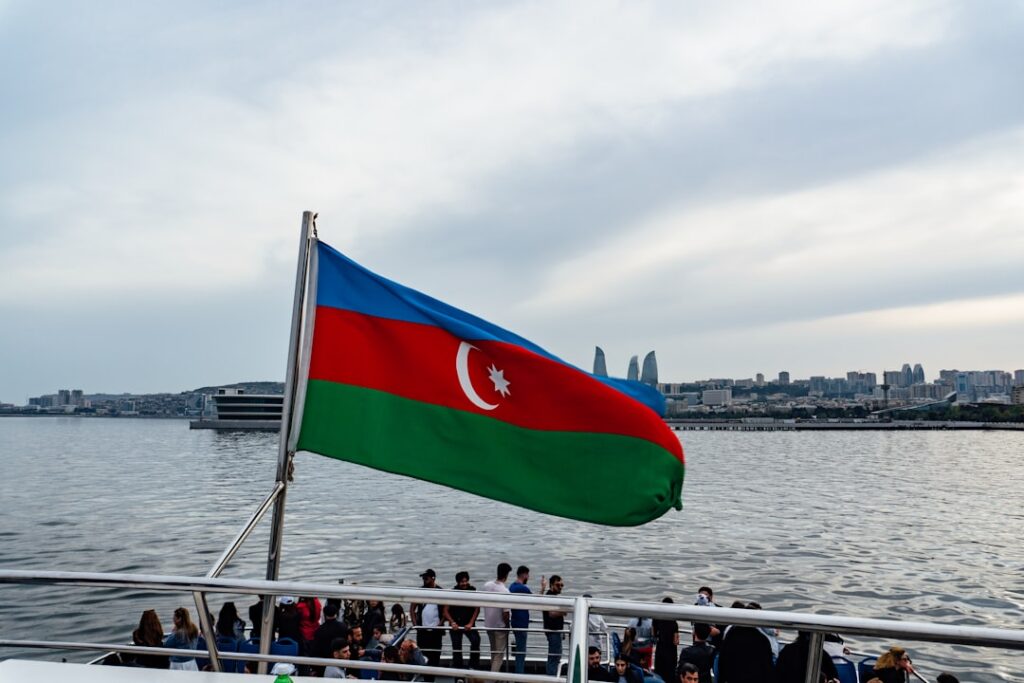
Image: GlobalBeat / 2026
**Azerbaijan-Gulf defense pacts alter South Caucasus power balance after 2023 offensive**
Muhammad Asghar | GlobalBeat
Baku signed joint defense agreements with Saudi Arabia and the UAE in March, pairing energy corridor deals with hard security guarantees that extend Gulf military reach into the South Caucasus for the first time.
The accords follow Azerbaijan’s lightning recapture of Nagorno-Karabakh in September 2023 and signal Ankara-backed Baku’s ambition to become the region’s indispensable transit hub while hedging against both Iran and Russia.
Gulf diplomats said the timing is no accident. “They watched the 44-hour operation, saw the vacuum left by distracted Russia, and decided to lock in energy and security ties before Tehran or Moscow regained traction,” a senior Saudi envoy told reporters after the signing.
Under the umbrella agreements, Riyadh and Abu Dhabi will finance a new Azerbaijani drone-maintenance center outside Baku, pre-position spare parts for Patriot batteries that Gulf states already supply to the stockpile in Turkey, and fund a $400 million upgrade of Azerbaijan’s Caspian naval base at Puta. In return, SOCAR will reserve 3 million tonnes per year of liquefied natural gas capacity for joint Gulf marketing starting in 2027 and grant DP World a 30-year concession to expand Alat port into a major cargo gateway bypassing Iranian and Russian routes.
Azerbaijani President Ilham Aliyev hailed the package as “strategic depth multiplied by hydrocarbons” during a televised cabinet meeting on March 25. He added that combined Gulf commitments will total $1.7 billion over the next five years, dwarfing the $200 million annual average of Gulf FDI since 2012 according to central bank records.
The West reacted cautiously. A State Department spokesperson welcomed “any effort that bolsters regional stability” but cautioned against provocative deployments near Armenia’s southern border. France went further, summoning Gulf envoys in Paris to clarify whether the pacts breach the EU-brokered ceasefire that requires all foreign militaries to stay outside a 5-kilometre buffer zone around Karabakh.
Armenian Prime Minister Nikol Pashinyan warned that Gulf troops “even in civilian garb” would be treated as a hostile act. Speaking to soldiers near Yeraskh on March 28 he said Yerevan will ask the CSTO for a mutual-defense clause review and accelerate fresh arms purchases from India, which already supplies Swathi radars and Pinaka rocket launchers.
Tehran kept its rhetoric low-grade yet firm. Foreign ministry spokesman Esmail Baghaei told a weekly briefing “we monitor any militarization on our northern frontier,” echoing a March 20 Islamic Revolutionary Guard drill that practiced pontoon crossings of the Aras river separating Iran from Azerbaijan. Iranian customs data also show a 23 percent drop in bilateral trade in Q1 2026, partly driven by Baku’s new import substitution rules favoring Türkiye and Gulf suppliers.
Moscow has not matched the rhetoric, preoccupied with Ukraine and budget sequestration. Russian peacekeepers withdrew from Karabakh last December, leaving behind only a 1,500-strong residual garrison at the Gabala radar station whose lease expires in 2027. Kremlin spokesman Dmitry Peskov said “bilateral cooperation is a sovereign right” when asked about the Gulf-Azeri agreements, yet leaked notes from a March security council meeting quoted Defense Minister Andrei Belousov calling the loss of influence “undesirable and expensive to reverse.”
Oil markets barely flinched. Brent slipped 67 cents the day of the announcement, a bluff response analysts said reflected surplus global supply and the long lead time of promised LNG volumes. Still, the contracts entrench Gulf state energy traders inside EU-sanctioned Azerbaijan at a moment Brussels seeks non-Russian gas, giving Baku new leverage to negotiate the stalled “Southern Gas Corridor” expansion to 20 billion cubic metres per year.
Timing intersects with domestic politics. Aliyev faces a referendum on constitutional term limits in September, and state television now pairs footage of victorious troops with new ports and pipelines, a narrative that blends military success with future prosperity. Pollster Shahin Jafari said survey results, if trustworthy, show 71 percent approval nationwide, eight points higher than pre-Karabakh levels.
Human-rights groups accuse Baku of using the Gulf cash infusion to double down on repression. On March 30 police arrested investigative journalist Sevinj Vagifgizi on smuggling charges her employer Abzas Media calls fabricated. Amnesty International’s annual report, released the same week, counted 68 “prisoners of conscience” in Azerbaijan, the highest tally since 2014. Gulf officials privately dismiss the issue as an internal affair, according to Western diplomats present at the Riyadh signing.
Energy economists question the commercial logic of deep-water LNG projects when renewables undercut gas prices. “If global demand plateaus after 2030, today’s lavish spending becomes tomorrow’s stranded asset,” said energy finance analyst Gulmira Rzayeva in Baku. “But for now the government wants security, not profit, and Gulf partners want a seat at every table from Ankara to Tashkent.”
Background
Azerbaijan emerged from Soviet rule in 1991 with three burdens: a landlocked position, unresolved territorial war with Armenia, and hydrocarbon wealth that attracted both investors and predators. The 1994 “Contract of the Century” enlisted Western majors to develop offshore Caspian fields, yet export routes ran only through Russia or Iran until the 2005 Baku-Tbilisi-Ceyhan pipeline broke the duopoly.
The balance tilted again after the 2020 Second Karabakh War, when Turkish Bayraktar drones and Syrian mercenaries helped Baku recapture most occupied districts. The September 2023 one-day offensive finished the job, displacing 100,000 ethnic Armenians and collapsing the self-declared Artsakh republic, a turning point that left Russian peacekeepers overstretched and tarnished Moscow’s regional clout.
Gulf interest is newer but accelerating. Azerbaijan joined the Saudi-led Islamic Military Counter Terrorism Coalition in 2016, hosted UAE special-forces training in 2021, and signed a strategic partnership with Riyadh the month before Russia invaded Ukraine. Shared mistrust of Iran and a desire to tap Caspian gas to feed Asian markets widened the courtship, culminating in this year’s defense-and-energy package that formalizes what had been informal security consultations.
What’s Next
Parliamentary ratification hearings in Baku start April 15, where lawmakers are poised to approve the accords within a single session, clearing the way for Gulf engineers and officers to arrive as early as May while SOCAR auctions first LNG cargoes to joint Gulf-Azeri marketing desks at the June Istanbul gas summit.
Senior Correspondent, World & Geopolitics
Muhammad Asghar covers international affairs, conflict zones, and US foreign policy for GlobalBeat. He has reported on events across the Middle East, South Asia, and Eastern Europe, with a focus on the intersection of diplomacy and armed conflict. He has been writing wire-service journalism for over a decade.