Explosion damages Jewish school in Amsterdam
Explosion damages a Jewish school in Amsterdam; no injuries reported, police investigating possible anti-Semitic motive.
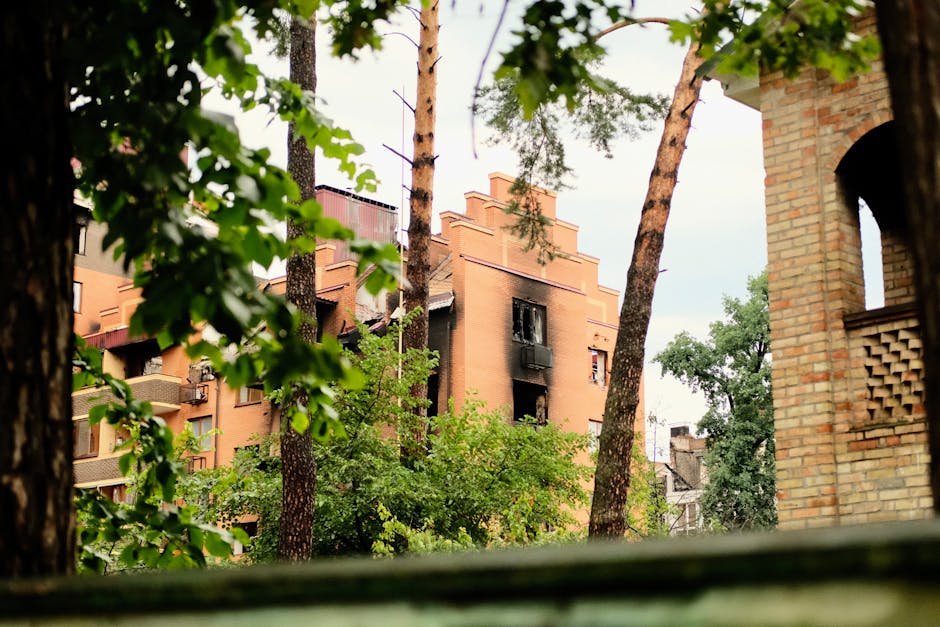
Image: GlobalBeat / 2026
Amsterdam Jewish school explosion shatters windows, no injuries
Early-morning blast damages century-old institution as police investigate motive
At 3:45 a.m. on Tuesday, a deafening blast ripped through the silence surrounding the Rosj Pina Jewish primary school in Amsterdam’s Oud-Zuid district, blowing out ground-floor windows and scorching its brick façade. Security cameras captured a flash near the front door; by sunrise, shards of stained glass littered the sidewalk and the scent of burnt cordite lingered.
The explosion arrives at a moment when Dutch Jewish institutions are on elevated alert. Antisemitic incidents in the Netherlands rose 28 % last year, according to government monitor CIDI, and pro-Palestinian demonstrations since October have repeatedly targeted Jewish sites across major cities. With national elections looming and Parliament debating tougher hate-crime sentencing, the damage to Rosj Pina instantly became political.
Moment of detonation caught by tram-stop camera
City transport cameras facing Henrick de Keijserplein show a cyclist swerving past the school gate seconds before the blast. A burst of white light lifts the heavy wooden door off its hinges; the cyclist wobbles but keeps riding. Police have appealed for the rider—and any late-night dog-walkers—to come forward.
Mayor Femke Halsema visited the scene at dawn. She told reporters the device “appeared to be aimed at the entrance, not random graffiti.” Technicians from the national forensic institute recovered battery fragments and traces of commercial fireworks, suggesting an improvised package rather than military-grade explosives.
School founded in 1921 braces for second relocation
Rosj Pina, named after a former diamond-workers’ quarter, has occupied its current 1950s building since the post-war Jewish community moved south from the old Jewish quarter bombed by the Nazis. Head teacher Esther Zemel said caretakers discovered the damage during routine unlocking. “We keep double doors, but they were both blown inward,” she noted. Classes for 220 pupils aged 4-12 were cancelled within minutes; parents received WhatsApp alerts before sunrise.
City education officials have offered temporary space at a secular primary nearby, yet community leaders worry the relocation could stretch into weeks if structural engineers condemn the entrance hall.
Jewish parents wrestle with familiar dilemma: stay or transfer
One mother, bringing flowers to the police cordon, admitted she had already debated moving her son to a non-denominational school after two antisemitic bullying incidents last spring. “Now this,” she whispered, declining to give her name. “Do we fold, or do we stand taller?”
Centraal Joods Overleg, the national Jewish council, has opened a hotline for psychological support. Director Ron van der Wieken said call volume doubled by mid-morning, mostly from parents weighing homeschooling options.
Police sift firework residue for DNA signatures
Investigators told NOS public broadcaster that heavy-duty fireworks sold legally for New Year celebrations can become “reasonably powerful” when bundled. Detectives are cross-checking recent retail sales in Amsterdam and neighbouring Haarlem, focusing on buyers who purchased more than 25 kilograms. Dutch law requires ID for such volumes.
No graffiti, pamphlet or digital claim has surfaced, frustrating efforts to label the act. Prosecutors must decide within 48 hours whether to transfer the file to the national counter-terrorism coordinator; that clock started when the firstalarm call came in.
Political sparks fly in cramped parliamentary corridor
Geert Wilders, whose Party for Freedom leads opinion polls, tweeted a photo of the scorched doorway with the caption: “Netherlands 2023: Jewish kids cannot learn in peace.” Centre-left D66 MP Jan Paternotte warned against “importing Middle-Eastern hatred,” triggering angry shouts from Greens lawmakers who accused him of Islamophobia. Speaker Vera Bergkamp briefly suspended the session.
Prime Minister Mark Rutte, campaigning in Groningen, called the explosion “an attack on all of us,” pledging extra €15 million for building security at faith schools nationwide.
But the challenge runs deeper than one budget line. Antisemitic incidents filed to CIDI hit 183 last year, the highest since the body began counting in 1984, and security-service sources say only one in four cases ends in conviction. Even when suspects are caught, juvenile courts often impose community service, a penalty critics call toothless.
The numbers tell a sharper story: of 62 prosecutions in 2022, 44 involved under-21s radicalised online, often within weeks of consuming extremist material on TikTok or Telegram. Rosj Pina now joins a growing list of soft targets—kosher restaurants, cemeteries, even Amsterdam’s Jewish cultural quarter—where attackers assume both lower security and symbolic punch.
Across Europe, morning news jolts school principals
In Antwerp, Paris and Berlin, security officers at Jewish schools received urgent protocol refresher e-mails before European stock markets opened. European Jewish Congress president Ariel Muzicant urged the EU to classify attacks on Jewish institutions as “EU-wide terrorist offences,” eliminating cross-border loopholes that let suspects shop for lenient jurisdictions.
Interior ministers from Belgium and Germany have already contacted Dutch colleague Dilan Yeşilgöz, offering bilateral forensic teams. France, still scarred by the 2012 Toulouse school shooting, dispatched a liaison officer from its national anti-terrorist office.
What comes next: Tuesday’s tight timetable
City engineers must finish structural checks by 6 p.m. Tuesday; if the stairwell is deemed unstable, the school faces weeks of remote lessons. Meanwhile, the Dutch counter-terrorism unit has 96 hours from detonation to decide whether to elevate the national threat level, currently at 4 of 5. Mayor Halsema will brief the security council on Wednesday, where funding for permanent concrete barriers around Jewish monuments tops the agenda. Parents hope answers, and extra protection, arrive faster than the next news cycle.