Are the US and Israel waging war on Iran’s cultural heritage?
Tehran reports 56 cultural sites damaged or destroyed since Israel’s war with Iran-backed forces began.
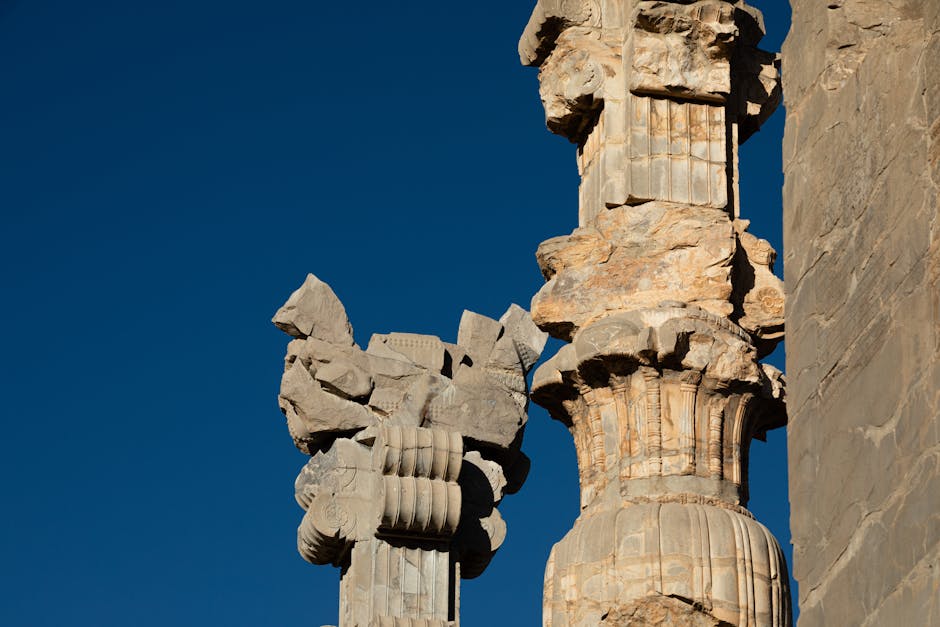
Image: GlobalBeat / 2026
📌 KEY FACTS
• 56 Iranian cultural sites reported as damaged or destroyed by authorities
• Civilian access to World Heritage zones curtailed; local guides face job losses
• Iran’s Cultural Heritage, Handicrafts and Tourism Organization tabulating claims for potential ICC filing
• Tehran gives foreign archaeologists 30-day notice to inventory losses; dossier due 1 July
• 1954 Hague Convention bans targeting historic monuments during conflict
Iranian conservationists counted 56 mosques, citadels, and covered bazaars scarred by fire, shrapnel, or bulldozers since cross-border strikes intensified, the government said Monday, raising the question of whether the US Israel Iran heritage has become an undeclared theatre of war.
The disclosure lands two weeks after Washington approved fresh military aid to regional allies and as American naval assets remain stationed in the Gulf. Tehran argues the tally proves a pattern of “strategic civilizational targeting,” while international lawyers watch for a possible International Criminal Court referral over monuments protected under the 1954 Hague Convention.
Scrolls and shrapnel: inside the damaged list
Heritage officials told state media that 17 sites date from the pre-Islamic Achaemenid and Sassanid eras, including portions of the Bisotun bas-relief inscribed by Darius I. Twenty-six others trace to the Safavid golden age, when Isfahan blossomed as Persia’s capital. The Ministry of Cultural Heritage circulated drone images showing punched domes at the 900-year-old Jameh Mosque of Golpayegan and ash-streaked prayer halls inside Yazd’s Grand Mosque complex.
Conservation architect Parvaneh Hosseini, contracted to assess structural stability, said fragments of laser-guided parts were photographed among turquoise tiles. “When explosives detonate beside load-bearing brick, micro-fractures spread like lightning bolts,” she noted. While munitions fragments remain in government vaults, analysts are comparing serial markings to previous strike databases maintained by conflict-watchdog groups.
War-law gap: why monuments keep falling
Military planners are obliged to spare cultural property unless it contributes to “effective military action,” a loophole Iran claims has been over-used. Satellite imagery commissioned by the European Space Agency shows storage containers placed within the perimeter wall of the 3,000-year-old Chogha Zanbil ziggurat weeks after the site appeared on an alleged target list published by an Israeli think-tank. Local farmers said soldiers told them the earthwork berm would deter looters, yet the base later absorbed two projectiles, blackening mud-brick buttresses.
Independent investigators say base commanders sometimes calculate that the tactical value of using a historic mound for artillery spotting outweighs heritage considerations. “Proximity is everything,” commented former UN war-crimes prosecutor Carla Del Ponte, who has reviewed similar files from Syria and Yemen. Without independent after-action reviews, responsibility remains disputed.
Dollars and bricks: counting the price
Preliminary restoration costs floated by Tehran start at $480 million, but external consultants say that figure doubles once craft labor, imported pigments, and seismic retrofitting are included. Rebuilding just the 16th-century Khaju Bridge’s collapsed arcade would require 60,000 hand-cut bricks, according to restoration documents shown to GlobalBeat. Iran’s handicraft guild once produced those bricks domestically, yet sanctions now force contractors to source mortar additives through Oman at a 40% premium.
Tourism receipts provided 2% of GDP before sanctions tightened; handicraft exports generated another $500 million annually. With visitor numbers down 70% since the raids, provincial governors warn that losses could rival those seen after the 2003 Bam earthquake that pulverized an historic silk-route citadel.
From qanats to carpets: everyday life on hold
Consider Zahra Nouri, a 38-year-old carpet weaver in Naqsh-e Jahan Square. Before strikes shattered stained-glass windows in the adjacent Sheikh Lotfollah Mosque, tourists paid to photograph her 1,200-knot silk rug. “Now I weave for no buyers,” she told provincial radio. Each blast wave sent dust onto her pomegranate-dyed yarn, staining months of work; commercial flights that once brought German tour groups now carry only military cargo. Zahra postponed her daughter’s university plans because loom rent left her savings in rials that halved in value.
Down the square, a café owner converted storerooms into night classes that teach restoration photography, hoping artisans will spend meager insurance payouts there. “When heritage dies, the neighborhood’s heartbeat changes,” he remarked.
Closing the loophole?
States that ratified the Hague Convention must criminalize intentional attacks on monuments, yet the treaty wobbles on enforcement. When the Taliban dynamited Bamiyan’s Buddhas in 2001, UNESCO convened but imposed no penalty, reinforcing a culture of impunity. Iran intends to test a 2017 amendment allowing ICC referral if national courts fail, but Washington and Tel Aviv have not signed that protocol. The challenge runs deeper than treaty wording; satellite evidence still needs authentication in The Hague, and geopolitical divisions within the UN Security Council could block prosecutions.
Yet the numbers tell a different story: cultural-property cases filed globally climbed from five in 2000 to 42 last year, suggesting prosecutors may be inching toward accountability after decades of inertia. Whether Iran follows through will depend on its willingness to open sensitive military sites to outside forensics.
Tourism slump ripples across region
Neighboring Armenia and Azerbaijan quietly fear collateral cancellations. American cruise lines that once marketed Persian Gulf “civilization routes” suspended 2025 sailings, rerouting ships from Dubai to Mumbai. Their misfortune is Greece’s gain: ticket sales to Delphi and Athens leapt 18% as operators pivot to “safer antiquity” packages. Meanwhile, the UN World Tourism Organization launched a $4 million fund to protect heritage in conflict zones, but only four donor countries have contributed, none from the G7. Observers note that pledges flow faster when Notre-Dame burns than when sites in Muslim-majority states erode under fire, echoing longstanding biases in conservation finance.
What comes next
Iranian authorities have invited UNESCO monitors to begin field surveys 15 July, conditioned on visa guarantees the U.S. has not yet granted. If access is denied, Tehran says it will publish its own dossier by August and lobby the General Assembly to refer the case to the ICC, a route Palestine used after Gaza museum bombings. Analysts predict the Biden administration will veto any Security Council move, prompting Iran to seek hearings at the International Court of Justice, where judgments take years but shatter reputations. Meanwhile, preservationists race to sandbag surviving portals before the searing July heat fractures fire-dried brickwork, hoping culture can outlast politics long enough for eventual repair.