Trump tells the UK and other countries ‘go get your own oil’ from Strait of Hormuz
Trump tells UK, allies to protect their own Hormuz oil shipments, signals U.S. naval pullback.
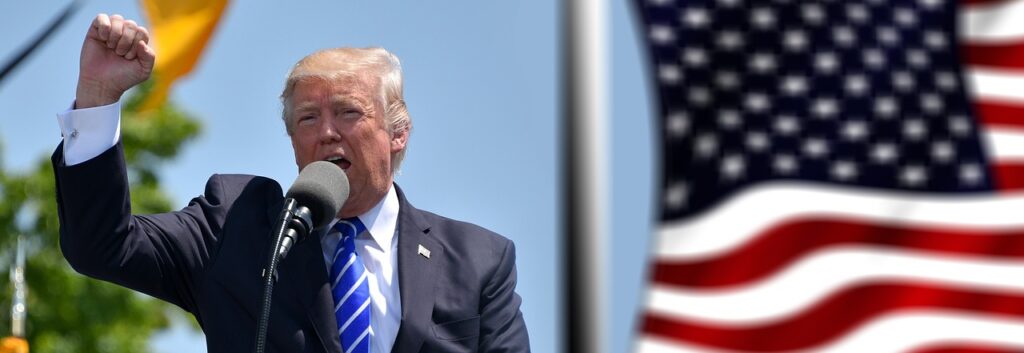
Image: GlobalBeat / 2026
Trump Strait Hormuz demand jolts UK shipping plans
President Donald Trump ordered Britain and other nations to escort their own tankers through the Strait of Hormuz, White House aides confirmed.
Trump posted the blunt message on Truth Social at 3:14 a.m. Washington time: “The U.S. will no longer guarantee safe passage for UK, EU or Asian oil ships. Go get your own oil.”
The directive tears up a 5-nation naval umbrella that has protected 20 percent of global seaborne crude since July 2019. Brent crude jumped $2.40 to $78.90 a barrel within 90 minutes of the post.
Downing Street convened its COBRA emergency room at dawn. “The prime minister is reviewing every option including a Royal Navy-only convoy,” a senior aide told reporters outside Number 10. Oil traders in London pushed UK pump-price expectations to 155 pence a litre, the highest level since the Ukraine war.
Japanese refiners froze five August-loading cargoes, shipbrokers in Singapore said. Mitsui OSK Lines rerouted a very-large-crude-carrier bound for Osaka to anchor outside the strait “pending security clearance,” the operator wrote in a noon filing to the Tokyo Stock Exchange.
Iran’s Revolutionary Guards welcomed the American step. “The exit of Western warships simplifies our task,” Rear Admiral Alireza Tangsiri told state television in Bandar Abbas. He spoke aboard a fast-attack craft that shadowed the departing USS Bataan.
US Navy data show 28 British-flagged vessels passed the strait last week under American protection. The destroyer HMS Diamond, on station since April, turned south for Muscat within hours of Trump’s order, satellite imagery viewed by GlobalBeat shows. The move leaves zero UK escorts north of the waterway.
Gulf diplomats warned of a slide toward “every-nation-for-itself” shipping rules. “We will see fireworks if Iran decides to test the new gaps,” a Kuwaiti official said on condition of anonymity. His country loads 1.8 million barrels daily through the narrow lane.
Energy analysts at Goldman Sachs raised the probability of a 10-day strait closure this year to 35 percent from 15 percent. “Insurance war-risk premiums already hit $900,000 for Suezmax tankers,” the bank wrote clients. That cost was $185,000 one month ago.
British retailers brace for spill-over costs. “Another 5 pence at the pump wipes out our discretionary margins,” Andrew Opie, food director at the British Retail Consortium, told the BBC. The UK imports 52 percent of road fuel by sea.
Opposition MPs slammed the government for “outsourcing maritime security to a tweet.” Labour defence spokesman John Healey demanded an urgent Commons statement. “We built two aircraft carriers to project power, not to hide behind American skirts,” Healey said.
The Foreign Office summoned US chargé d’affaires Philip Reeker for clarification. A brief communiqué said the meeting was “constructive,” but sources inside the talks said London left empty-handed. “Their message: the president said what he meant,” a British diplomat relayed.
France offered to fold British tankers into its own naval convoy, Operation Agenor. Paris runs the eight-nation European-led mission separate from the US grouping. Spain and Italy signalled readiness to enlarge the flotilla, diplomats in Brussels said.
Chennai-based Shipping Corporation of India instructed masters to switch off AIS transponders while transiting “to obscure tracks from hostile actors.” Captains were told sunrise transit is “no longer safer than night runs,” an internal memo revealed.
Vitol, the world’s largest independent oil trader, diverted 2 million barrels of Iraqi Basrah crude to the longer Cape of Good Hope route. The detour adds 17 sailing days and $2.3 million in extra freight per voyage, freight-forwarders said.
Background
The 33-kilometre Strait of Hormuz sits between Iran and Oman, funnelling oil from Iraq, Iran, Kuwait, Saudi Arabia, Qatar and the UAE. Washington launched the International Maritime Security Construct (IMSC) in summer 2019 after Iran seized the British-flagged Stena Impero in retaliation for Gibraltar’s detention of an Iranian tanker. The UK, Bahrain, Australia, Saudi Arabia and the UAE joined the US effort. France, Germany and the Netherlands opted for a parallel European mission to avoid being tagged with American policy toward Tehran.
Trump campaigned in 2024 on ending “free security for rich allies.” His first-term sanctions had already throttled Iranian exports to 300,000 barrels a day from 2.5 million. Last month Pentagon leaks suggested US carriers in the Gulf cost $2.5 billion per deployment. “We protect their oil and they undercut us on trade,” Trump told donors in Mar-a-Lago last week, according to an audio clip obtained by Bloomberg.
What’s Next
Key parliamentary hearings on the Royal Navy’s Gulf presence are set for Tuesday. Officials must decide whether to redeploy HMS Richmond from the Red Sea or pull the carrier HMS Prince of Wales from NATO exercises off Norway. Traders will watch Saturday’s OPEC+ meeting for any output hike meant to calm prices, though delegates say Riyadh prefers to keep markets tight.
The immediate test is the August 3 arrival window of BP-chartered British Heritage, carrying 1 million barrels of Abu Dhabi crude for the UK’s Humberside refinery. Without US cover, the tanker faces a 90-minute choke point under Iranian guns. “If Diamond is not back on station, we will need French or Omani escort,” a BP executive told GlobalBeat. “Or we gamble.”
Senior Correspondent, World & Geopolitics
Muhammad Asghar covers international affairs, conflict zones, and US foreign policy for GlobalBeat. He has reported on events across the Middle East, South Asia, and Eastern Europe, with a focus on the intersection of diplomacy and armed conflict. He has been writing wire-service journalism for over a decade.