Iran latest: Israel tells Iranians not to travel by train as Trump threatens to ‘demolish’ infrastructure
Israel warned Iranians to avoid trains as Trump vows to demolish Iranian infrastructure amid heightened Mideast tensions.
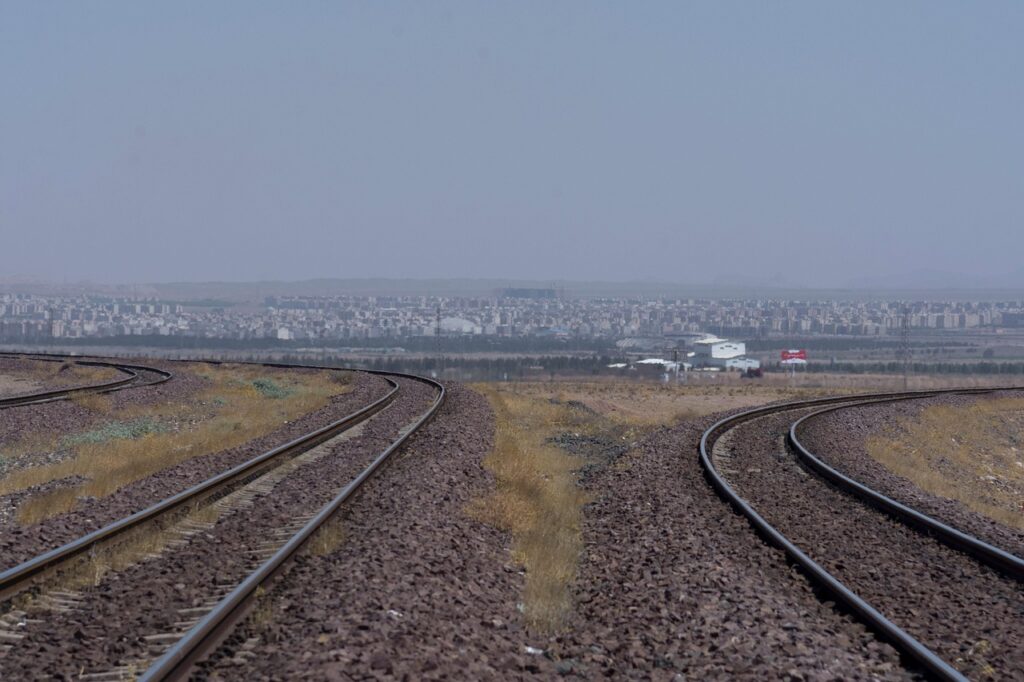
Image: GlobalBeat / 2026
Iran travel warning: Israel urges citizens avoid trains as Trump vows to destroy Tehran infrastructure
Muhammad Asghar | GlobalBeat
Israel warned Iranians to avoid train travel Monday while President Donald Trump threatened to “totally demolish” Iranian infrastructure as regional tensions spiraled.
The Israeli military issued the train advisory through Persian-language Telegram channels, citing unspecified security concerns. Hours earlier Trump declared Tehran would “pay a very big price” for uranium enrichment activities.
The twin warnings came after satellite imagery showed fresh construction at Iran’s Fordow nuclear facility and Iranian-backed militias fired rockets at US positions in eastern Syria. Iranian state media reported 7 Revolutionary Guards died in separate incidents across 48 hours.
Israel’s military spokesperson told reporters the train warning targeted Iranian civilians directly. “We are seeing indicators of potential operations against transportation networks,” Rear Admiral Daniel Hagari said during a Tel Aviv briefing. The advisory marked the first time Israel issued specific travel guidance to Iranian citizens rather than its own population.
Trump amplified threats on his Truth Social platform. “If Iran doesn’t stop their nuclear nonsense, we will totally demolish their infrastructure, no questions asked,” the president wrote. He claimed US forces already identified “every bridge, rail line and power plant that matters.”
Iranian Foreign Minister Abbas Araghchi dismissed both warnings as psychological warfare. “The Zionist regime and its American masters are panicking,” Araghchi told state television. He maintained Iran’s nuclear program remains peaceful, though International Atomic Energy Agency inspectors confirmed uranium enrichment reached 84% purity last week.
Regional airlines began rerouting flights away from Iranian airspace. Dubai-based Emirates cancelled 14 Tehran-bound services through Wednesday, while Qatar Airways suspended night operations over the Strait of Hormuz. Oil prices jumped $4.20 to $79.30 per barrel on Asian markets.
Russia and China both condemned Trump’s infrastructure threats at the UN Security Council. Moscow’s deputy ambassador said attacking civilian infrastructure constitutes “a grave war crime,” while Beijing warned of “catastrophic consequences” for the global economy. Neither resolution mentioned Israel’s train advisory specifically.
US Central Command confirmed additional F-16 squadrons arrived at Al Udeid Air Base in Qatar. A spokesperson said the deployment was “pre-planned” but acknowledged accelerating the timeline “based on regional developments.” Roughly 2,800 American troops now surround Iran across bases in Kuwait, Bahrain and the United Arab Emirates.
European Union foreign ministers scheduled emergency talks for Friday. Germany’s Annalena Baerbock urged “maximum restraint” while France’s Jean-Noel Barrot proposed reviving the 2015 nuclear deal, which Trump abandoned during his first term. Britain’s David Lammy said London was reviewing “all diplomatic options” but stopped short of endorsing military intervention.
Background
Israel and Iran have fought a shadow war across the Middle East since 2010, targeting each other’s shipping, scientists and military bases. Tehran supports anti-Israel militant groups including Hezbollah in Lebanon and Hamas in Gaza, while Israel allegedly orchestrated assassinations of Iranian nuclear scientists and sabotage operations against uranium facilities.
The 2015 nuclear agreement lifted crippling sanctions on Iran in exchange for limits on its atomic program, but Trump withdrew the United States in 2018 and restored economic penalties. Iran responded by breaching enrichment caps and stockpiling uranium, reducing its “breakout time” to produce weapons-grade material from 12 months to roughly 10 days according to nuclear experts.
What’s Next
Iran’s Supreme National Security Council meets Tuesday to discuss potential responses to the Israeli and American warnings. European diplomats expect Tehran to announce either further nuclear escalation or limited military retaliation against Israeli interests in Syria, with both scenarios likely to trigger fresh Israeli airstrikes and push oil prices toward $90 per barrel.
The Islamic Revolutionary Guard Corps will likely determine whether Monday’s threats represent genuine attack preparations or psychological pressure tactics. Their next move could reshape Middle Eastern security architecture for years.
Senior Correspondent, World & Geopolitics
Muhammad Asghar covers international affairs, conflict zones, and US foreign policy for GlobalBeat. He has reported on events across the Middle East, South Asia, and Eastern Europe, with a focus on the intersection of diplomacy and armed conflict. He has been writing wire-service journalism for over a decade.