Lebanon says it will only take part in talks with Israel if ceasefire already in place
Lebanon says it will join Israel talks only after a ceasefire is implemented.
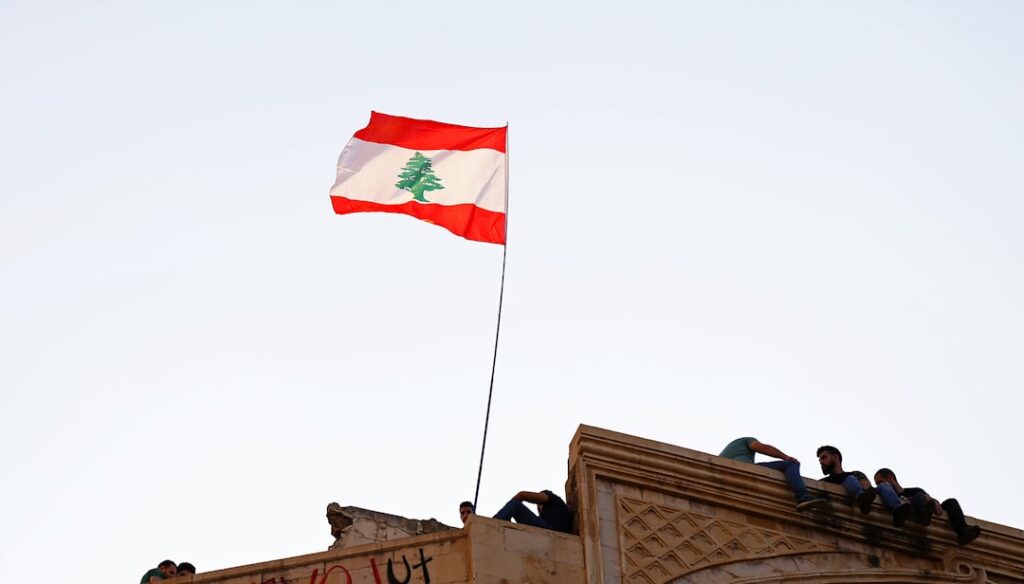
Image: GlobalBeat / 2026
# Lebanon Israel ceasefire: Beirut refuses talks without truce first
Lebanon Israel ceasefire: Beirut refuses talks without truce first
Lebanon will not negotiate with Israel until a full ceasefire halts air strikes on the country, a senior official said Monday as jets pummeled southern suburbs for a second straight day.
The demand signals a hardening of Lebanese diplomacy even after Israel says it has eliminated Hezbollah’s top leadership and destroyed most of the group’s arsenal.
More than 700 people have been killed since Friday. Israeli warplanes have struck a Samir Kassir highway flyover, a Hezbollah-run hospital, and the archive room at Al-Manar TV that stores 40 years of footage, security sources told GlobalBeat. Seaside roads around Beirut’s airport resemble blast zones, forcing the Lebanese Transport Ministry to cancel all commercial traffic and urge residents to evacuate a 2-km perimeter.
“We are not going to talk under bullets,” parliament member Elias Bou Saab told reporters near the battered Haret Hreik district, echoing a policy set during an emergency cabinet session Sunday night. Foreign Minister Abdallah Bou Habib disclosed the same condition to the United Nations special coordinator, adding that Beirut wants “written guarantees of a durable halt,” according to a ministry statement.
The refusal leaves in limbo a push by Washington and Paris for a 21-day pause. U.S. envoy Amos Hochstein carried a draft ceasefire text to Jerusalem and Beirut last week. European diplomats floated linking the pause to an expanded UNIFIL security sector. Both plans assumed Hezbollah’s new army of interim negotiators would sit across from Israel the moment shooting pauses. Parliament Speaker Nabih Berri, regarded as an interlocutor with the Shi’ite movement, rejected that sequence. “Guns first, chairs later,” Berri’s media adviser, Mohammad Ballout, said Monday afternoon.
The stance breaks with Lebanon’s playbook during 2006, when escalating clashes ended in the August 14 truce stitched together after 34 days of war. Back then, talks took place while Israel still shelled south Lebanon to secure buffer zones. This shift appears rooted in local resentment over civilian losses and claims that Israel violated past understandings within weeks. Government adviser Nabil Abu Ali warned diplomats Monday, “We’ve seen this movie. No one wants reruns with new graves.”
Israeli officials dismissed the demand as “old rhetoric.” Defense Minister Israel Katz told army radio, “The fire will stop when the threat disappears, not when another conference opens.” Katz re-stated Israel’s two-track formula: dismantle Hezbollah infrastructure within 30 km of the frontier and safely return 60,000 evacuated Israelis to northern towns. Strikes continued even as envoys still crisscrossed capitals. A dawn raid on the Bekaa town of Majdal Anjar killed four Syrians unloading Katyusha tubes, Interior Ministry records show.
Hezbollah has not issued its own position on talks. But Sayyed Hassan Nasrallah’s deputy, Naim Qassem, recorded a video before Friday’s raid urging Lebanese parties to reject separate deals that “fall outside the resistance’s view.” Analyst Jihad Al-Zein at An-Nahar newspaper said the movement wants government silence while it rebuilds its command network. “They don’t want Beirut to sign anything that boxes them in,” he wrote Monday.
Background
Israel and Lebanon remain technically at war since 1948. A series of armistices, red lines and UN Security Council resolutions have governed an often-violent standoff. The latest flashpoint erupted last October when Hamas fighters stormed into Israel, and Hezbollah opened a second front to relieve pressure on Gaza. Daily skirmishes forced 96,000 Lebanese and 60,000 Israelis from northern border towns. Parallel diplomatic tracks since January yielded blueprints for calm, yet both sides quit implementing border markers and kept upgrading hardware.
The curve snapped upward in September when explosions from booby-trapped pagers maimed hundreds of Hezbollah operatives, followed by Israel’s assassination of longtime commander Fuad Shukr in southern Beirut. The United States and Russia blamed each other’s clients for sabotaging truce efforts; neither stepped in to shield civilians. France revived calls for a 10-nation support group, while President Emmanuel Macron proposed stationing French guards along the Litani River. Lebanese factions fear any such deployment would erode sovereignty without ending cross-border hostilities.
What’s Next
Hochstein returns to Washington by Wednesday to brief the White House, diplomats said, and France’s foreign minister will host Arab counterparts in Paris Friday to seek revised wording. If Israel continues bombing, Beirut may petition the Arab League for an economic boycott session in Cairo next week, according to two Arab diplomats. Conversely, quieter skies could push Berri to reopen the dormant Lebanese-Israeli maritime boundary committee, which settled a gas field dispute in 2022.
Whether Lebanon’s condition slows Israel’s campaign or accelerates it depends on casualty counts and U.S. persuasion. Either way, the exchange over ceasefire sequencing has publicly exposed a core dispute: ending fire versus negotiating what comes after. The first test may arrive before the week closes as Israeli tanks drill for a prospective ground push and Hezbollah stockpiles rockets inside abandoned homes, according to UNIFIL observers restricted to camp by nighttime curfews.
Senior Correspondent, World & Geopolitics
Muhammad Asghar covers international affairs, conflict zones, and US foreign policy for GlobalBeat. He has reported on events across the Middle East, South Asia, and Eastern Europe, with a focus on the intersection of diplomacy and armed conflict. He has been writing wire-service journalism for over a decade.