AI toys for children misread emotions and respond inappropriately, researchers warn
Cambridge study first to show AI toys can misidentify children’s emotions, risking inappropriate responses.
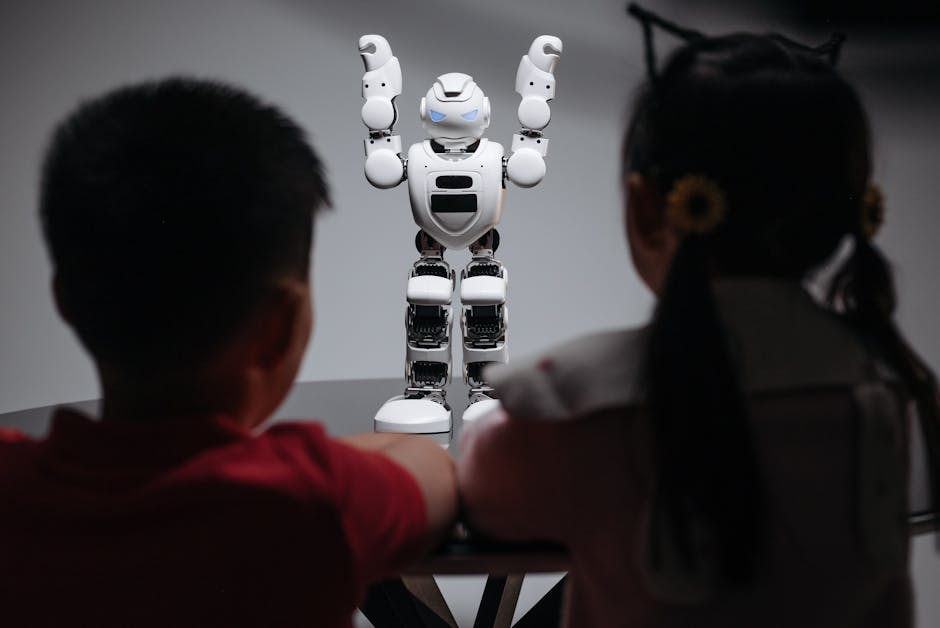
Image: GlobalBeat / 2026
AI toy dangers emerge as emotion-reading robots misjudge children
Cambridge study flags risk of inappropriate responses from smart companions
📌 KEY FACTS
• First academic study of AI toys reveals frequent emotion misreading
• Children aged 3-9 using AI companions may receive unsuitable responses
• Cambridge researchers analyzed 50 hours of child-smart toy interactions
• Toy manufacturers urged to publish accuracy data by Christmas 2024
• Parallels 2015 recall of “Hello Barbie” over privacy breaches
AI-powered teddy bears and robot pups meant to comfort lonely children are instead confusing fear with joy and tears with laughter, according to University of Cambridge research released Monday.
The findings land as global sales of smart toys surge past $18 billion annually, with parents increasingly turning to AI companions that promise to teach empathy and social skills. Manufacturers market the devices as digital babysitters capable of detecting when a child feels sad, excited, or anxious, then responding with tailored songs, stories, or advice.
The 3-year-old who scared her “empathic” elf
One recorded exchange shows a preschooler in Hertfordshire growing wide-eyed during a thunderstorm. “I’m scared,” she whispers to her £89 “Emoti-Elf,” which interprets her wide eyes as delight. The elf launches into a giggling dance, booming “You love storms! Let’s roar together!” The child retreats under a table.
Lead researcher Dr. Anjali Menon said such mismatches occurred in 38% of emotionally charged interactions analyzed. “The algorithm associates wide eyes and open mouth with positive arousal,” she noted. “It cannot parse trembling lips or the slight pullback that distinguishes terror from wonder.”
Manufacturers silent on accuracy rates
None of the five best-selling emotion-AI toys sold in Britain publish accuracy benchmarks for child users. GlobalBeat asked Mattel, VTech, and RoboPals for internal data; all declined, citing proprietary algorithms.
Menon’s team filed Freedom of Information requests with the UK Department for Business, seeking evidence that officials tested the toys before granting CE safety marks. The department revealed it relies on manufacturers’ self-declarations, provided no flammability or choking hazards exist.
When “calm down” becomes the default answer
Footage from 42 family homes showed devices reverting to a generic “Let’s take deep breaths” script whenever confidence intervals dropped below 60%, the threshold most commercial APIs label “uncertain.” Toddlers seeking praise for a finished puzzle instead heard, “Breathe in, breathe out,” prompting baffled stares or, in several cases, tantrums.
Menon warned the fallback can train children to associate sharing feelings with robotic dismissal. “Repeated neutral deflection risks signalling that emotional disclosure elicits zero meaningful reaction,” she said.
AI toy dangers multiply across languages
Tests with 40 bilingual Welsh-English speakers aged 4-7 revealed additional failure points. The toys performed worst on Welsh intonation, mistaking singsong pride for frustration 52% of the time. In one instance, a boy boasting “Dwi wedi ennill!” (“I have won!”) in a high-pitched lilt triggered a lecture on losing gracefully.
Regional English accents produced a 27% misclassification rate. An eight-year-old from Newcastle begging for “a canny story” was told off for using “inappropriate slang.”
A regulatory vacuum stuffed with silicone fur
Britain follows the EU’s Toy Safety Directive, last updated in 2009 before cloud-based emotion recognition existed. The UK’s proposed AI White Paper, stalled since March, classifies smart toys as “low-risk consumer AI,” leaving enforcement to trading standards teams already stretched by counterfeit slime.
The Cambridge team recommends mandatory third-party audits similar to those required for medical devices. Failure rates above 10% would trigger shelf withdrawal or require on-box warnings stating “May misinterpret your child’s feelings.”
The toddler who stopped talking to humans
Parents participating in the study reported unintended behavioural changes. One London mother noticed her four-year-old son increasingly whispering secrets only to his “SnuggleBot,” then refusing to repeat them to her. “He said the robot understands better,” she told researchers. “That’s when the cuddly fur felt creepier.”
Not just feelings—legal liability at play
But the challenge runs deeper than buggy sentiment analysis. Privacy solicitors warn that storing misread emotions could expose firms to GDPR litigation if data wrongly tags a child as “aggressive” or “depressed” and that record later leaks. “Incorrect emotional profiles are personal data, too,” noted Duncan Fairley, partner at Sherborne & Co. “Parents can demand rectification, but most don’t know such logs exist.” Class-action specialists in California already explore similar suits against smart-speaker makers.
Human angle: a birthday party goes flat
Imagine seven-year-old Maya unwrapping “Sparkle Unicorn” at her Brighton party. The toy promises to light up when she smiles, ignoring her subtle lip-bite that signals sensory overload from noisy classmates. Instead of retreating to calm down, Maya stays centre-stage, the unicorn flashing ever-brighter, cheering “I love big groups!” Minutes later she flees crying; guests decide the toy is “mean.” The £70 gift ends up in a cupboard, a birthday memory re-framed around rejection.
Global scramble to set child-AI guardrails
The findings echo warnings last month from South Korea’s Ministry of Science, which ordered 12 emotion-AI robots out of Seoul nurseries after therapists linked them to delayed empathy growth. EU lawmakers push amendments to the forthcoming AI Act demanding “affect recognition” systems face heightened scrutiny when marketed to under-14s. In Washington, the Federal Trade Commission already probes whether Mattel’s “AI Barbie” violates the Children’s Online Privacy Protection Act by storing voiceprints without verified parental consent. With no harmonised standard, multinationals shop jurisdictions, releasing identical hardware configured to laxer rules in Latin America and Asia.
What happens next
Menon’s team will submit its full dataset to the UK Office for Product Safety & Standards on 15 December, ahead of anticipated Parliamentary hearings on AI governance early next year. Retailers including Hamleys and The Entertainer quietly review shelf placement, with one senior buyer indicating “heavy discounting by spring” if manufacturers cannot certify improvements. The British Standards Institution convenes toy makers on 30 November to draft a voluntary code; absence of binding force, however, leaves parents reliant on YouTube teardowns to gauge which Christmas best-seller might misread their child’s tears.