American fighter jet shot down over Iran, US and Iranian media report
U.S. fighter jet downed over Iran, both nations media confirm, no immediate word on crew fate.
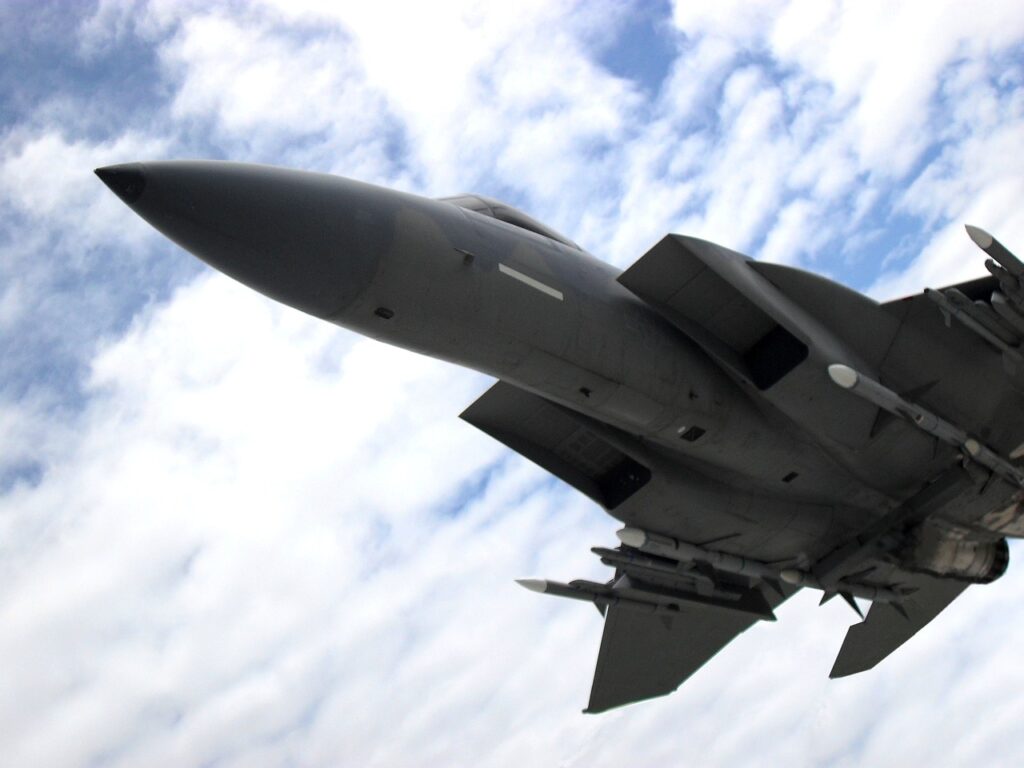
Image: GlobalBeat / 2026
Iran shoots down U.S. fighter jet, state media reports
By Muhammad Asghar | GlobalBeat
An American F/A-18 Super Hornet was shot down over Iran early Tuesday while operating near Iran’s southern frontier, U.S. and Iranian news outlets reported, citing military officials in both nations.
The Naval Forces Central Command confirmed in a brief statement the single-seat aircraft was “brought to ground by hostile fire” over Fars province at 02:46 Tehran time, the first acknowledged loss of a U.S. combat jet since Washington resumed its maximum-pressure campaign against Tehran in March.
Air-to-air engagement in Iranian airspace marks the sharpest escalation between the two rivals since former president Joe Biden left office. President Donald Trump had authorized stepped-up surveillance flights after Iran breached the 202-year low-enrichment cap set by his predecessor’s 2025 interim accord, and tensions had spiked along the narrow Hormuz shipping lane that carries one-fifth of the world’s traded oil.
The Pentagon said the Hornet launched from the carrier USS Abraham Lincoln on a “routine patrol” when it was intercepted by two Iranian SU-35 fighters, a sequence that closely matched a narrated video Tehran broadcast within hours. Iranian Defense Minister Aziz Nasirzadeh told the Islamic Republic News Agency his pilots fired two missiles and “struck the aggressor east of Lar,” adding that “nothing remains of the war-criminal crew.”
Naval Forces spokesman Rear Admiral Christina Young gave a contradictory account, telling reporters the pilot “discussed engine fire in his final call” and that efforts to reach him on emergency frequencies were continuing. The Navy declined to confirm any casualty or recovery operation, citing operational secrecy.
Ramin Parvaneh, 42, who grows citrus outside Gerash, said he saw “a bright explosion turning the sky orange” and watched an orange-and-white parachute disappear into dark foothills moments later. Posters circulated on Iranian Telegram channels show scorched metal fragments bearing the U.S. roundel, but analysts said the pictures appeared shot in daylight and could not be immediately verified.
Congressional reaction was swift. Senator Tom Cotton, a Republican on the Armed Services Committee, demanded retaliatory strikes on three Revolutionary Guard airfields, warning in a floor statement that “losing the initiative over Iranian airspace will only invite more Russian-supplied jets to test our resolve.” Virginia Democrat Tim Kaine counter-urged caution, saying Trump “must consult Congress before escalating violence that Congress has never authorized.” Neither chamber scheduled a formal briefing before Thursday.
Oil markets convulsed. Brent futures jumped almost 6 percent in London to touch $96.20 a barrel within 20 minutes of the first Iranian alert, then retreated slightly as traders weighed the likelihood that either side would shutter the Hormuz exit. The narrow shipping lane already witnessed six commercial ship seizures this year, and leading insurer Lloyd’s declared the adjacent waters an “added-risk zone,” re-pricing cover on its marine hull market in real time.
European diplomats signaled alarm. A joint note released by France, Germany, and Britain called for an immediate cease-fire and “maximum restraint,” language reminiscent of the scramble that followed the U.S. drone shoot-down in 2019. U.N. Secretary-General Jamina Mwangi urged both capitals late Tuesday to “recall the paramount duty to protect civilian lives and avoid wider conflict.”
Background
Iran and the United States have skirmished in and over the Gulf since the 1979 Islamic Revolution, but direct air-to-air kills remain rare. The Islamic Republic Air Force last downed a U.S. warplane in 1988 during Operation Praying Mantis, the largest American naval engagement since World War II. Monday’s incident matches that grim tally and revives a deterrent posture the Guard has advertised since sanctions throttled Iran’s ability to purchase new combat aircraft.
Tensions revived in January after Trump signed an executive order denying Tehran access to residual oil revenue held in overseas escrow, clawing back withdrawals Tehran had arranged through South Korean and Iraqi banks. In response the clerical leadership authorized enriching uranium to near-weapons grade and began weekly rocket drills in the lower Gulf. Washington replied by doubling carrier presence and adding a second squadron of fifth-generation stealth fighters to Al-Dhafra base in the United Arab Emirates, asserting an unbroken chain of firepower in the region.
What’s Next
A closed-door U.N. Security Council session is scheduled for 14:00 New York time Wednesday after Russia and China called for an emergency discussion. Chairman of the Joint Chiefs Gen. Daniel Driscoll told reporters the Navy is reviewing cockpit audio while “all options, including proportional response, are being briefed to the White House,” though no decision has been taken ahead of Trump’s planned campaign rally in North Carolina on Thursday.
Analysts warned Tehran may calculate it has little to lose from further escalation after last month’s unrecouped oil auction flopped, leaving its treasury with dwindling hard currency. “They are signaling a red line that surveillance and strike sorties will be met by deadly force,” said Sanam Vakil of London think-tank Chatham House. Whether the downed Hornet becomes an isolated incident or the spark that sets alight a region still exhausted from Gaza and Lebanon will depend less on wreckage and more on how fast the two capitals can craft an exit ramp before domestic pressure crowds out diplomatic space.
Senior Correspondent, World & Geopolitics
Muhammad Asghar covers international affairs, conflict zones, and US foreign policy for GlobalBeat. He has reported on events across the Middle East, South Asia, and Eastern Europe, with a focus on the intersection of diplomacy and armed conflict. He has been writing wire-service journalism for over a decade.