Australia’s superb fairywren could be extinct within decades due to climate crisis, researchers say
Australias superb fairywren faces possible extinction within decades from climate change-driven heatwaves and wildfires, researchers warn.
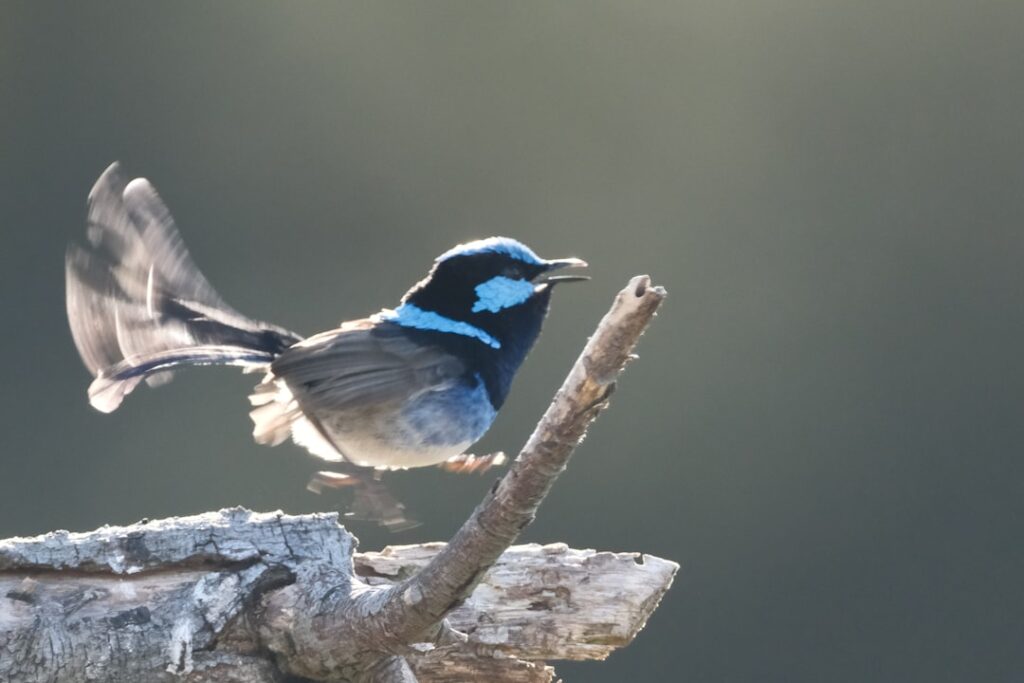
Image: GlobalBeat / 2026
Superb fairywren extinction: Australian songbird faces 20-year wipeout as heat hits 47°C
By Muhammad Asghar | GlobalBeat
Australia’s superb fairywren could vanish within two decades as rising temperatures push the tiny songbird past survival limits.
Researchers warned the 9-gram bird faces extinction across much of its range after modeling showed 47°C heatwaves hitting breeding sites by 2045.
The fairywren’s collapse would mark the first Australian extinction directly tied to climate change. scientists told reporters Monday. The bird’s breeding success drops to zero when temperatures exceed 35°C for more than 3 consecutive days.
Lead researcher Dr. Sarah Bekessy of RMIT University said the fairywren’s specialized habitat requirements make it “the canary in the coal mine” for broader ecosystem collapse. The birds need dense understory vegetation that dries out rapidly in extreme heat.
Field data from 35 monitoring sites across southeastern Australia revealed a 60% population decline since 2015. Bekessy’s team tracked 450 breeding pairs and found complete nest failure during the 2019-2020 Black Summer fires.
“We’re watching a species disappear in real time,” Bekessy told reporters in Melbourne. “The fairywren has adapted to Australian conditions over millennia, but the speed of current warming outpaces any evolutionary response.”
The research, published in Biological Conservation, shows the fairywren’s core habitat shrinking by 8% annually. Coastal populations near Sydney and Melbourne face total loss by 2035 under current emissions scenarios.
Australia’s Environment Minister Tanya Plibersek’s office acknowledged the findings but provided no specific rescue plan. A spokesperson said the government would “consider all available science” in upcoming threatened species assessments.
Conservation groups demanded immediate action. The Wilderness Society called for emergency listing under federal environment laws, while BirdLife Australia proposed captive breeding programs at Melbourne Zoo and Taronga Zoo.
“Every month we delay puts another nail in the coffin,” said BirdLife Australia’s Sean Dooley. “These birds need cool refuges now, not bureaucratic processes that take years.”
The fairywren’s plight mirrors broader avian declines. Australia has lost 9 bird species since European settlement, with 216 more threatened. Climate heating has emerged as the primary driver after historical habitat destruction.
Previous extinction waves hit ground-dwelling parrots and island songbirds. The fairywren represents the first widespread, common species facing climate-driven collapse across continental Australia.
University of Queensland ecologist Professor James Watson warned the fairywren’s extinction would trigger cascading ecosystem impacts. The birds control insect populations and disperse seeds across understory vegetation.
“This isn’t just about one pretty bird,” Watson said. “Lose the fairywren and you lose the entire understory ecology of eastern Australian forests.”
Background
Australia’s superb fairywren ranks among the continent’s most recognizable birds. Males sport brilliant blue and black breeding plumage, while females maintain subtle brown tones that camouflage nests built close to ground level.
The species once thrived from Queensland’s tropics to South Australia’s temperate zones. Historical accounts describe flocks of 50 birds foraging through suburban gardens as recently as the 1970s. Urban sprawl and introduced predators began the initial decline before climate impacts accelerated losses.
Australia leads developed nations in mammal extinctions, with 34 species lost since European settlement. Climate change now threatens to repeat this pattern across bird populations, particularly specialist species requiring specific temperature ranges for breeding success.
What’s Next
Federal environment officials meet in Canberra next month to determine the fairywren’s conservation status. Conservationists expect a decision by July on emergency listing, which would trigger mandatory recovery plans and habitat protection measures.
Senior Correspondent, World & Geopolitics
Muhammad Asghar covers international affairs, conflict zones, and US foreign policy for GlobalBeat. He has reported on events across the Middle East, South Asia, and Eastern Europe, with a focus on the intersection of diplomacy and armed conflict. He has been writing wire-service journalism for over a decade.