Double danger? Climate change, El Niño push Earth ‘beyond its limits’
Scientists warn simultaneous climate change and El Niño effects are straining Earths systems beyond safe limits.
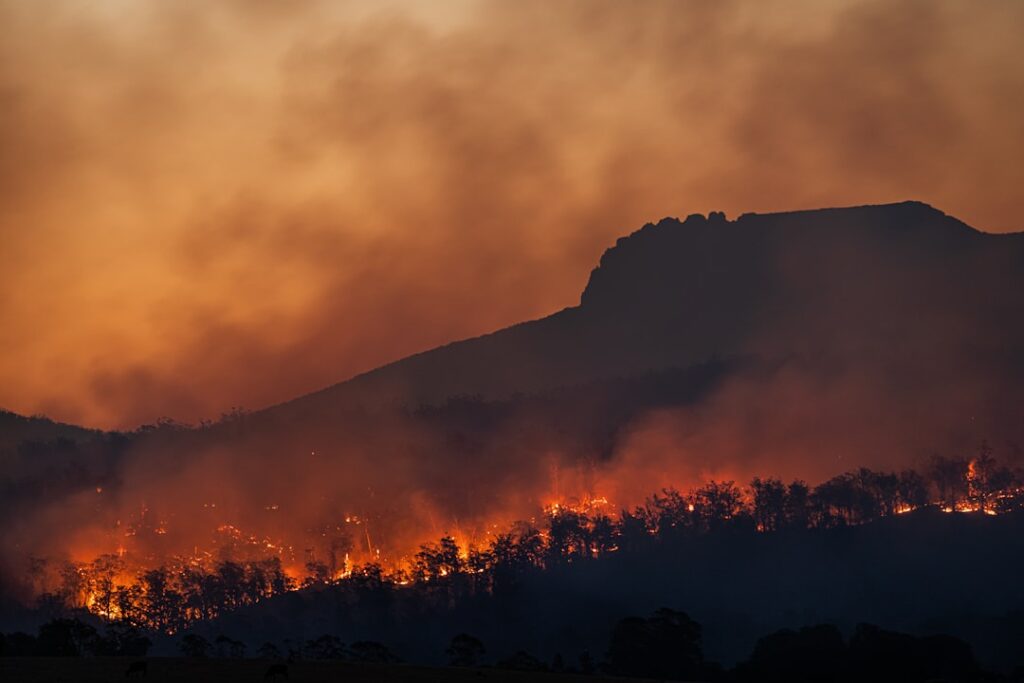
Image: GlobalBeat / 2026
Climate change El Niño push earth past 7 of 8 safety limits scientists warn
Earth has busted through seven of eight “planetary boundaries” that keep it safe for human life due to surging carbon pollution made worse by the current El Niño scientists reported Wednesday.
The stark warning was published in two papers in the journal Science that tracked how humanity stepped into the danger zone on issues ranging from freshwater use to species extinction and climate change itself.
The researchers said rising temperatures and extreme weather already hitting world food supplies will intensify as El Niño peaks in 2026. Governments have failed to stop breaking limits that define “the safe operating space for humanity” the report concluded.
El Niño has driven global temperatures to record highs since mid-2023. The warming ocean pattern is now colliding with decades of fossil-fuel pollution to drive Earth into riskier territory the analysis found.
“This is like stepping on the accelerator while approaching a red light” said Johan Rockström director of the Potsdam Institute for Climate Impact Research who co-led the study. “Earth systems are flashing red warnings.”
Scientists weighed 8 planetary boundaries ranging from climate change to deforestation. In 2015 they judged only 4 transgressed. By 2023 the figure had jumped to 7 as skyrocketing emissions and land use changes pushed ecosystems toward irreversible tipping points.
Freshwater overuse now tops safe limits in most major river basins including the Colorado Nile and Indus rivers. Forest losses in the Amazon have slashed rainfall across South America. Extinction rates for plants and animals now run 100 times higher than natural background levels according to the report.
Aerosol pollution was the only boundary still inside the safe zone researchers said. Even there sulfur dioxide from coal plants and shipping is falling quickly as countries clean up air quality. That aerosol decline may temporarily boost global warming by reducing the reflective haze that partially masks greenhouse gases.
Climatologists warned that the hottest El Niño on record is supercharging the damage. Ocean surface temperatures in the eastern Pacific have soared 2 C above normal for 13 straight months the US National Oceanic and Atmospheric Administration confirmed. The pattern typically drives drought across Australia Indonesia and parts of Africa while drenching South America and the southern United States.
“2023 and 2024 have shattered heat records by extraordinary margins” said Sarah Kapnick chief scientist at NOAA. “El Niño is amplifying long-term warming to push ecosystems past the point of no return.”
Agricultural losses are mounting. Wheat yields in Australia have plunged 34% this season as El Niño dries out the continent’s grain belt. Coffee production in Vietnam dropped 20% after the Mekong Delta received half its normal rainfall. Global food prices have risen 11% since May according to the UN Food and Agriculture Organization.
Rockström and his colleagues first proposed the planetary boundaries framework in 2009 to define environmental limits beyond which human survival becomes precarious. Each boundary uses specific metrics. Climate safety sits at atmospheric carbon dioxide below 350 parts per million. Biodiversity requires keeping extinction rates under 10 species per million per year. Freshwater limits are breached when human withdrawals exceed 20% of a river’s annual flow.
The new data show humanity has smashed through those numerical guardrails. CO2 levels now top 425 ppm measured at Hawaii’s Mauna Loa Observatory. Extinction rates are running roughly 1,000 species per million annually. People consume 28% of available river water globally researchers calculated.
Exceeding a boundary does not trigger instant catastrophe scientists stressed. Instead it moves Earth systems into an uncertain zone where small shocks can flip forests into grasslands or trigger ice sheet collapse. “Think of it as removing safety bolts from a bridge” said co-author Katherine Richardson a biologist at the University of Copenhagen. “At first nothing happens but the structure becomes vulnerable to the next storm.”
Some scientists argue the framework understates risks. “These are conservative thresholds based on what we know today” said James Hansen former NASA climate scientist. “Reality could unravel much faster as feedback loops kick in.”
The new analysis adds two boundaries not in the original 2009 list leaving only one still in the green. Novel entities — meaning human-made chemicals including microplastics and pesticides – joined the watch list after scientists detected them from pole to pole. Ocean acidification crossed the threshold for pH decline. Only aerosol loading remains within safe limits for now.
World leaders will confront the findings at next month’s UN climate talks in Belém Brazil. Negotiators are required to submit updated national emission plans by early 2026 under the Paris Agreement. Current pledges would allow global temperatures to rise 2.7 C this century far above the 1.5 C target Rockström noted.
Brazilian President Luiz Inácio Lula da Silva who will host the summit said he hopes to push for stronger deforestation controls across the Amazon. Satellite data show Brazil cut forest loss by 59% in 2023 after beef and soy traders faced trade sanctions. Yet neighboring countries including Bolivia and Peru continue clearing at accelerating rates.
“Science is telling us the bill for decades of reckless consumption has come due” Lula told reporters in Brasília. “We can either change course or face collapse.”
Negotiators in Belém will also debate whether to add a goal of protecting 30% of land and oceans by 2030 to the UN biodiversity treaty. Scientists say safeguarding intact ecosystems could help restore the breached boundaries. Critics counter that target is meaningless without stopping fossil fuels. Coal oil and gas account for 75% of global CO2 emissions according to the International Energy Agency.
Background
Planetary boundaries emerged from work by an international team of 28 scientists who sought to quantify how much humans can alter Earth without destroying the stable conditions that allowed civilization to flourish. The researchers defined nine key systems that regulate the planet ranging from the atmosphere to the nitrogen cycle. Crossing a boundary does not mean immediate disaster but instead pushes Earth into a zone where further change becomes unpredictable and potentially irreversible.
Previous updates showed humanity had strayed outside safe operating space for climate change biodiversity and nitrogen loading by 2015. The newest assessment widened the breach to 7 of 8 categories as land-use change freshwater use and novel entities exceeded limits. Scientists first detected the El Niño pattern in 1791 when Peruvian fishermen noticed warm coastal waters decimating anchovy stocks. Today’s events are growing more intense as oceans absorb 93% of excess heat from greenhouse gas emissions.
What’s Next
World Meteorological Organization forecasts indicate the current El Niño will taper off by summer but give way to neutral conditions that could still leave 2026 warmer than any pre-2023 year. Countries must submit tougher climate targets to the UN by February 2026 while Brazil will press negotiators in Belém to adopt a plan for restoring 600 million acres of degraded forest worldwide by 2035.
Scientists vowed to refine boundary measurements within months adding that the rapid spread of chemical pollutants may soon push the final aerosol boundary into the red. Richardson said governments treat environmental crises separately but Earth sees them as one linked emergency. “We’re juggling hand grenades” she warned. “Sooner or later we drop one.”
Senior Correspondent, World & Geopolitics
Muhammad Asghar covers international affairs, conflict zones, and US foreign policy for GlobalBeat. He has reported on events across the Middle East, South Asia, and Eastern Europe, with a focus on the intersection of diplomacy and armed conflict. He has been writing wire-service journalism for over a decade.