Iran war live updates: 1 U.S. fighter jet shot down; second plane crashes near Hormuz
U.S. confirms one fighter jet downed, second aircraft crashes near Hormuz amid Iran hostilities.
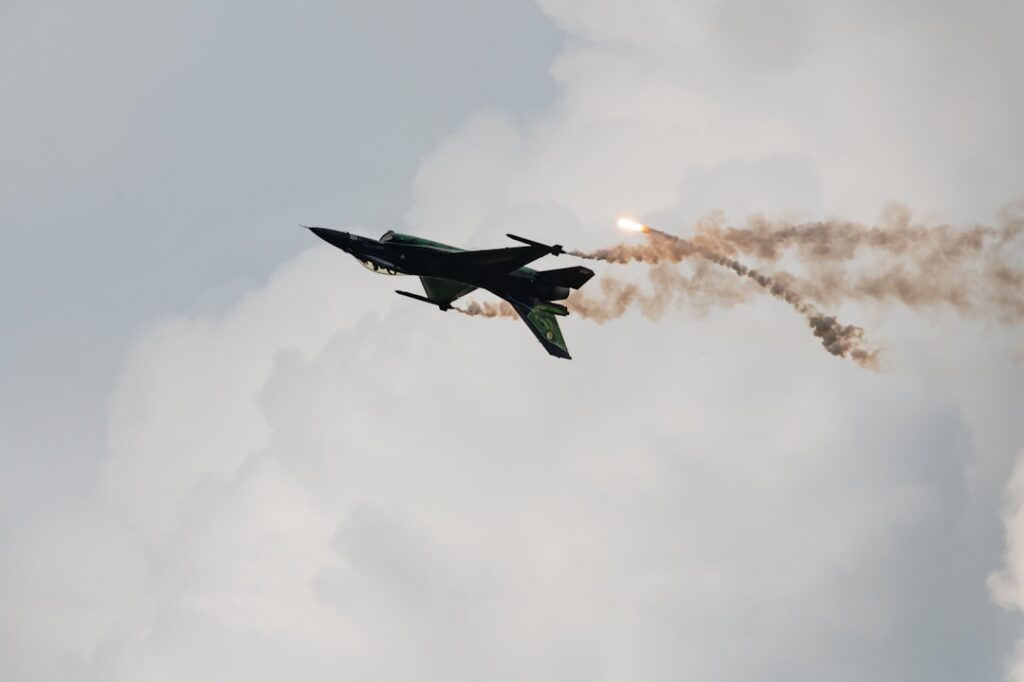
Image: GlobalBeat / 2026
# Iran war: US jet downed over Persian Gulf, second aircraft crashes near Hormuz
**Muhammad Asghar | GlobalBeat**
Iranian forces shot down an American F/A-18 fighter jet on Thursday morning as it flew near the Strait of Hormuz, the Pentagon confirmed, while a second US aircraft crashed minutes later under unclear circumstances.
The downed Super Hornet went into the water 25 nautical miles southeast of Bandar Abbas after taking ground fire from Iranian coastal defenses, US Central Command spokesperson Capt. Bill Urban told reporters in Doha. The pilot ejected and was recovered by a Navy rescue helicopter with non-life-threatening injuries.
Defense officials said the Super Hornet had been providing air cover for the Dwight D. Eisenhower carrier strike group transiting the strait, the narrow chokepoint through which 20 percent of the world’s traded oil passes daily. The second aircraft, identified by crew members aboard the carrier as an EA-18G Growler electronic warfare jet, crashed into the sea roughly 8 miles away. Both crew members were rescued alive, though one suffered back injuries, the Navy said.
Thursday’s incidents mark the first American warplanes lost in direct combat with Iran since White House national security adviser Mike Waltz announced limited strikes on Revolutionary Guard bases two days earlier. President Donald Trump ordered the campaign after Iran’s April 2 missile attack on Al-Udeid Air Base in Qatar wounded 37 US service members and killed two civilian contractors.
## Background
The United States and Iran have edged toward open conflict since Trump returned to office in January, vowing to tighten the “maximum pressure” sanctions regime he first imposed during his previous term. Tehran responded by accelerating uranium enrichment beyond weapons-grade levels, according to the UN atomic agency, and arming Houthi rebels who have resumed drone strikes on Saudi oil facilities.
The April 2 Iranian missile barrage followed a week of tit-for-tat strikes between the two countries. A US drone killed Revolutionary Guard aerospace chief Brig. Gen. Mohammad Nilforoushan outside Damascus on March 28. Iran replied with ballistic missiles at Diego Garcia on March 30, damaging hangars used by B-52 bombers and wounding 4 US airmen.
## What’s Next
The Eisenhower carrier group is expected to exit the Persian Gulf within 24 hours, defense officials said, adding that the destroyer USS Roosevelt remains on station to guard commercial shipping. The Pentagon has already dispatched a second carrier, the USS Harry S. Truman, from the Mediterranean, but it will not reach the region for at least a week.
Congressional leaders received a closed-door briefing Thursday evening. House Armed Services Committee chair Rep. Mike Rogers told reporters afterward that requests for additional Patriot missile batteries for Gulf allies are expected to move quickly. Tehran’s UN envoy warned any further US strikes would be met with “immediate, comprehensive retaliation targeting every American base within 2,000 kilometers of Iran.”
Background
The Strait of Hormuz has been a flashpoint since Iran first threatened to close it during the Iran-Iraq war in the 1980s. Mines laid by Tehran damaged tankers and triggered Operation Praying Mantis in 1988, when the US sank half of Iran’s operational navy. Tensions reignited after Trump withdrew from the 2015 nuclear deal, with Iran seizing British and South Korean tankers in 2019 and Saudi oil facilities suffering drone attacks blamed on Tehran.
The United States maintains about 40,000 troops across the Persian Gulf, including at Al-Dhafra air base in the UAE and naval facilities in Bahrain. Iran’s Revolutionary Guard controls a fleet of fast attack craft armed with anti-ship missiles, backed by shore batteries that cover every mile of the strait. Military analysts say large US warships must pass within range of these weapons to enter or leave the Gulf, making each transit a high-risk maneuver.
What’s Next
Washington and Tehran both say they want to avoid a full ground war, yet neither has offered a diplomatic off-ramp. Iran set a 48-hour deadline late Thursday for regional nations to refuse US forces access, a threat designed to test alliances from Abu Dhabi to Manama. Trump’s national security team is debating whether to strike Revolutionary Guard ports at Bandar Abbas and Chabahar, options scheduled for White House review on Friday afternoon, according to two officials familiar with the planning.
Senior Correspondent, World & Geopolitics
Muhammad Asghar covers international affairs, conflict zones, and US foreign policy for GlobalBeat. He has reported on events across the Middle East, South Asia, and Eastern Europe, with a focus on the intersection of diplomacy and armed conflict. He has been writing wire-service journalism for over a decade.