Live Updates: Iran threatens to take war “beyond the region” if Trump orders new U.S. attacks
Iran vowed to expand conflict “beyond the region” if Trump launches further U.S. strikes, state media reports.
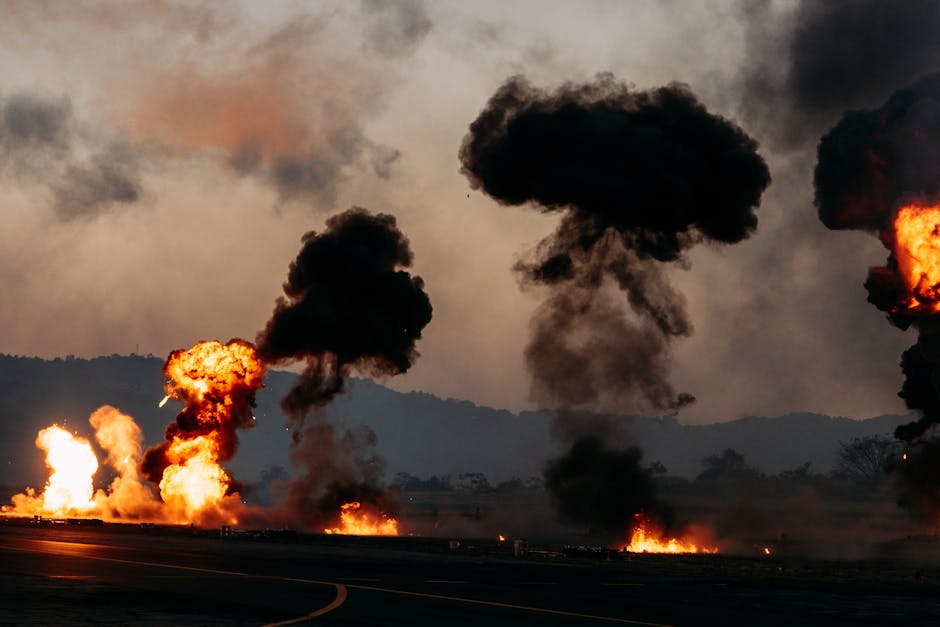
Image: GlobalBeat / 2026
Iran war threat: Tehran warns Trump it will strike beyond Middle East if US attacks
Tehran issued its sharpest warning yet to Washington on Monday, threatening to take military conflict “beyond the region” if President Donald Trump launches fresh strikes against Iranian targets.
The threat came hours after Trump told reporters that “all options remain on the table” following Iran’s weekend missile barrage against Israeli military sites, raising fears of a direct US-Iran confrontation.
Iran’s Foreign Minister Abbas Araghchi delivered the warning during an emergency press conference, marking the first time Tehran has explicitly threatened to expand the Gaza war beyond the Middle East. “Any new American aggression will not be met with a regional response alone,” Araghchi said. “We have made preparations to take this battle to areas the United States has never considered.”
The escalation follows two days of missile exchanges between Iran and Israel that killed 47 people across Lebanon, Syria and Israel. Israeli jets struck Iranian military facilities near Damascus early Monday, while Iran launched over 200 missiles at Israeli bases on Saturday in retaliation for Israeli operations in Gaza.
Trump convened his national security team at the White House on Monday evening to weigh military options, including strikes on Iranian nuclear facilities and Revolutionary Guard bases. Defense Secretary Pete Hegseth arrived carrying marked folders labeled “Iran Response Options,” visible to photographers outside the West Wing.
The president has faced mounting pressure from Republican allies to respond forcefully after Iran’s weekend attacks injured 12 American service members at Al-Asad airbase in Iraq. “We cannot allow American blood to go unanswered,” Senator Tom Cotton told reporters outside the Capitol.
But the administration remains deeply divided over how to proceed without triggering a wider war. Some advisers push for limited strikes on Iranian military assets, while others warn any attack could spiral into a regional conflict that disrupts global oil supplies.
Iran’s threat to expand the conflict beyond the Middle East has alarmed European capitals already struggling with energy inflation and refugee flows. French President Emmanuel Macron urged “maximum restraint” during an emergency call with Trump, while German Chancellor Friedrich Merz warned that “the consequences of escalation would reach far beyond this region.”
Oil prices surged 8 percent on the news, with Brent crude hitting $97 per barrel amid fears of disruptions to shipping through the Strait of Hormuz. Energy analysts warned that sustained conflict could push prices above $120, threatening global economic growth just as inflation shows signs of easing.
The Pentagon has already deployed additional warships to the region, including the aircraft carrier USS Dwight D. Eisenhower and accompanying destroyers. The carrier strike group passed through the Suez Canal on Sunday and took up position in the northern Arabian Sea, within striking distance of Iranian targets.
Iran’s Revolutionary Guard has responded by placing its naval forces on high alert and deploying additional speedboats equipped with anti-ship missiles around the strait. Commercial shipping companies report increased naval activity, with at least 12 tankers delayed near the crucial waterway that handles 20 percent of global oil supplies.
Background
The current crisis marks the most serious confrontation between Washington and Tehran since Trump ordered the assassination of Iranian General Qassem Soleimani in January 2020. That drone strike in Baghdad triggered Iranian missile attacks against US bases in Iraq that injured over 100 American troops, but both sides stepped back from further escalation.
Iran’s nuclear program has advanced significantly since then, with UN inspectors reporting that Tehran now possesses enough enriched uranium for multiple nuclear weapons. The country has also developed sophisticated ballistic missiles capable of reaching targets 2,000 kilometers away, putting US bases across the region within range.
The latest tensions stem from Iran’s backing of Hamas and Hezbollah during the Gaza war that began in October. Israeli strikes have killed several senior Iranian military advisers in Syria, while Iran has supplied drones and missiles used by its proxy forces against Israeli targets. The conflict has already drawn in multiple countries, with US and British forces striking Houthi rebels in Yemen and Israel conducting operations in Lebanon and Syria.
What’s Next
Trump faces a Wednesday deadline imposed by congressional Republicans to present his Iran strategy, while Tehran has given Washington 48 hours to rule out military strikes. Behind the scenes, diplomats from Oman and Qatar are attempting to mediate between the two sides, though officials privately acknowledge the window for de-escalation is narrowing rapidly.
The next 72 hours will likely determine whether the region slides into a direct US-Iran conflict that could reshape Middle Eastern politics for a generation. European diplomats warn that unlike previous crises, both Washington and Tehran appear prepared to accept higher levels of risk, making miscalculation more likely and making the region’s future harder to predict than at any point since the 1979 Iranian revolution.
Senior Correspondent, World & Geopolitics
Muhammad Asghar covers international affairs, conflict zones, and US foreign policy for GlobalBeat. He has reported on events across the Middle East, South Asia, and Eastern Europe, with a focus on the intersection of diplomacy and armed conflict. He has been writing wire-service journalism for over a decade.