Live updates: Iran war news; Vance says no agreement after marathon talks in Pakistan
No deal reached after marathon U.S.-Pakistan talks on Iran, Senator JD Vance confirms.
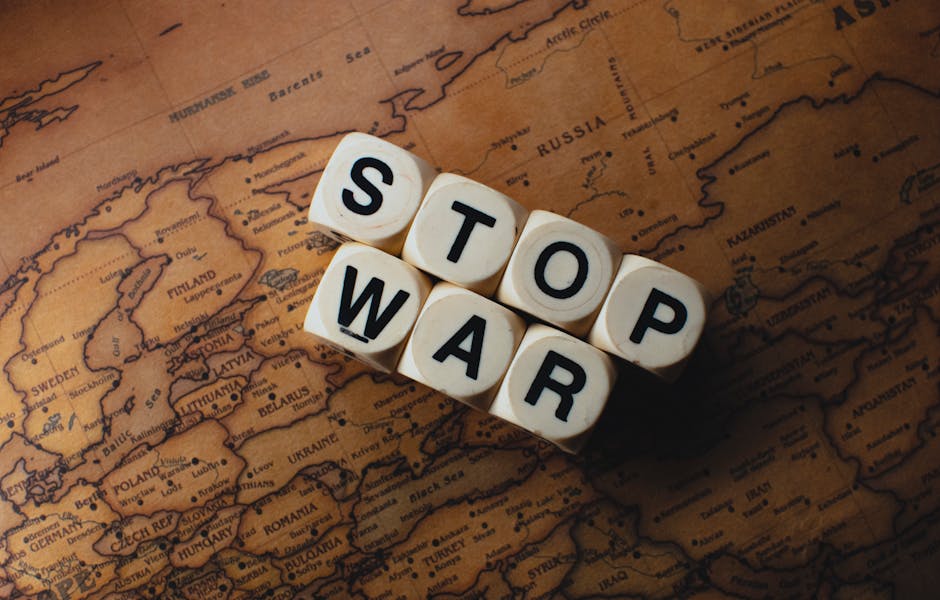
Image: GlobalBeat / 2026
Iran war news: Vance leaves Pakistan empty-handed after 12-hour talks collapse
Muhammad Asghar | GlobalBeat
US Vice President JD Vance departed Islamabad empty-handed Tuesday night after Pakistani officials rejected Washington’s proposed ceasefire framework for the widening Iran conflict.
The marathon 12-hour session ended without any agreement, Vance told reporters on the tarmac before Air Force Two lifted off at 11:47 pm local time.
The breakdown leaves the Trump administration without a diplomatic off-ramp as Iranian missiles continue targeting Israeli cities and US bases across the region. Nearly 200 people have died since Friday when American warplanes struck nuclear sites near Isfahan, prompting Tehran to fire more than 300 ballistic missiles at Israel in retaliation.
“I came with flexibility. We leave with clarity,” Vance said, reading from a prepared statement. “Pakistan could not accept even the basic confidence-building steps.”
Pakistani Foreign Minister Ishaq Dar later confirmed the impasse in a terse midnight press conference at the colonial-era Foreign Office. “Our sovereignty is non-negotiable,” Dar said, flanked by military chiefs in full regalia. “Washington wanted commitments we cannot give.”
The failed diplomacy marks the second high-level US mission to unravel in 48 hours. Secretary of State Marco Rubio left Amman Monday after Jordanian officials refused to host American Patriot batteries intended to shield Israeli airspace.
Inside the closed-door talks, Pakistani officials balked at three US demands, according to two diplomatic sources present. Washington wanted permission to stage surveillance drones from Jacobabad air base in southern Sindh province, emergency overflight rights for B-52 bombers, and a Pakistani commitment to pressure Tehran through back-channel contacts.
“They wanted us to choose sides in someone else’s war,” a senior Pakistani diplomat told GlobalBeat, requesting anonymity because the discussions were confidential. “We chose our own survival instead.”
The timing proved toxic. Hours before Vance landed, Iranian Foreign Minister Abbas Araghchi had wrapped his own two-day visit pledging discounted crude oil and upgraded air defenses for Islamabad. Iranian state media broadcast footage of Araghchi touring Pakistan’s nuclear facilities at Kahuta on Monday, imagery that infuriated Washington.
“That circus act killed whatever goodwill remained,” a US official traveling with Vance said via text message.
Pakistan’s calculation rests on geography and economics. The country shares a 909-kilometer border with Iran and hosts 2.4 million Afghan refugees who could flee westward if fighting spreads. More pressing, Islamabad owes Tehran $2.8 billion for electricity imports that keep Pakistani factories humming despite chronic domestic shortages.
“The lights stay on in Lahore because Iranian gas flows through those pipes,” analyst Maria Sultan at the Islamabad Policy Research Institute said. “Why would Pakistan shoot itself in the foot?”
China’s shadow loomed large throughout the negotiations. Beijing’s ambassador to Pakistan met Prime Minister Shehbaz Sharif Sunday evening, delivering what Pakistani officials described as “guidance” on maintaining neutrality. China is constructing a $62 billion transport corridor to Pakistan’s Gwadar port, infrastructure Washington believes could serve dual military purposes.
“The Pakistanis kept repeating that they answer to Beijing first,” the US official texted. “Vance finally snapped: ‘You’re mortgaging your future to Communists.'”
On the streets of Islamabad, anti-American sentiment surged as word spread of Vance’s demands. Hundreds of protesters from the hardline Jamaat-e-Islami party blocked the main boulevard Tuesday afternoon, burning effigies of Trump beside Israeli flags. Police used tear gas to clear the crowd after demonstrators pelted Vance’s motorcade with stones as it sped back to the airport.
“We will not become America’s launching pad against fellow Muslims,” protest leader Hafiz Naeem ur Rehman shouted through a megaphone. His voice cracked with fury.
The diplomatic failure leaves Washington scrambling for alternatives. US Central Command officials confirmed Tuesday that planning continues for potential strikes against Iranian naval assets if Tehran attempts to close the Strait of Hormuz, through which 21 percent of global oil supplies flow. Benchmark Brent crude prices jumped 4.3 percent to $91.60 per barrel on the news.
Israeli officials reacted frostily to Pakistan’s rebuff. “Every nation that refuses to confront Iranian aggression enables the next missile barrage,” Prime Minister Benjamin Netanyahu’s office said in a statement released after Vance’s departure.
Iran celebrated the outcome. “Muslim nations stand united against American intimidation,” Iranian ambassador to Pakistan Reza Amiri Moghadam tweeted at 1:15 am, posting photos of him sharing tea with Pakistani generals.
Inside the Pentagon, frustration mounted. Military planners had hoped Pakistani bases could shorten flight times for American tankers supporting strikes from the Persian Gulf. Without closer refueling options, each bombing run requires mid-air tankers to loiter longer over the Arabian Sea, limiting sortie rates against Iranian targets.
“Physics doesn’t negotiate,” an Air Force planner said. “Every extra mile means fewer bombs per day.”
The impasse also complicates evacuation plans for Americans scattered across the region. Roughly 84,000 US citizens remain in the Gulf states, including 12,000 in Kuwait whose exit routes run through Pakistani airspace. Without overflight rights, evacuation flights must detour south over the Indian Ocean, adding 90 minutes to journeys already stretched thin by fuel limitations.
Background
Pakistan’s delicate balancing act between Washington and Tehran stretches back decades. The country joined the US-led Central Treaty Organization during the Cold War but refused to sever ties when Washington broke relations after Iran’s 1979 revolution. Islamabad secretly helped finance Tehran’s nuclear program during the 1980s while simultaneously accepting billions in American military aid to fight Soviet forces in Afghanistan.
The relationship grew strained after Pakistan’s 1998 nuclear tests prompted US sanctions, pushing Islamabad closer to Tehran for energy cooperation. When America invaded Afghanistan in 2001, Pakistan became a crucial American ally again, allowing drone strikes against Taliban targets while quietly maintaining trade with Iran through back channels including a sanctioned banking network uncovered in 2014.
More recently, Pakistan’s military has relied on Iranian military hardware despite American objections. The Pakistan Air Force operates 25 Iranian-made unmanned aerial vehicles used for border surveillance, while Iranian technical advisors have assisted Pakistan’s ballistic missile program since 2016.
What’s Next
Vance flies next to New Delhi where Indian officials have signaled willingness to discuss limited cooperation including intelligence sharing on Iranian naval movements. Prime Minister Narendra Modi’s government faces elections within six months and cannot appear too close to American military adventures, but India’s own tensions with Iran over delayed port development at Chabahar may provide diplomatic opening the White House is eager to exploit.
The Trump administration’s remaining leverage diminishes by the day. With Pakistan’s bases off-limits and Jordan refusing American troops, Washington’s military options narrow to naval power and long-range bombers flying from Diego Garcia, 2,800 miles south. Each delay gives Iran more time to disperse its missile launchers deeper into mountain tunnels carved during the 1980s war with Iraq.
Inside Islamabad’s diplomatic circles, officials express quiet confidence they weathered American pressure without lasting damage. “We kept our honor and kept our lights on,” a Foreign Ministry bureaucrat said over tea Wednesday morning. “What more could we ask?”
Senior Correspondent, World & Geopolitics
Muhammad Asghar covers international affairs, conflict zones, and US foreign policy for GlobalBeat. He has reported on events across the Middle East, South Asia, and Eastern Europe, with a focus on the intersection of diplomacy and armed conflict. He has been writing wire-service journalism for over a decade.