Live updates: US expected to deploy around 1,000 paratroopers to the Middle East as Iran taunts White House
U.S. to deploy roughly 1,000 troops to Middle East amid Iranian attacks, Pentagon says.
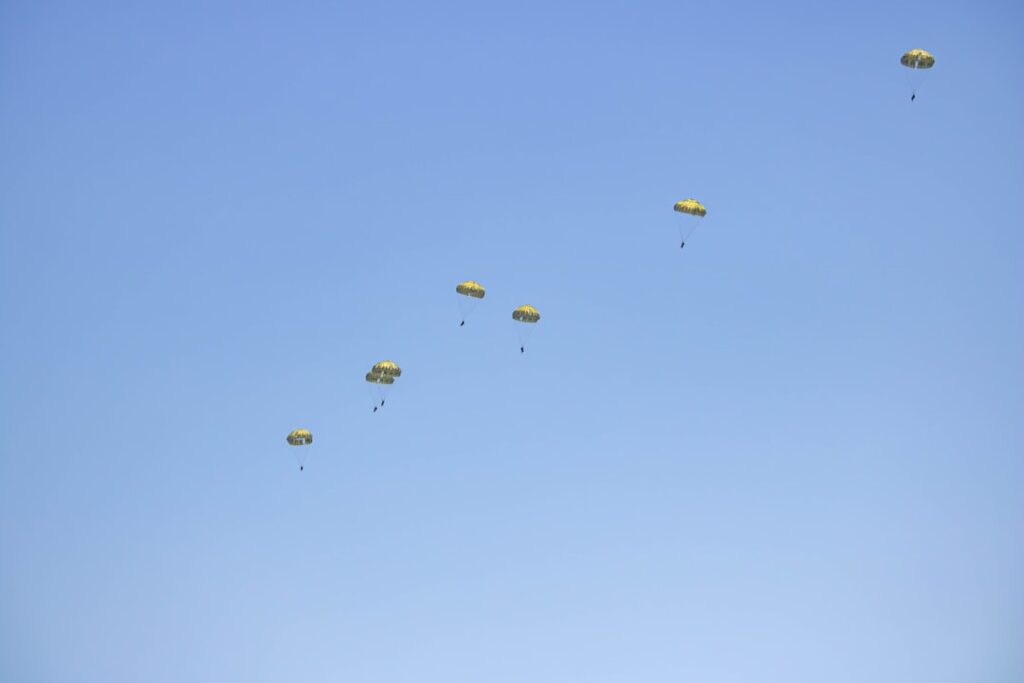
Image: GlobalBeat / 2026
US troops Middle East: 1,000 paratroopers deploy after Iran taunts Biden administration
Muhammad Asghar | GlobalBeat
The Pentagon directed 1,000 paratroopers to deploy to the Middle East within 48 hours after Iran said Washington lacked “the courage” to retaliate, officials told reporters on Friday.
Defense Secretary Lloyd Austin approved the rapid-response order to “bolster force protection” across U.S. bases in Kuwait, Qatar and the United Arab Emirates, Pentagon spokesman Maj. Pete Nguyen said.
The move came after a suspected Iranian drone struck a U.S. outpost near al-Tanf in southern Syria on Wednesday, wounding two American contractors.
Brig. Gen. Pat Ryder, the Air Force officer who speaks for the Pentagon, said the 82nd Airborne brigade combat team would leave Fort Bragg on Saturday. “They are equipped to reinforce embassy security, operate air-defense systems and conduct quick-reaction missions,” Ryder told a briefing.
An army officer with knowledge of the plan said the lead elements would reach Ali al-Salem air base in Kuwait by dawn on Sunday. CNN first reported the 1,000-troop figure.
Iran’s mission at the United Nations released a statement late on Friday that mocked President Joe Biden’s promise to “act forcefully” to protect Americans. “The White House barks, yet its forces in the region hide in fortified bases,” the statement said.
That message followed a day of escalating warnings. In Damascus, President Bashar al-Assad’s defense minister said Syrian forces would treat any new U.S. strike as “an act of war.” In Tel Aviv, Israeli Prime Minister Benjamin Netanyahu convened his security cabinet to discuss coordination with Washington.
The Pentagon has already dispatched a guided-missile destroyer, the USS Thomas Hudner, through the Suez Canal toward the Red Sea, two naval officers confirmed. A second destroyer, the USS Carney, remains on station in the Gulf of Oman.
Both ships carry SM-3 interceptors that can down ballistic missiles, a capability U.S. Central Command wants in place before 15 May, when the Iranian-backed Houthis have pledged a “major military announcement,” a U.S. intelligence official said.
Troop additions to the Middle East carry political risk for Biden, who in 2021 ordered the end of the U.S. combat mission in Iraq. The White House has tried to keep deployments temporary. Yet attacks on American positions have climbed from 14 in 2021 to 78 last year, according to data released by Central Command.
In Congress, leading Republicans demanded firmer action. “Deploying 1,000 soldiers is welcome, but Iran only understands strikes against its own soil,” Sen. Tom Cotton told reporters on Friday, urging the president to hit Islamic Revolutionary Guard bases.
Democrats urged caution. Sen. Chris Murphy said additional forces “must remain defensive,” warning that “another forever war” would serve Tehran’s interests.
Gasoline markets reacted immediately. Brent crude rose $2.40 to $84.18 a barrel, its highest close since January, after the Pentagon announcement. Energy analysts at RBC Capital said traders saw a 25% probability of clashes that could interrupt tanker traffic through the Strait of Hormuz, gateway for 20% of global oil.
European diplomats worry that U.S. strikes inside Iran would shatter the fragile nuclear talks that have dragged on in Vienna since 2021. “We told Washington any kinetic escalation must avoid Iranian territory,” a senior French foreign ministry official said, speaking on condition of anonymity.
Iran’s own calculation is opaque. The Revolutionary Guard’s navy wrapped up a three-day exercise in the Strait of Hormuz on Thursday, staging 50 speedboats in a swarming attack pattern, Iranian state television showed. Guard commander Gen. Alireza Tangsiri said the drill proved Iran could “close the waterway within minutes.”
Background
U.S. troops have faced repeated attacks in Iraq and Syria since the 2020 American drone strike that killed Revolutionary Guard Quds Force chief Qassem Soleimani at Baghdad airport. Iran responded then by firing ballistic missiles at al-Asad air base in Iraq, injuring more than 100 U.S. service members.
The pattern has moved to smaller, deniable weapons. U.S. officials blame Iran-backed militias for 67 drone or rocket attacks so far this year, almost all using commercial-grade parts that are hard to trace. American forces typically answer with single air strikes against militia depots in eastern Syria. Civilians have died in at least 4 of those retaliatory raids, according to the Syrian Observatory for Human Rights.
What’s Next
CENTCOM chief Gen. Erik Kurilla will brief senators in a classified session on Tuesday. Congress must appropriate $10 billion for regional force protection by 30 September, a defense appropriations aide said.
Iran’s next move may depend on the American response. “If Washington limits itself to Syria, Tehran will probably absorb it,” an intelligence assessment shared with allies said. Any strike inside Iran, however, “risks a missile barrage” on the 34,000 U.S. troops based in the Gulf, the assessment added.
Oil traders will keep watch on the strait over the weekend. The U.S. Navy’s Fifth Fleet has scheduled a previously planned mine-clearing drill with Gulf partners for Monday, giving the Pentagon additional assets in the area if tensions escalate.