Opinion | The U.S. Military Was Losing Its Edge. After Iran, Everyone Knows It.
Opinion piece: U.S. military superiority eroding, latest Iran clashes exposing readiness gaps, commentators argue.
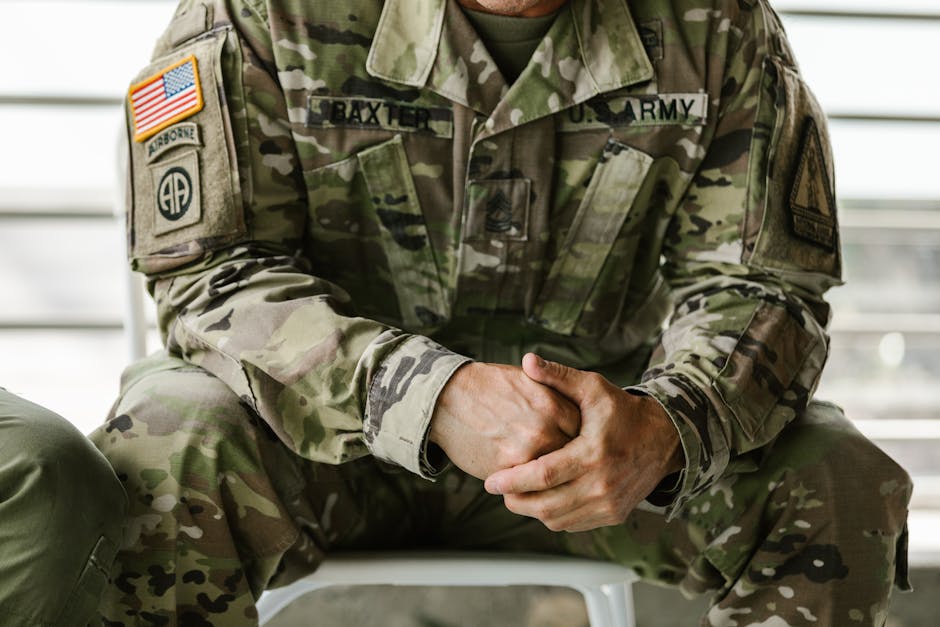
Image: GlobalBeat / 2026
US military decline exposed after Iran confrontation reveals capability gaps
Muhammad Asghar | GlobalBeat
The Pentagon’s April 28 strike on Iran’s nuclear facilities lasted 14 hours before U.S. forces withdrew under heavy fire.
Defense Secretary Pete Hegseth admitted American jets “suffered unexpected losses” during the operation that failed to destroy Tehran’s uranium enrichment program. Three B-2 bombers went down with 18 crew members, marking the single deadliest day for U.S. airpower since Vietnam.
The aborted mission ended Washington’s aura of invincibility. Regional commanders who once relied on American protection watched live satellite feeds showing Iranian missiles punching through supposed U.S. air superiority. China tracked every radar signature. Russia recorded jamming frequencies. Even close allies privately questioned whether decades of spending $900 billion annually had bought a hollow force.
“The Iran operation peeled back the veneer,” said retired General Mark Hertling, former commander of U.S. Army Europe. “We’ve optimized for counterinsurgency against goat herders with AK-47s. We forgot how to fight a peer adversary.”
Hegseth revealed the scope of failure during a tense Senate hearing Tuesday. Iranian air defenses shot down 3 of 19 attacking aircraft using Russian-made S-300 systems older than most American pilots. Cruise missiles missed 40 percent of their designated targets. Radar evasion technology built at $2 billion per plane proved worthless against 1980s-era Soviet radar.
“Our stealth advantage has evaporated,” Hegseth testified. “The Iranians saw us coming from 200 miles out.”
The Pentagon had planned a 48-hour campaign to eliminate Tehran’s nuclear capability. Instead, aircraft limped home after Iranian ballistic missiles cratered runways at Al Udeid Air Base in Qatar. Satellite photos showed hardened aircraft shelters reduced to rubble. Two KC-135 tankers burned on the tarmac, cutting refueling capacity for the entire region.
Regional allies responded with alarm. Saudi Arabia’s Crown Prince Mohammed bin Salman dispatched his foreign minister to Beijing within 72 hours. The United Arab Emirates quietly canceled $23 billion in pending U.S. arms purchases. Even Britain’s defense secretary suggested the Royal Navy might “reconsider operational assumptions” in the Persian Gulf.
“The Gulf states just realized America can’t protect them anymore,” said Bilal Saab, a former Pentagon official now at the Middle East Institute. “They’re shopping for new security guarantors.”
China moved swiftly to exploit the vacuum. Beijing offered to mediate between Tehran and Gulf Arab states while simultaneously selling HQ-9 air defense systems at half American prices. Russia dispatched technical teams to upgrade Iranian radacles with new frequency-hopping technology. Both nations gained access to captured U.S. aircraft debris.
“We handed our adversaries an intelligence goldmine,” said Representative Elaine Luria, a Virginia Democrat who serves on the House Armed Services Committee. “Every piece of that downed B-2 contains secrets China wanted for 30 years.”
The timing proved particularly damaging. The failed strike came just weeks after a classified Pentagon war game showed the U.S. losing a hypothetical conflict with China over Taiwan within three weeks. Analysts warned American aircraft carriers would face mass destruction from hypersonic missiles. The Iran operation appeared to validate those grim projections.
“Our force structure is optimized for the last war, not the next one,” said Christian Brose, former staff director of the Senate Armed Services Committee. “We built a military to fight Saddam Hussein. We’re facing 2020s technology with 1990s doctrine.”
Budget priorities face mounting scrutiny. The Pentagon spent $1.7 trillion developing the F-35 fighter program while Chinese engineers fielded cheaper, more capable systems. U.S. aircraft carriers cost $13 billion each but cannot operate within 1,000 miles of Chinese shores. Hypersonic weapons programs remain years behind Russian and Chinese deployments.
Retired Admiral James Stavridis warned Congress that American technological advantages had “atrophied dangerously” across multiple domains. Chinese shipyards launch modern warships every six weeks while U.S. yards struggle to produce one annually. Beijing fields 200 hypersonic missiles; Washington possesses fewer than 10 operational systems.
“We’re buying sports cars for a tank battle,” Stavridis testified. “Pretty equipment that can’t survive modern combat.”
Internal military assessments paint a darker picture. A leaked Army study found 70 percent of U.S. ground combat systems would prove “ineffective or unavailable” against Chinese electronic warfare. Navy reports warn current air defenses cannot stop massed hypersonic attacks. Air Force analysts admit pilot training hours fall 40 percent short of Chinese standards.
“The all-volunteer force is breaking,” said Katherine Kuzminski, a military personnel expert at the Center for a New American Security. “We’re 20 percent understrength across technical specialties. The best people leave for Silicon Valley salaries.”
Recruiting shortfalls compound readiness problems. The Army missed its 2025 recruiting goal by 15,000 soldiers. Navy submarine programs lack 3,000 qualified sailors. Air Force morale plummeted after Iran as pilots questioned aging equipment. Hegseth admitted “fundamental reforms” require immediate implementation.
Background
American military dominance rested on three pillars since 1991: overwhelming airpower, precision-guided munitions, and technological superiority. Each advantage required decades of investment and combat experience to perfect. The Gulf War demonstrated stealth aircraft could operate with impunity. Kosovo proved precision weapons eliminated collateral damage fears. Iraq appeared to validate network-centric warfare concepts.
But those victories came against vastly inferior opponents. Saddam Hussein fielded 1970s Soviet equipment with poorly trained conscripts. Taliban fighters lacked radar, missiles, or air forces. Islamic State terrorists carried small arms and pickup trucks. America optimized its military for counterinsurgency against irregular forces while potential adversaries studied U.S. methods and developed counters.
China pursued “anti-access area denial” strategies specifically designed to exclude American forces from the Western Pacific. Russia invested in electronic warfare systems to blind U.S. sensors. Iran deployed massed missile barrages to overwhelm expensive defensive systems. All three exploited vulnerabilities in American military doctrine that prioritized quality over quantity, platforms over payloads, and technology over tactics.
What’s Next
Hegseth faces a Friday deadline to present Congress with a comprehensive military reform plan. Lawmakers demand specifics on how the Pentagon will address readiness shortfalls, modernize aging systems, and develop new operational concepts for peer competition. Defense contractors brace for program cancellations as budget pressures mount and strategic requirements shift. Allies anxiously await reassurances about American security guarantees that suddenly seem questionable.
Senior Correspondent, World & Geopolitics
Muhammad Asghar covers international affairs, conflict zones, and US foreign policy for GlobalBeat. He has reported on events across the Middle East, South Asia, and Eastern Europe, with a focus on the intersection of diplomacy and armed conflict. He has been writing wire-service journalism for over a decade.