Serbia buys Chinese supersonic missiles
Serbia, a NATO partner and EU candidate, has bought Chinese supersonic missiles for its air force.
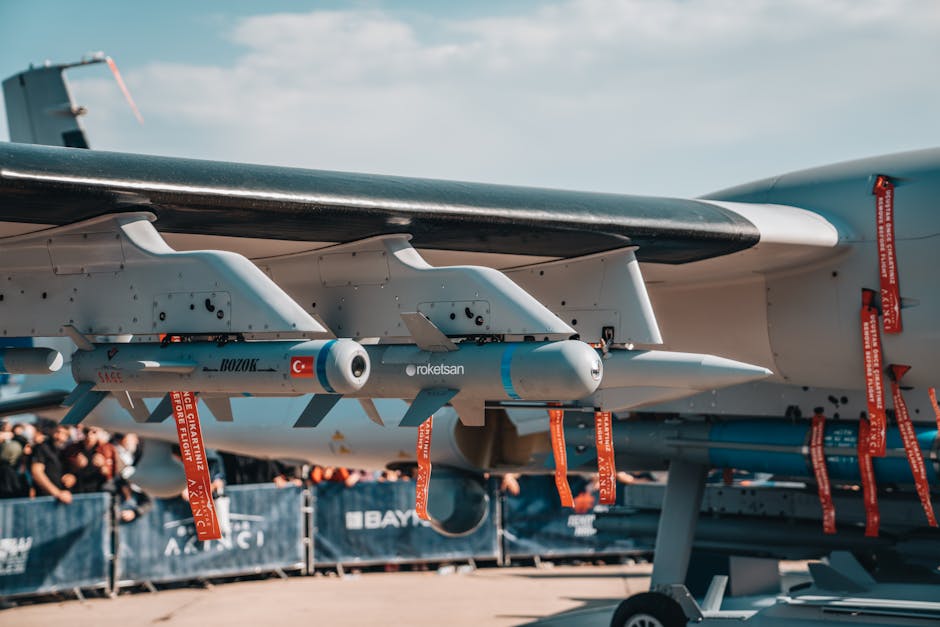
Image: GlobalBeat / 2026
Serbia Secures Chinese Supersonic Missiles in Balkan First
Buy places Belgrade outside NATO’s standardised arms ecosystem weeks before EU membership talks resume
Muhammad Asghar | GlobalBeat
📌 KEY FACTS
• Quantity and model of missiles not disclosed; Serbian defence budget €1.1 bn this year
• Serbian Air Force affected — fleet now mixes Soviet-era jets with new Chinese munitions
• Defence Ministry confirmed deal after social-media footage showed crated missiles at Batajnica air base
• Brussels expected to query compatibility with EU Common Security commitments before next chapter opening
• Comparable to Turkey’s 2019 S-400 purchase that triggered U.S. CAATSA sanctions
Six olive-green canisters marked with Chinese export serial numbers sat on a Batajnica tarmac last Thursday, the first visible proof that Serbia has added supersonic air-to-surface missiles from Beijing to its arsenal.
The procurement — acknowledged discreetly by the defence ministry — makes Serbia the only European operator of Chinese-made guided missiles and complicates the country’s effort to balance NATO partnership talks with EU accession negotiations scheduled to restart in June.
Missiles arrive as EU screens Belgrade on foreign-policy alignment
European Commission questionnaires sent to Serbian diplomats last month explicitly ask whether any bilateral defence contracts “undermine harmonisation with the Common Security and Defence Policy.” Officials in Brussels told GlobalBeat the Chinese delivery will be raised during chapter 31 (foreign and security policy) screening, pencilled in for 17-18 June.
The commission’s enlargement wing privately expects Serbia to explain how non-NATO compatible weaponry fits with earlier commitments made under its 2013 cooperation agreement with the Western alliance.
Defence Minister Bratislav Gašić has budgeted €1.1 billion for 2025, up eleven percent from last year, but avoids naming suppliers in press briefings.
Chinese hardware edges out ageing Soviet stock
Serbian pilots currently rely on 1980s Soviet Kh-25 rockets and locally upgraded OV-2 ground-attack missiles with a range under 20 km. Industry magazine Vojni Logistika reported the Chinese import “triples effective stand-off distance,” giving MiG-29s a conventional strike option beyond the reach of most Kosovo-based air-defence systems.
Analysts at the Belgrade Centre for Security Policy say adaptation kits needed to load the missiles on existing pylons cost an extra €8-10 million, pushing the total package toward €70 million once training and spare parts are included.
Air-force instructors have already travelled to China, according to a source close to the training squadron, though neither Beijing nor Belgrade will confirm numbers or dates.
History of non-alignment shapes arms purchases
Serbia’s constitution enshrines military neutrality, a legacy of Yugoslavia’s Cold-Way Non-Aligned Movement. The clause allows governments to buy from both East and West, a flexibility President Aleksandar Vučić calls “pragmatic equidistance.”
Between 2018 and 2023 Belgrade took delivery of nine used MiG-29s donated by Russia, French Mistral 3 short-range missiles, and Chinese CH-92 drones, creating what one NATO attaché termed “logistical spaghetti” with four separate maintenance standards inside a single air brigade.
The latest buy signals deepening supply-chain ties with Beijing; China is already financing a tyre factory in Zrenjanin and a Smederevo steel plant, making it Serbia’s second-largest trading partner after Germany.
Neighbours eye range map with unease
Croatia’s defence council discussed the shipment on Monday, concerned the missiles’ 120-km reach could cover Slavonski Brod, home to an oil refinery on the Trans-Adriatic pipeline route. Zagreb foreign minister Gordan Grlić-Radman said any “capability shock” alters the Balkan balance, though stopped short of threatening counter-measures.
Kosovo’s government warned the purchase violates the spirit of a 2020 White House-brokered economic accord in which both Belgrade and Priština pledged “no unilateral military build-up.” Serbia insists the missiles are defensive and therefore not covered by the clause.
Washington keeps sanctions option in reserve
State Department spokesperson Vedant Patel told reporters the administration is “reviewing whether the deal triggers” provisions of the 2017 Countering America’s Adversaries Through Sanctions Act that hit Turkey after it acquired Russia’s S-400 system.
Serbia is not a NATO member so the legislation’s language is murkier, but U.S. diplomats note Congress could still block International Military Education and Training funds worth $2.3 million earmarked for Serbian officers this year.
Serbian Chinese missile deal risks EU timeline more than Brussels admits
The European Commission has no formal veto on bilateral arms sales, yet chapter 31 accession talks require alignment with EU restrictive measures and dual-use export protocols. Diplomats say if Beijing’s missiles later appear re-exported to third parties, Brussels can freeze the entire negotiating chapter indefinitely. In short, the cost of closer air-force ties with China could be calendar time — something Vučić, facing re-election in 2027, has little of.
Pilots train while taxpayers count the overtime
Captain Nenad Marković, a 37-year-old squadron leader from Kraljevo, is one of an estimated 12 pilots brushing up on Mandarin phrases such as “fāshè zhǔnbèi” (launch ready) during simulator runs at Batajnica. Each sortie keeps his ageing MiG airborne only 45 minutes; because Chinese trainers charge per flight hour, the air force has extended shifts for ground crew to push turnaround time below 30 minutes. The overtime bill — paid in dinars — is draining a maintenance account already shrunk by inflation above 10 percent, base union reps told local media.
Echoes of Turkey’s Russian purchase rattle alliance
The transaction mirrors Ankara’s 2019 import of Russia’s S-400 surface-to-air system, which led to Turkey’s expulsion from the F-35 consortium and targeted U.S. sanctions. NATO officials fear a similar “trust fracture” if Serbian officers gain insight into Chinese tactical data-links during joint exercises, then share北约 radar signatures during Balkan peacekeeping drills.
Unlike Turkey, Serbia hosts no alliance nuclear bombs, but its joint “Srem” battalion operates alongside Hungarian, Croatian and Slovenian troops in NATO’s KFOR reserve, giving Chinese software indirect proximity to allied communications protocols.
Next EU-Balkan summit set to confront awkward questions
Enlargement Commissioner Marta Kos will visit Belgrade on 28 June to seek written clarifications on how Serbia plans to reconcile Chinese weapons with EU security commitments. Any failure to supply an answer within ten days could delay chapter 31 screening until after the summer recess, pushing negotiations — originally slated for first closure in December — into 2025. Meanwhile defence minister Gašić has asked parliament for a closed session next week to review spending priorities; lawmakers say approval is likely, but budget amendments could surface as early as 15 July.