Trump demands a ballroom like China in Truth Social tirade from Air Force One after lavish reception in Beijing
Trump, airborne from Beijing, posts that Mar-a-Lago deserves a Chinese-scale ballroom, calling U.S. protocol “cheap.”
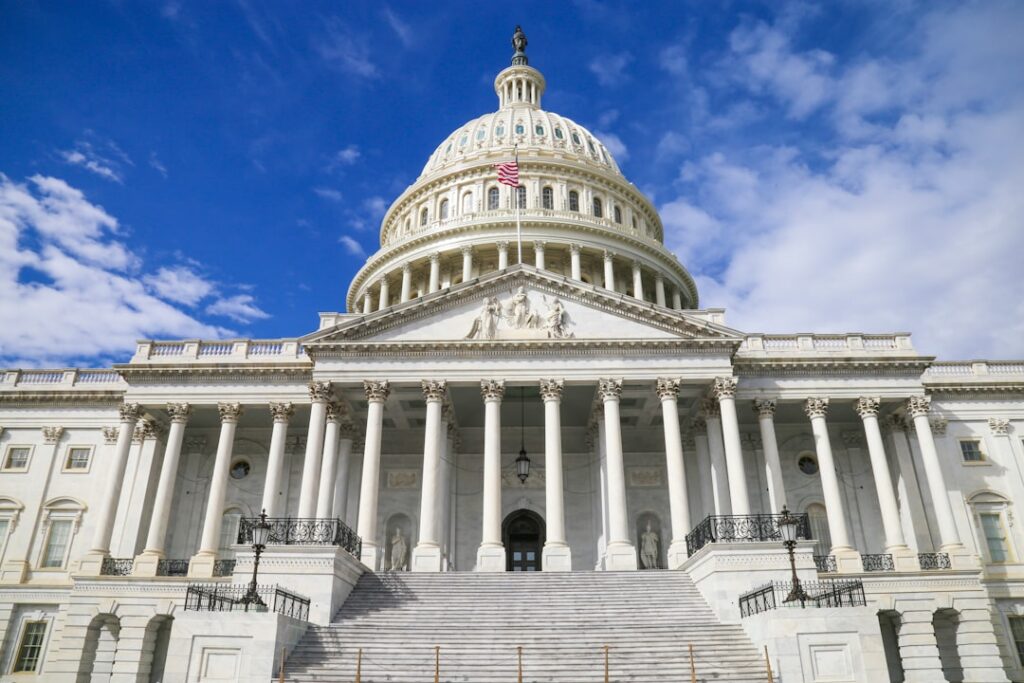
Image: GlobalBeat / 2026
Trump demands US build ballroom like China’s after Beijing lavish reception
Muhammad Asghar | GlobalBeat
President Donald Trump posted on Truth Social from Air Force One demanding the United States build a grand state ballroom comparable to the lavish venue he attended in Beijing.
The posts came after Chinese President Xi Jinping feted Trump with rare Peking duck, vintage mao-tai liquor, and a private concert in the 1,000-seat Golden Hall in Beijing’s Great Hall of the People. Trump toured the Chinese facility on Saturday, later calling it “the most beautiful ballroom in the world” and demanding Washington build something “bigger, better, and more gold.”
Trump’s evening tirade marks his first public complaint about American protocol infrastructure since returning to the White House. The 47th president has long admired authoritarian choreographed pageantry, once praising North Korea’s military parade staging to former President Joe Biden’s staffers. His latest demand revives questions about whether taxpayer funds should finance ceremonial upgrades as he pressures Congress to cut domestic spending.
The president wrote three consecutive posts at 9:47 p.m. Beijing time, an unusual late-night burst given aides had scheduled him for a 10:30 p.m. wheels-up departure. “Our ballrooms look like motel lobbies,” Trump complained, attaching a 45-second phone clip panning across the Golden Hall’s crimson carpets, gilded ceilings, and tiered chandeliers. “China shows respect. We show cheap curtains.” The video, shot by an aide who lingered after journalists left, racked up 3.2 million views within 90 minutes.
State Department veterans note that Trump previously griped about DC’s Blair House, the 119-room presidential guest quarters, calling it “small” and “dingy” during his 2017 term. He is not the first commander-in-chief to covet foreign grandeur. John F. Kennedy admired Versailles, Ronald Reagan borrowed a horse-drawn carriage from Britain’s Queen Elizabeth II, and Barack Obama obsessed over India’s open air, 3,000-seat Hyderabad House forecourt. None, however, used social media to vent mid-flight or threatened to withhold unrelated votes to secure construction cash.
Speaker Mike Johnson’s office told reporters Sunday morning that the House had “no plans” to appropriate money for a new federal ballroom. “The president can redecorate the East Room if he wants gold leaf,” Johnson spokesperson Emma Johnson said, distinguishing between interior refresh and new-build projects. Senate Appropriations Chair Susan Collins was blunter, telling Maine radio that Congress would “not foot marble bills when the debt is $29 trillion.” Taxpayers for Common Sense calculated that a Golden Hall replica would cost $480 million to $600 million, based on 2024 embassy construction prices and the need for security blast walls.
White House Press Secretary Karoline Leavitt defended her boss Monday, arguing that showcasing American elegance abroad “beats apologizing tours.” She did not say where funding would originate or whether the president had instructed the General Services Administration to draw up plans. Leavitt instead pivoted to planned cuts at the Consumer Financial Protection Bureau, suggesting that “one week of CFBP salaries” would pay for refurbishing. Agency records show a week of payroll equals roughly $23 million.
Chinese officials celebrated Trump’s online envy. Foreign Ministry spokesman Lin Jian said the Golden Hall “reflects 5,000 years of continuous civilization” and invited American designers to “learn from China.” State tabloid Global Times crowed that Trump’s rant proved the “irresistible attraction of Chinese style.” The paper editorialized that the US should copy not only architecture but also etiquette: “Leave shoes at door, toast elders first, pour tea for others before self.”
Background
Presidential entertaining venues have sparked envy and renovation waves since Theodore Roosevelt built the West Wing in 1902. The East Room, at 80 by 37 feet, remains the White House’s largest chamber yet seats only 300 for dinner. Harry Truman gutted the interior in 1949 after engineers declared the beams unsafe, choosing cheaper plaster ceiling medallions instead of installing European-style frescoes. Nancy Reagan raised $822,000 in private donations for new china, drawing congressional scorn; her successor Barbara Bush called the backlash “china syndrome.”
Modern leaders increasingly host summits at Camp David or presidential libraries to sidestep space constraints. Obama welcomed China’s Xi at Sunnylands, California, in 2013 partly to avoid television images of a modest East Room. Trump’s 2020 pre-pandemic state dinner for Australia’s prime minister crammed 220 guests elbow-to-elbow, requiring two seatings for recession guests to hear the toasts. Advocates say a dedicated ceremonial hall would allow simultaneous press viewing and backstage protocol, but critics note that heads of state prefer intimate settings that project closeness rather than spectacle.
What’s Next
Trump will land at Joint Base Andrews early Tuesday and head straight to a Republican fundraiser at his Virginia golf club, where donors expect him to mock DC’s “ugly” interiors and hint at a private fundraising drive to build a Trump Center for Diplomatic Arts. Conservative philanthropist Miriam Adelson has signaled interest though no paperwork has been filed. If Congress blocks taxpayer money, advisers say, the president could repeat his 2019 maneuver of diverting military construction funds, a tactic that drew lawsuits lasting beyond his first term.
The episode feeds a broader narrative that foreign spectacle mesmerizes Trump more than policy detail. Lawmakers will watch whether he inserts ballroom line items into future emergency spending, or whether aides quietly drop the idea once news cycles shift to upcoming debt-ceiling talks. Either way, China’s Golden Hall has become a new yardstick for presidential self-image and a fresh wedge between a cost-cutting GOP base and a developer-president who prizes grandeur.
Senior Correspondent, World & Geopolitics
Muhammad Asghar covers international affairs, conflict zones, and US foreign policy for GlobalBeat. He has reported on events across the Middle East, South Asia, and Eastern Europe, with a focus on the intersection of diplomacy and armed conflict. He has been writing wire-service journalism for over a decade.